Adamax 10mg (3ml Pen) – Experimental Cognitive Research Peptide
A modified ACTH-fragment analogue from the same structural family as Semax, with a notably thin independent research record. Research use only.
Cognitive Function
Neuromodulation
BDNF Pathway
Description
Adamax is an experimental peptide marketed as a structurally modified derivative of Semax, a synthetic neuropeptide associated with research into neurological signalling and cellular responses within the nervous system.
Adamax is commonly described as incorporating modifications intended to alter the molecular properties of the parent peptide, including stability and lipophilicity. However, its precise chemical identity is not consistently documented across available supplier descriptions, and these proposed properties have not been independently established.
Unlike more extensively investigated neuropeptides, Adamax has little published compound-specific experimental evidence. Its scientific interest therefore centres primarily on peptide structure, molecular modification and the questions raised by its proposed relationship with Semax.
Adamax 10mg is available in a 3ml pen format from Coridion Sciences for laboratory research.
What Is Adamax?
Adamax is generally described as a modified analogue associated with the adrenocorticotropic hormone (ACTH) fragment family from which Semax was developed.
Semax is a synthetic heptapeptide based on the ACTH(4-10) sequence and has been investigated in neurological and neuroprotective research.
Adamax is marketed as a derivative incorporating additional chemical modifications, frequently described as involving N-terminal acetylation and an adamantane-related group.
However, different published supplier descriptions identify different molecular structures under the Adamax name.
Consequently, the presence, position and exact chemical identity of these modifications should be confirmed through product-specific analytical documentation rather than assumed from the commercial name alone.
Adamax and Cognitive Function Research
The scientific interest surrounding Adamax is largely associated with its proposed structural relationship to Semax.
Research involving Semax and related ACTH-derived peptides has examined biological mechanisms associated with:
- Neuronal signalling: Molecular processes involved in communication between nerve cells.
- Neurotrophic pathways: The regulation of proteins involved in neuronal development and maintenance.
- Synaptic plasticity: Cellular mechanisms associated with changes in neural connections.
- Neuropeptide metabolism: How peptide sequences and structural modifications influence stability and degradation.
- Cellular stress responses: Mechanisms involved in neuronal responses to experimental injury or oxidative stress.
- Structure-activity relationships: How modifications to a peptide affect its molecular and biological characteristics.
These topics provide background context for Adamax-related research questions. They do not establish that Adamax itself produces the same effects as Semax.
Researchers investigating related compounds can explore our cognitive function and neuroscience peptide collection, featuring peptides associated with neurotrophic signalling, neuronal physiology and experimental neurological research.
Adamax and Semax: Understanding the Differences
Semax – Established Structural Identity
Semax is a synthetic peptide with a defined seven-amino-acid sequence.
Research involving Semax has explored neurological signalling, gene expression and neurotrophic mechanisms in experimental models.
Its published research history is substantially more extensive than that of Adamax.
Adamax – Proposed Structural Modification
Adamax is marketed as a chemically modified Semax-related peptide.
The proposed modifications are intended to influence molecular characteristics, but publicly available descriptions are inconsistent.
Reliable comparative studies establishing differences in receptor activity, biological potency, pharmacokinetics or neurological effects have not been identified.
Why Molecular Differences Matter
Relatively small changes to a peptide’s amino-acid sequence or terminal chemical groups can influence its biological behaviour.
Such changes may affect enzyme susceptibility, solubility, receptor interactions and cellular uptake.
These outcomes require direct experimental verification. Structural similarity alone is not sufficient to establish equivalent activity.
Proposed Research Mechanisms
Peptide Stability and Enzymatic Degradation
Peptides can undergo enzymatic degradation that affects their persistence in biological environments.
Chemical modifications such as acetylation may influence stability, depending on the peptide and experimental conditions.
Whether Adamax exhibits increased stability relative to Semax has not been established through independent compound-specific studies.
Lipophilicity and Molecular Properties
Adamantane-containing chemical groups are used in various areas of medicinal chemistry because their rigid hydrocarbon structure can influence molecular properties.
However, the presence of an adamantane-related modification in a particular Adamax formulation must first be verified.
No reliable evidence currently establishes enhanced blood-brain barrier penetration for Adamax.
Neurotrophic Signalling
Semax research has examined pathways associated with neurotrophic factors, including brain-derived neurotrophic factor (BDNF).
These findings have prompted broader scientific interest in the ACTH-derived peptide family.
However, there is insufficient direct evidence to conclude that Adamax increases BDNF expression or produces neurotrophic effects.
Receptor Pharmacology
The precise receptor-binding profile of Adamax has not been adequately characterised in independently published studies.
Claims regarding specific neurotransmitter systems or receptor interactions should therefore be regarded as hypotheses rather than established mechanisms.
Scientific Research Questions
1. Molecular Identity
A fundamental research priority is establishing a reproducible chemical identity for Adamax.
Analytical techniques such as mass spectrometry and chromatographic methods can help investigate molecular composition and purity.
2. Structure-Activity Relationships
Comparing chemically modified peptides with their parent structures helps researchers examine how molecular changes influence biological activity.
Adamax may be relevant to this wider area of peptide chemistry, provided its identity is confirmed.
3. Peptide Degradation
Differences in peptide structure can influence resistance to enzymatic cleavage.
Controlled studies would be necessary to determine whether Adamax has different degradation characteristics from Semax.
4. Neurological Signalling
The relationship between Adamax and ACTH-derived peptides raises questions about potential neurological activity.
These questions have not yet been answered by a substantial independent experimental evidence base.
5. Comparative Peptide Pharmacology
Direct comparisons between verified Adamax material and Semax would be necessary to establish differences in receptor responses, cellular activity and biological effects.
Claims of superior potency or greater cognitive activity are not currently supported by reliable comparative evidence.
Adamax 10mg Product Specifications
- Product: Adamax
- Quantity: 10mg
- Format: 3ml pen
- Classification: Experimental Semax-related peptide
- Proposed structural family: ACTH-derived neuropeptide analogues
- Molecular identity: Requires product-specific analytical confirmation
- Primary research interest: Peptide modification and structure-activity relationships
- Related research areas: Neuropeptide chemistry, molecular stability and neurological signalling
- Evidence status: Extremely limited independent compound-specific research
Adamax and Cognitive Peptide Research at Coridion Sciences
Coridion Sciences supplies specialist research peptides covering cognitive function, endocrine signalling, metabolic physiology and other areas of biochemical investigation.
Adamax forms part of the company’s cognitive research collection, alongside more extensively documented compounds such as Semax and Selank.
Its limited evidence base makes accurate product identification and transparent reporting of scientific uncertainty particularly important.
Research Use Only: Adamax is an experimental compound intended exclusively for laboratory research. It is not approved for human consumption, cognitive enhancement, neurological treatment or therapeutic use. Its safety, pharmacokinetics and efficacy in humans have not been established.
Mechanisms of Action
Adamax is presented as a structural analogue of the melanocortin-derived neuropeptide family that includes Semax, incorporating a modification intended to increase lipophilicity and metabolic stability. On the basis of the wider literature for this peptide family, proposed activity involves neurotrophic factor expression and monoamine system modulation without the steroidogenic activity of the parent hormone. Direct receptor binding and pharmacokinetic characterisation specific to this compound is largely absent from the peer-reviewed record.
Research Status & Findings
Among the least characterised compounds in this range. Independent peer-reviewed research is very limited and mechanistic claims rest largely on structural inference.
Structural family
Positioned within the ACTH-fragment neuropeptide family that includes Semax.
Modification rationale
Proposed lipophilicity and stability changes relative to the parent sequence.
Direct evidence
Peer-reviewed characterisation specific to this compound is very limited.
Extrapolated pharmacology
Most mechanistic description derives from related peptides rather than direct study.
Evidence maturity
No clinical data and minimal independent preclinical replication.
*For research purposes only – not for human consumption*

As Seen In The Press
Peptides can affect the way the body functions at a cellular level.

Our 3 Step System
Pre-filled Cartridges
Engineered for absolute accuracy and ease. Our pre-blended pens make precise dosing completely seamless in just three quick steps.
Step 1 - Remove the Pre-mixed pen from the box
Step 2 - Secure the needle tip
Step 3 - Twist to set the required dose
Blends
Blends
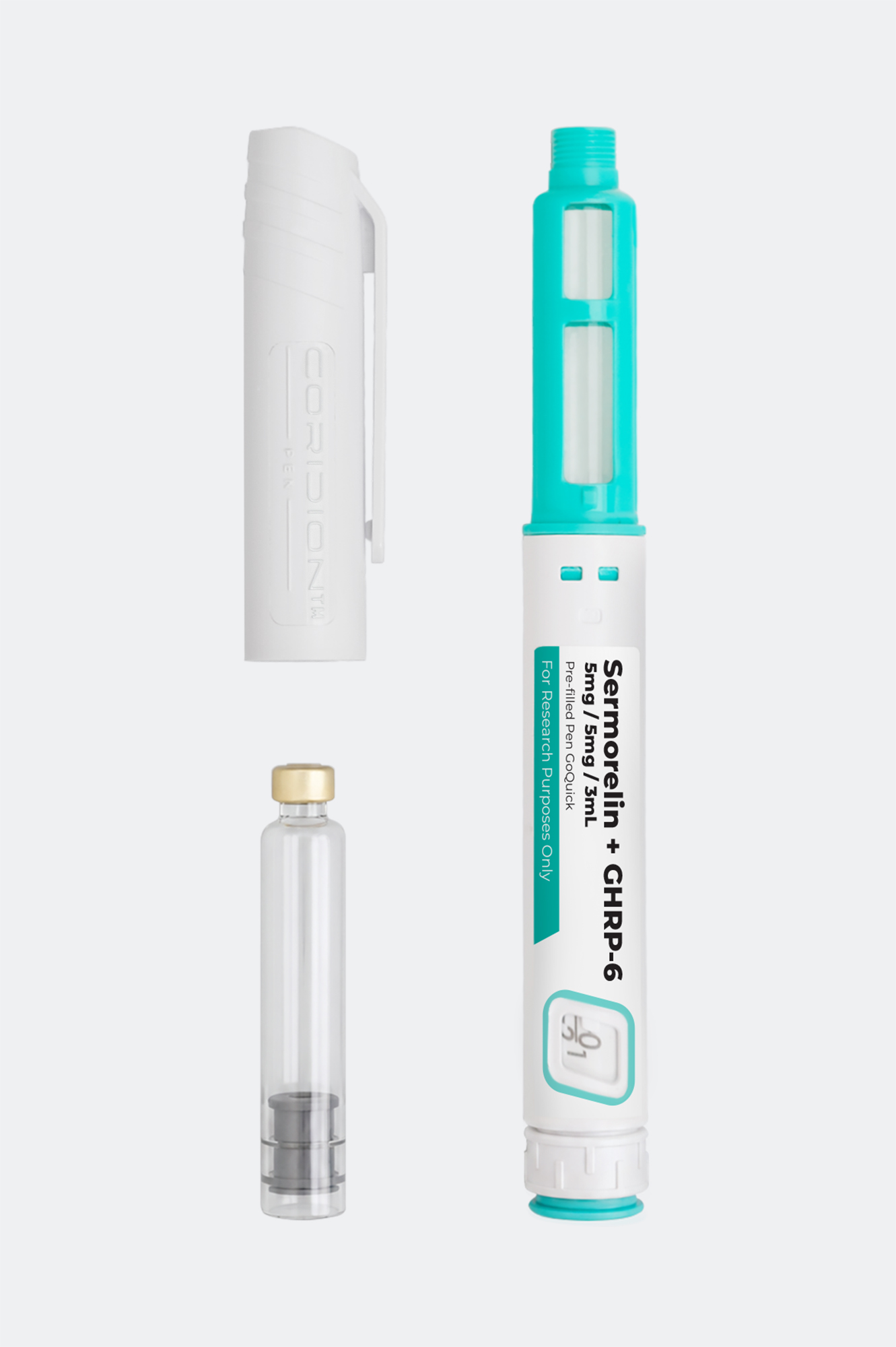
Sermorelin + GHRP-6 – 5mg / 5mg (3ml Pen)
Sermorelin + GHRP-6 5mg/5mg combines a 29-amino-acid GHRH analogue with a synthetic ghrelin receptor agonist. Investigated for complementary growth hormone signalling pathways, pituitary hormone. Research use only.
£95.00
Blends
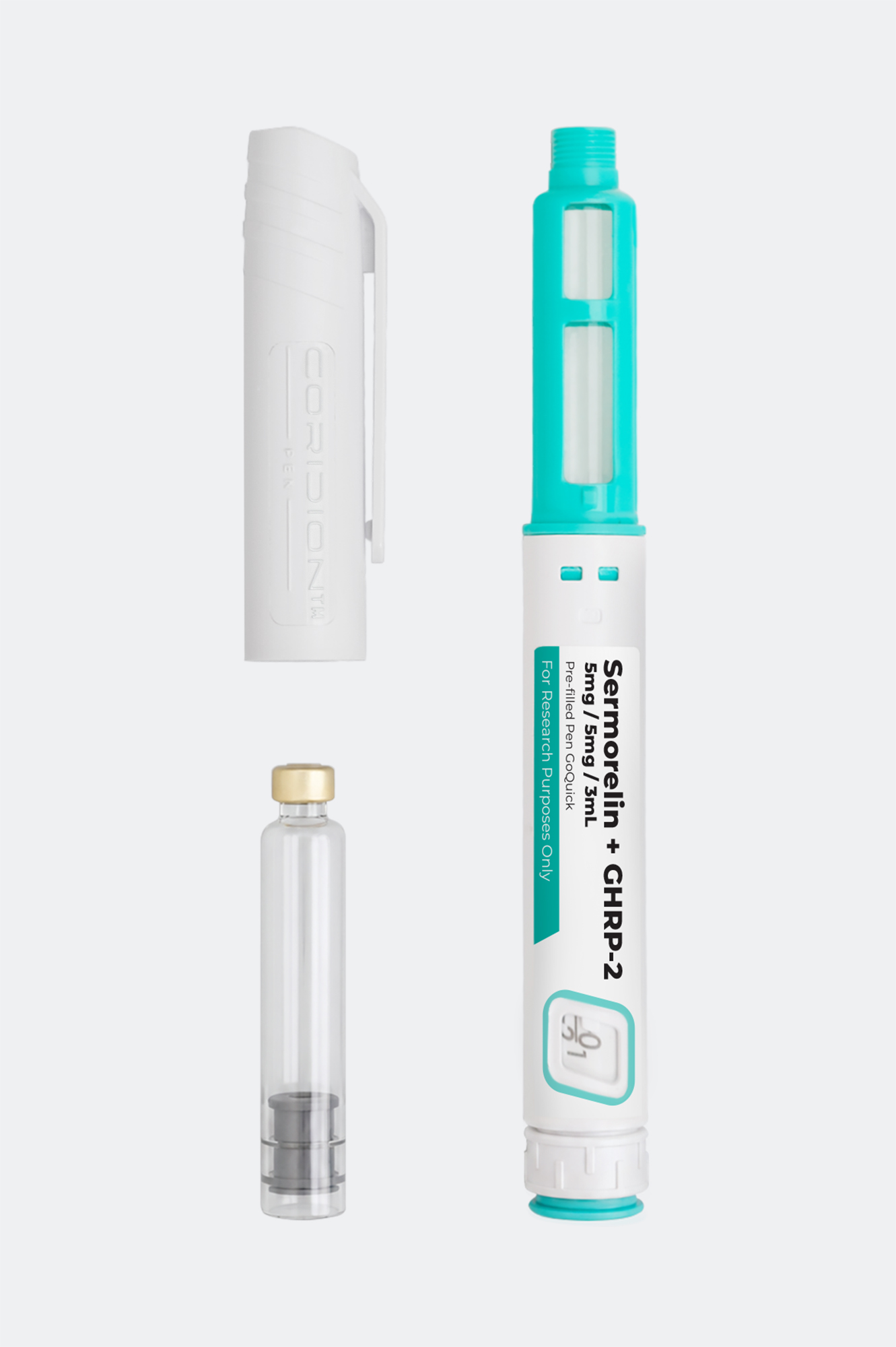
Sermorelin + GHRP-2 – 5mg / 5mg (3ml Pen)
Sermorelin + GHRP-2 5mg/5mg combines a 29-amino-acid GHRH analogue with a synthetic growth hormone secretagogue. Investigated for complementary pituitary signalling, ghrelin receptor activation and. Research use only.
£99.00
Blends
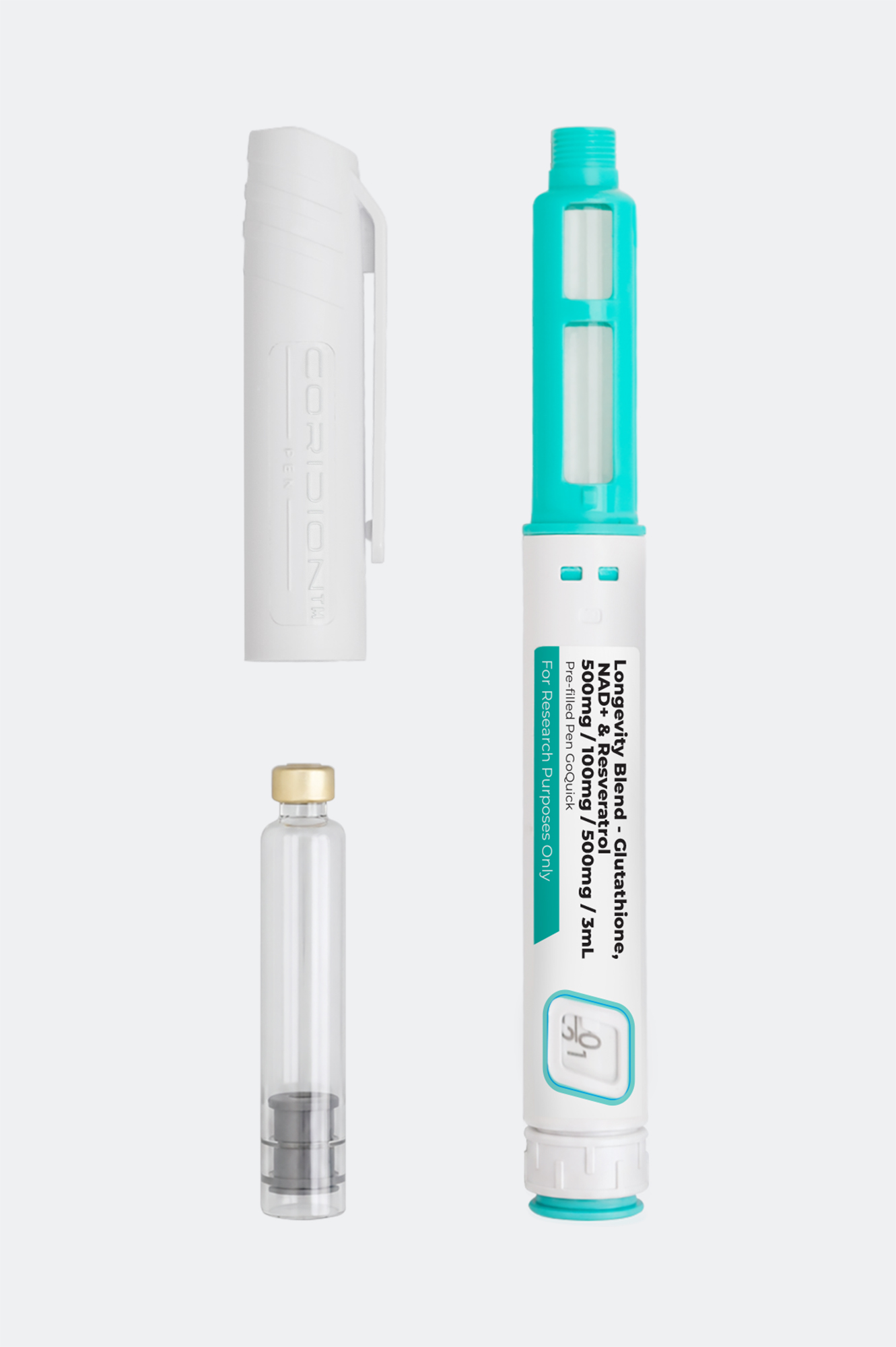
Longevity Blend (Glutathione / NAD+ / Resveratrol) – 500mg / 100mg / 500mg (3ml Pen)
Three pillars of cellular ageing research in one pen. Pairs antioxidant defence, NAD+ coenzyme power, and sirtuin-modulating activity. Research use only. Research use only.
£129.00
Blends
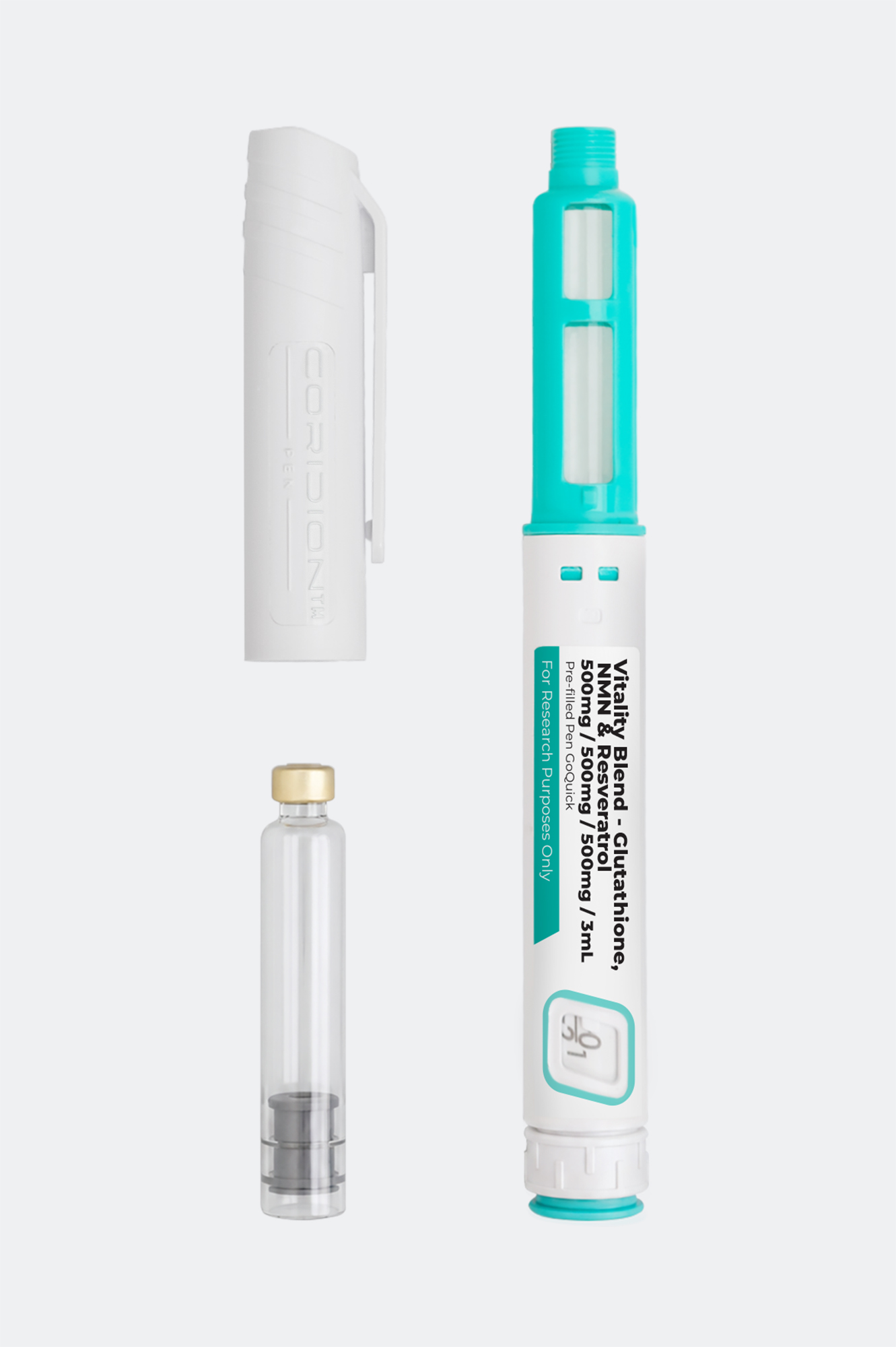
Vitality Blend (Glutathione / NMN / Resveratrol) – 500mg / 500mg / 500mg (3ml Pen)
The NAD+ precursor evolution. Swaps direct NAD+ for NMN — the biosynthetic precursor the cell uses via the salvage pathway. Research use only. Research use only.
£129.00
Blends

SS-31 + MOTS-c – 10mg / 10mg (3ml Pen)
Two mitochondrial compounds acting on different layers of the same biology — membrane structure and mitokine signalling. Research use only. Research use only.
£139.00
Blends

SS-31 + MOTS-c + NAD+ – 10mg / 10mg / 200mg (3ml Pen)
The flagship triple combination of mitochondrial research. SS-31, MOTS-c and NAD+ each act on a different layer of cellular energy biology — structure, signal. Research use only.
£159.00
Blends

KLOW Blend Peptide – BPC-157, TB-500, KPV & GHK-Cu (3ml Pen)
KLOW Blend Peptide combines BPC-157 10mg, TB-500 10mg, KPV 10mg and GHK-Cu 50mg in a four-component research formulation. The blend brings together compounds studied. Research use only.
£105.00
Blends

CJC-1295 (No DAC) + Ipamorelin + GHRP-2 – 3mg / 3mg / 3mg (3ml Pen)
A three-component preparation pairing a GHRH analogue with both a selective and a higher-potency ghrelin agonist. Research use only. Research use only.
£95.00
Blends
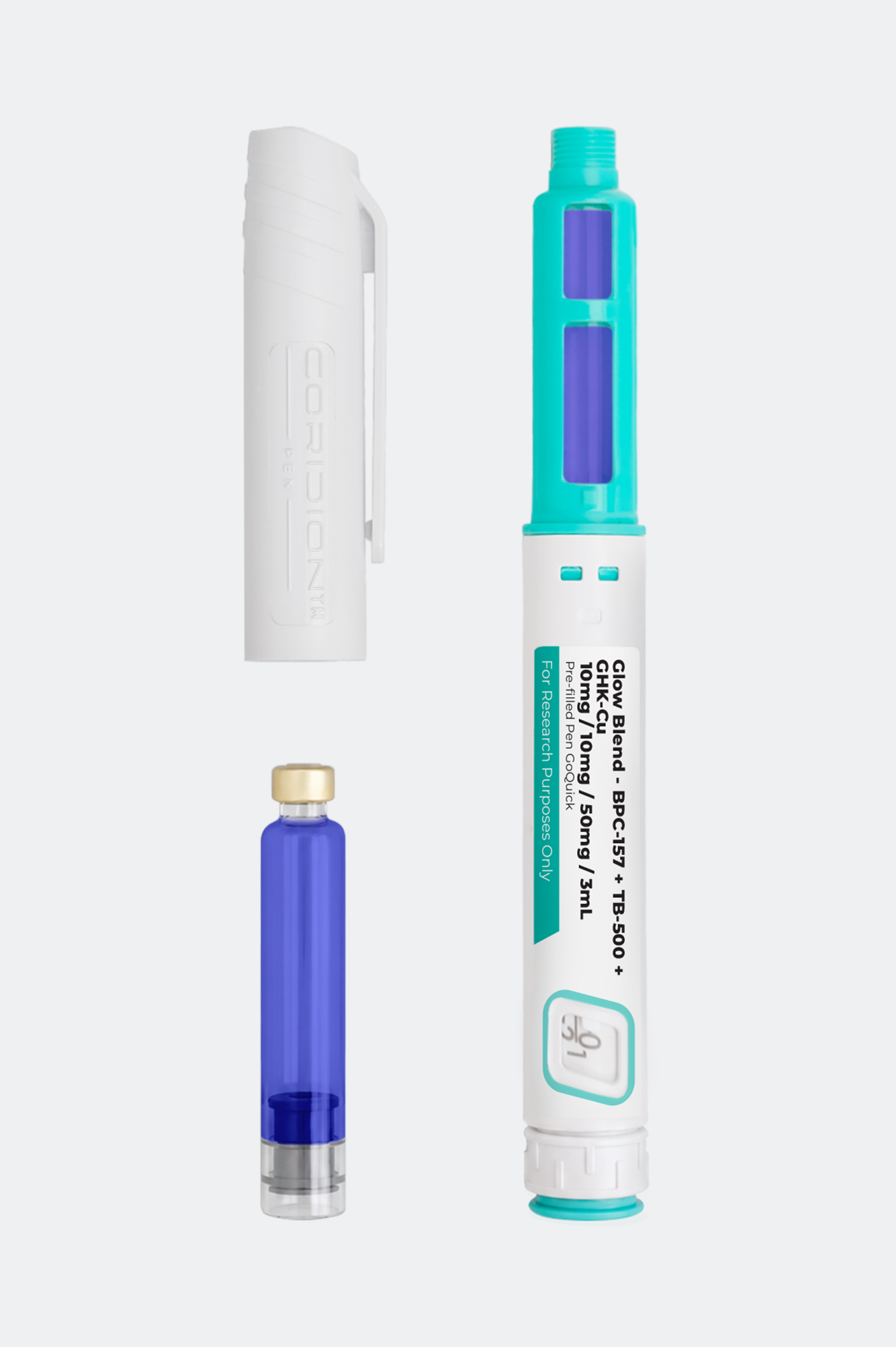
Glow Blend Peptide – BPC-157, TB-500 & GHK-Cu (3ml Pen)
Glow Blend Peptide combines GHK-Cu 50mg, BPC-157 10mg and TB-500 10mg in a three-component research formulation. Its ingredients have been investigated individually for extracellular. Research use only.
£95.00