Cortagen 20mg (3ml Pen) – AEDP Peptide Bioregulator for Neuroscience Research
A short peptide bioregulator from the Khavinson research tradition, associated with cerebral cortex tissue in that programme's literature. Research use only.
Neuroprotection
Neuromodulation
Cognitive Function
Description
Cortagen is a synthetic tetrapeptide with the amino-acid sequence Ala-Glu-Asp-Pro (AEDP). Developed within the Khavinson peptide bioregulator research programme, Cortagen has been investigated for its effects on neural tissue responses, peripheral nerve regeneration and experimental mechanisms associated with cellular regulation.
Unlike larger neuropeptides, Cortagen consists of just four amino acids. Its short molecular structure has made it a subject of research into peptide bioregulation, molecular signalling and the relationship between peptide sequence and biological activity.
The published evidence remains predominantly preclinical, with findings drawn largely from a relatively small research community. Cortagen has not been established as an effective treatment for neurological conditions or cognitive impairment.
Cortagen 20mg is supplied by Coridion Sciences in a 3ml pen format for laboratory research.
What Is Cortagen (AEDP)?
Cortagen belongs to a group of short synthetic peptides associated with the work of Vladimir Khavinson and researchers investigating tissue-related peptide bioregulation.
Its structure consists of four amino acids:
Alanine – Glutamic Acid – Aspartic Acid – Proline (Ala-Glu-Asp-Pro)
The peptide was developed through research associated with Cortexin, a more complex preparation derived from cerebral cortex tissue.
However, Cortagen and Cortexin are not the same substance. Cortexin contains a mixture of peptide components, whereas Cortagen is a defined synthetic tetrapeptide.
This distinction is important when interpreting scientific findings, as results involving a complex peptide preparation cannot automatically be attributed to an individual four-amino-acid compound.
Cortagen and Cognitive Function Research
Cortagen is associated with neuroscience research because of investigations involving neural tissues and experimental models of nerve injury.
The nervous system relies on complex interactions between cellular signalling, gene expression, neuronal survival and tissue responses to injury.
Preclinical research involving Cortagen has explored several areas:
- Peripheral nerve regeneration: Examining nerve-related structural and functional responses in animal injury models.
- Neuronal physiology: Investigating biological processes associated with nervous tissue.
- Cellular regulation: Studying how short peptides may influence cellular activity under experimental conditions.
- Gene expression: Exploring proposed interactions between peptide bioregulators and transcriptional regulation.
- Neural tissue responses: Investigating changes in selected biological markers associated with nerve injury.
- Peptide structure and activity: Understanding how short amino-acid sequences may influence experimental biological systems.
These research areas are relevant to neuroscience, but they do not establish that Cortagen improves memory, concentration, learning or cognitive performance in humans.
Researchers examining related compounds can explore our collection of cognitive function and neuroscience research peptides, which includes peptides investigated for neuronal signalling, neuroplasticity and cellular processes associated with brain function.
How Does Cortagen Work?
The precise molecular mechanism of Cortagen has not been conclusively established.
Much of the published research comes from investigations into short peptide bioregulators, a class of compounds studied for their proposed effects on tissue-specific cellular regulation.
Proposed Gene Expression Regulation
Researchers associated with the Khavinson programme have proposed that certain short peptides may interact with molecular structures involved in gene expression.
This theoretical model suggests that peptide sequences could influence transcriptional processes and thereby affect cellular activity.
However, direct sequence-specific peptide–DNA interactions have not been established as the confirmed mechanism of Cortagen in independent research.
The hypothesis should therefore be distinguished from experimentally verified receptor-mediated signalling mechanisms.
Neural Tissue Responses
Animal studies have investigated Cortagen in models involving peripheral nerve injury.
These investigations examined structural and functional measures associated with nerve regeneration.
While some studies reported favourable experimental outcomes, the findings have not been sufficiently replicated by independent research groups.
Peptide Structure and Stability
As a tetrapeptide, Cortagen has a relatively simple molecular structure.
Short peptides can be susceptible to enzymatic degradation, and their behaviour depends on amino-acid sequence, chemical environment and experimental conditions.
Specific claims regarding Cortagen’s circulating half-life, tissue distribution or ability to cross the blood-brain barrier require direct pharmacokinetic evidence.
Scientific Research Applications
1. Peripheral Nerve Regeneration
One of the more directly investigated areas of Cortagen research involves peripheral nerve injury models.
Experimental studies in rodents have examined functional recovery and nerve-related structural changes following injury.
Some findings suggest changes in regeneration-associated outcomes, but the research is limited and has not established clinical benefits in humans.
2. Peptide Bioregulation
Cortagen is part of the wider family of synthetic compounds investigated for potential tissue-related biological activity.
Researchers have explored whether short peptide sequences can influence cellular processes through mechanisms distinct from conventional hormones and neurotransmitters.
This research remains exploratory.
3. Gene Expression and Cellular Regulation
The proposed interaction between short peptides and gene regulatory mechanisms is an important theme within the Khavinson research tradition.
Investigations involving peptide bioregulators have examined cellular and chromatin-related responses under laboratory conditions.
However, these findings do not establish a validated gene-regulation mechanism for Cortagen.
4. Neuroscience and Cellular Stress
Neural tissues are affected by oxidative stress, inflammatory signalling and changes in cellular metabolism.
These mechanisms provide context for experimental investigations involving peptide bioregulators.
Evidence remains insufficient to conclude that Cortagen prevents neuronal degeneration or protects the human nervous system from disease.
5. Comparative Peptide Research
Cortagen can also be considered within research comparing short peptides with different amino-acid sequences.
Such investigations may help clarify whether molecular composition influences biological responses in laboratory systems.
Cortagen Compared with Other Cognitive Research Peptides
Although several peptides are associated with neuroscience research, their structures and evidence bases differ considerably.
Cortagen (AEDP)
A synthetic tetrapeptide investigated primarily in preclinical studies involving nerve injury and peptide bioregulation.
Pinealon
A short synthetic peptide associated with the Khavinson research tradition and investigated in experimental models involving neural tissue and cellular stress.
Semax
A synthetic peptide derived from an ACTH-related sequence, investigated for neurological signalling and neurotrophic mechanisms.
Selank
A synthetic tuftsin-related peptide researched for its interactions with stress-associated signalling, neurotransmitter systems and neuroimmune pathways.
These compounds should not be treated as interchangeable. Their molecular structures, proposed mechanisms and available scientific evidence differ.
Cortagen 20mg Product Specifications
- Product: Cortagen
- Alternative designation: AEDP
- Amino-acid sequence: Ala-Glu-Asp-Pro
- Peptide length: 4 amino acids
- Quantity: 20mg
- Format: 3ml pen
- Classification: Synthetic tetrapeptide bioregulator
- Primary research focus: Peripheral nerve regeneration and neural tissue responses
- Additional research areas: Peptide bioregulation, cellular regulation and gene-expression hypotheses
- Evidence status: Primarily preclinical, with limited independent replication
Research Peptide Bioregulators at Coridion Sciences
Coridion Sciences supplies research peptides covering neuroscience, cellular physiology, endocrine signalling and other areas of biochemical investigation.
Cortagen forms part of our wider selection
Mechanisms of Action
Cortagen is described in this literature as a short peptide (Ala-Glu-Asp-Pro) developed from work on cerebral cortex tissue. The mechanistic model proposed by the originating research programme is direct interaction between short peptides and DNA regulatory regions, with sequence-specific binding said to modulate transcription in a tissue-selective manner. Research within this programme reports effects on nerve regeneration markers in injury models and on cortical electrophysiological measures. This proposed mechanism of direct peptide–DNA regulation is not widely adopted in mainstream molecular biology, and the binding model itself remains an open question outside the originating tradition.
Research Status & Findings
The evidence base consists principally of cell culture and animal work published within the originating research programme, alongside observational clinical material. Independent replication outside the originating research programme remains limited, which is the principal caveat applying across this peptide family.
Originating programme
Cell culture and animal research published within the Khavinson institutional tradition.
Proposed mechanism
Direct peptide–DNA interaction model governing tissue-selective transcription.
Tissue focus
Nerve regeneration markers and cortical electrophysiological measures in animal models.
Peptide chemistry
Very short sequence with correspondingly rapid enzymatic degradation profile.
Replication context
Independent international verification of central findings is limited.
*For research purposes only – not for human consumption*

As Seen In The Press
Peptides can affect the way the body functions at a cellular level.

Our 3 Step System
Pre-filled Cartridges
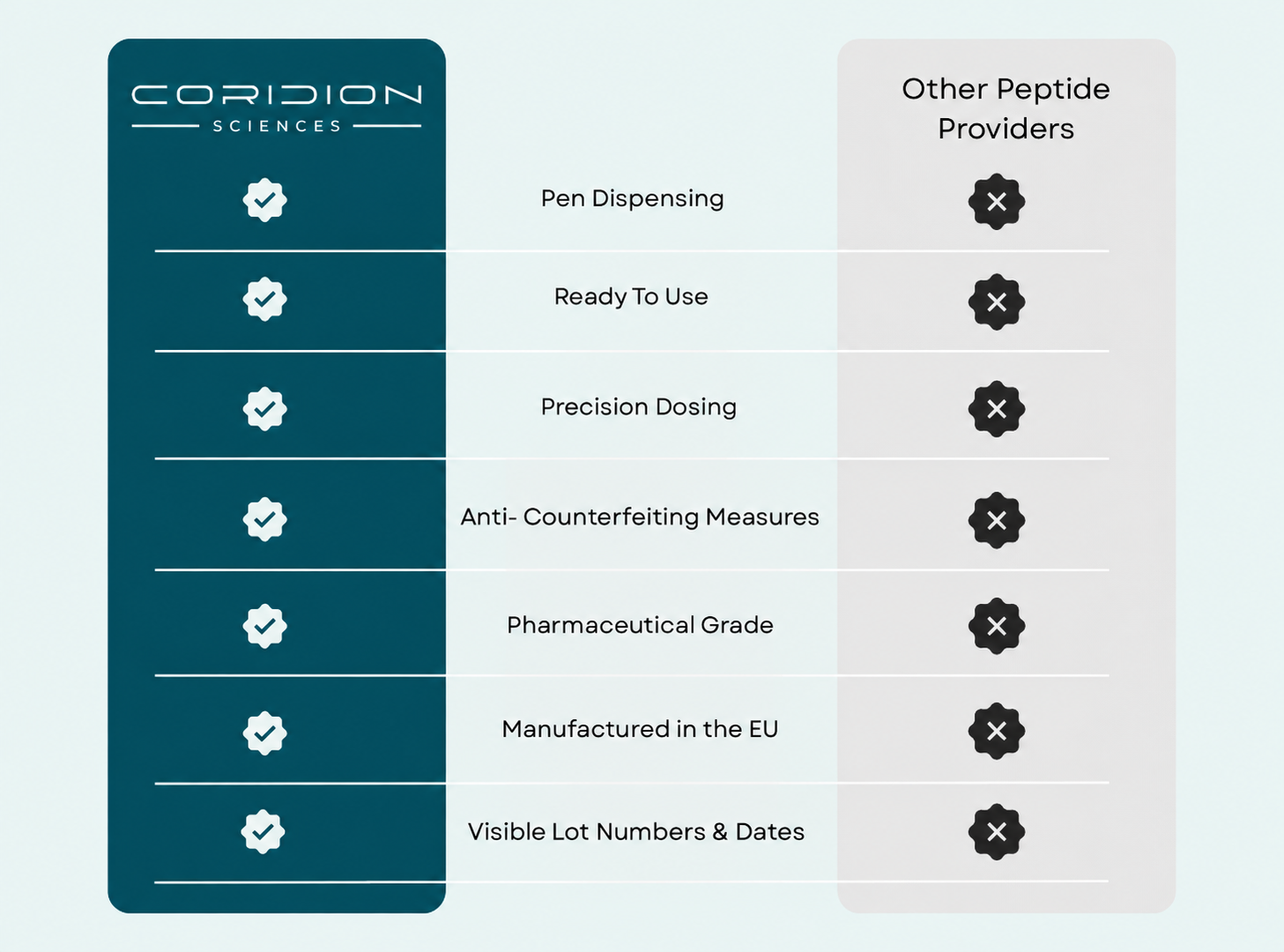
Engineered for absolute accuracy and ease. Our pre-blended pens make precise dosing completely seamless in just three quick steps.
Step 1 - Remove the Pre-mixed pen from the box
Step 2 - Secure the needle tip
Step 3 - Twist to set the required dose
Blends
Blends
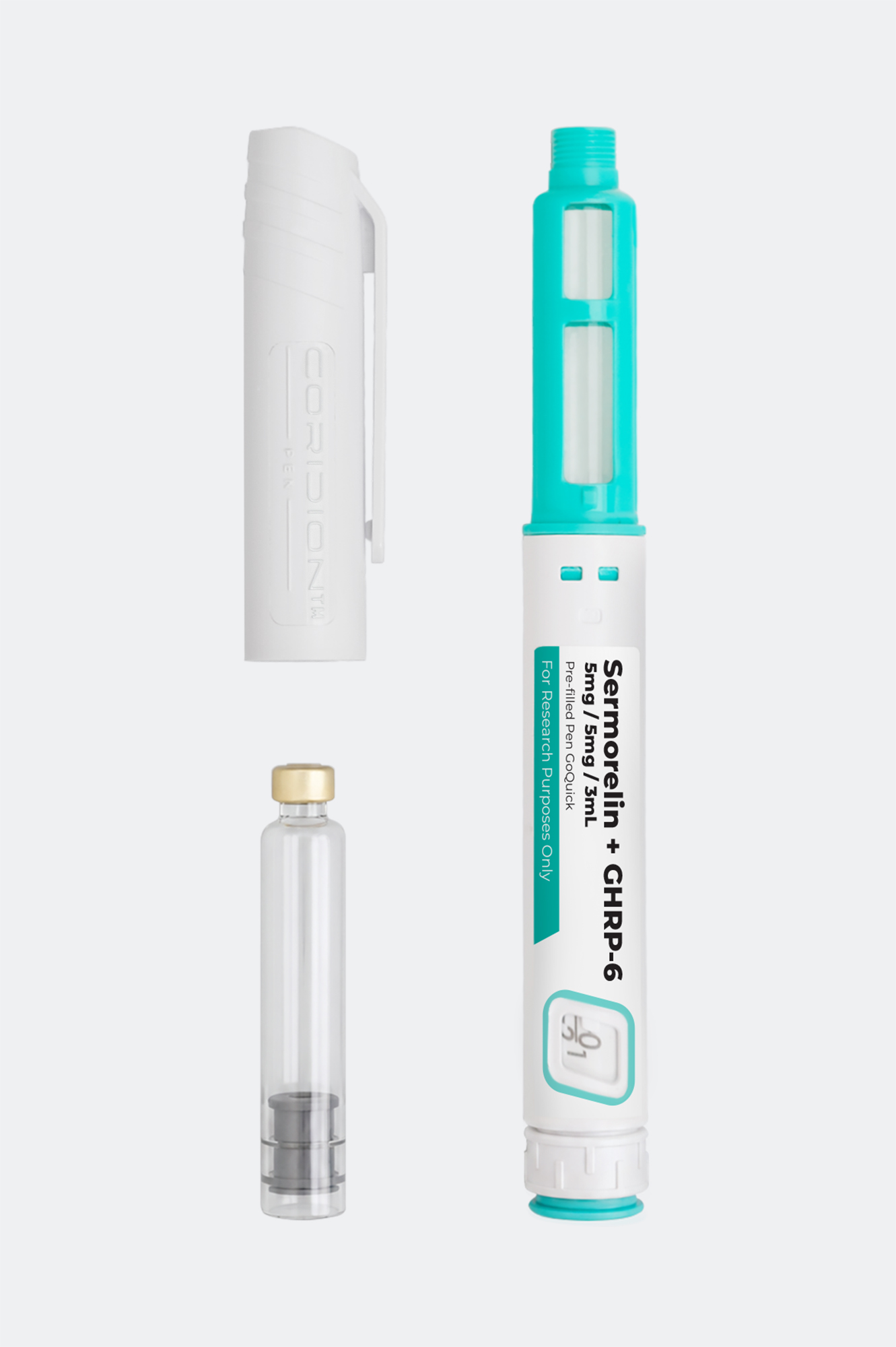
Sermorelin + GHRP-6 – 5mg / 5mg (3ml Pen)
Sermorelin + GHRP-6 5mg/5mg combines a 29-amino-acid GHRH analogue with a synthetic ghrelin receptor agonist. Investigated for complementary growth hormone signalling pathways, pituitary hormone. Research use only.
£95.00
Blends
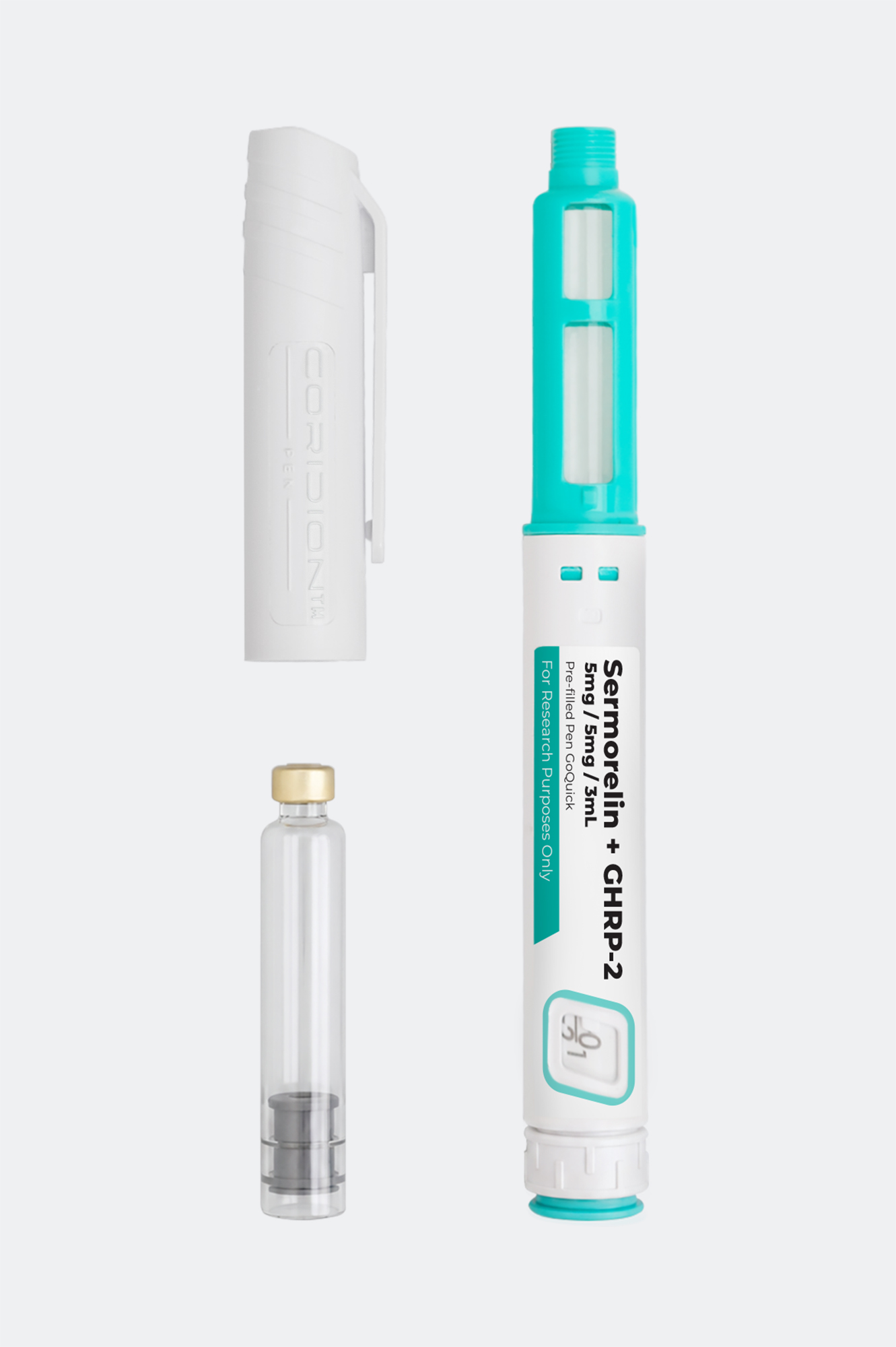
Sermorelin + GHRP-2 – 5mg / 5mg (3ml Pen)
Sermorelin + GHRP-2 5mg/5mg combines a 29-amino-acid GHRH analogue with a synthetic growth hormone secretagogue. Investigated for complementary pituitary signalling, ghrelin receptor activation and. Research use only.
£99.00
Blends
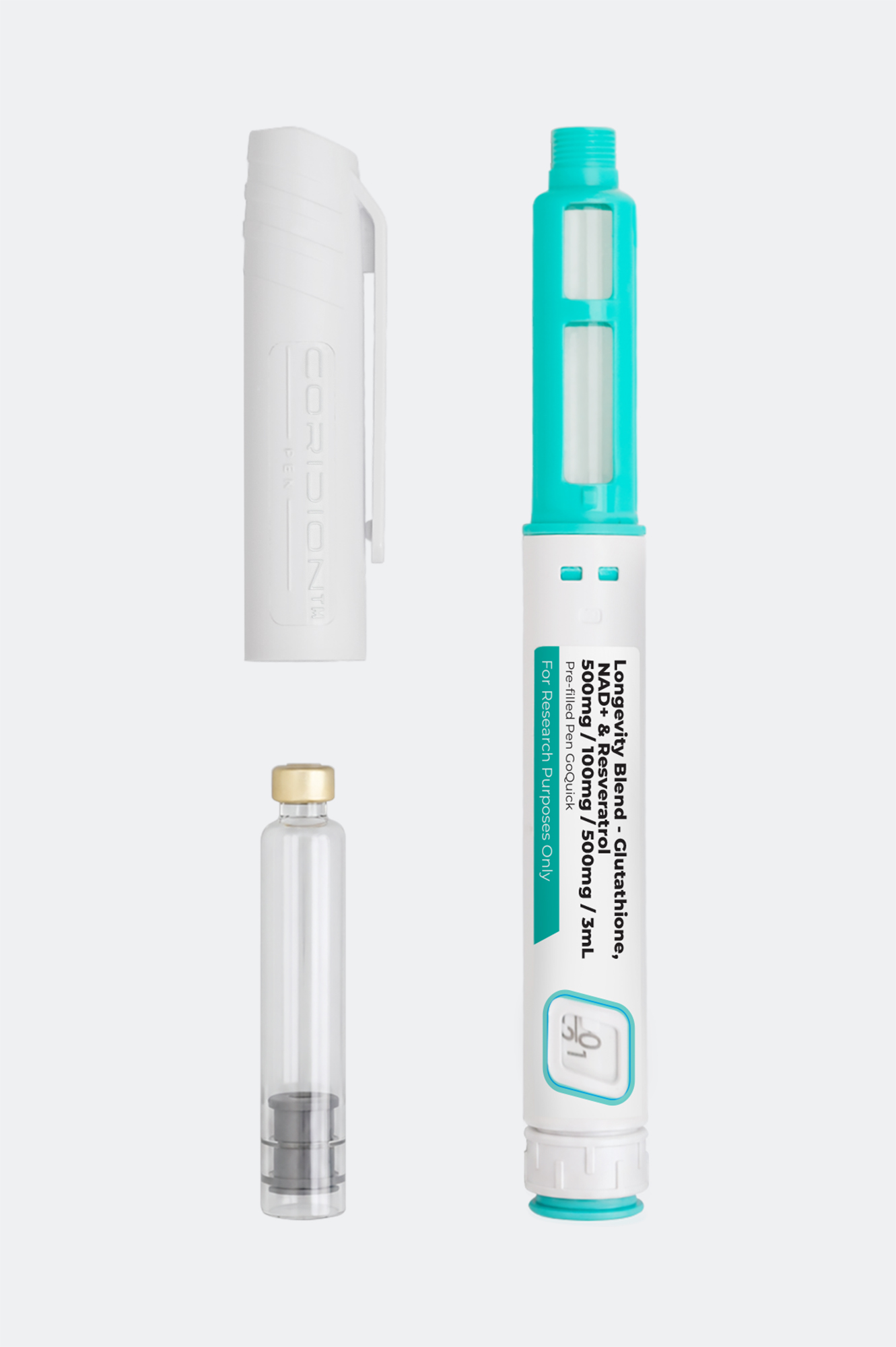
Longevity Blend (Glutathione / NAD+ / Resveratrol) – 500mg / 100mg / 500mg (3ml Pen)
Three pillars of cellular ageing research in one pen. Pairs antioxidant defence, NAD+ coenzyme power, and sirtuin-modulating activity. Research use only. Research use only.
£129.00
Blends
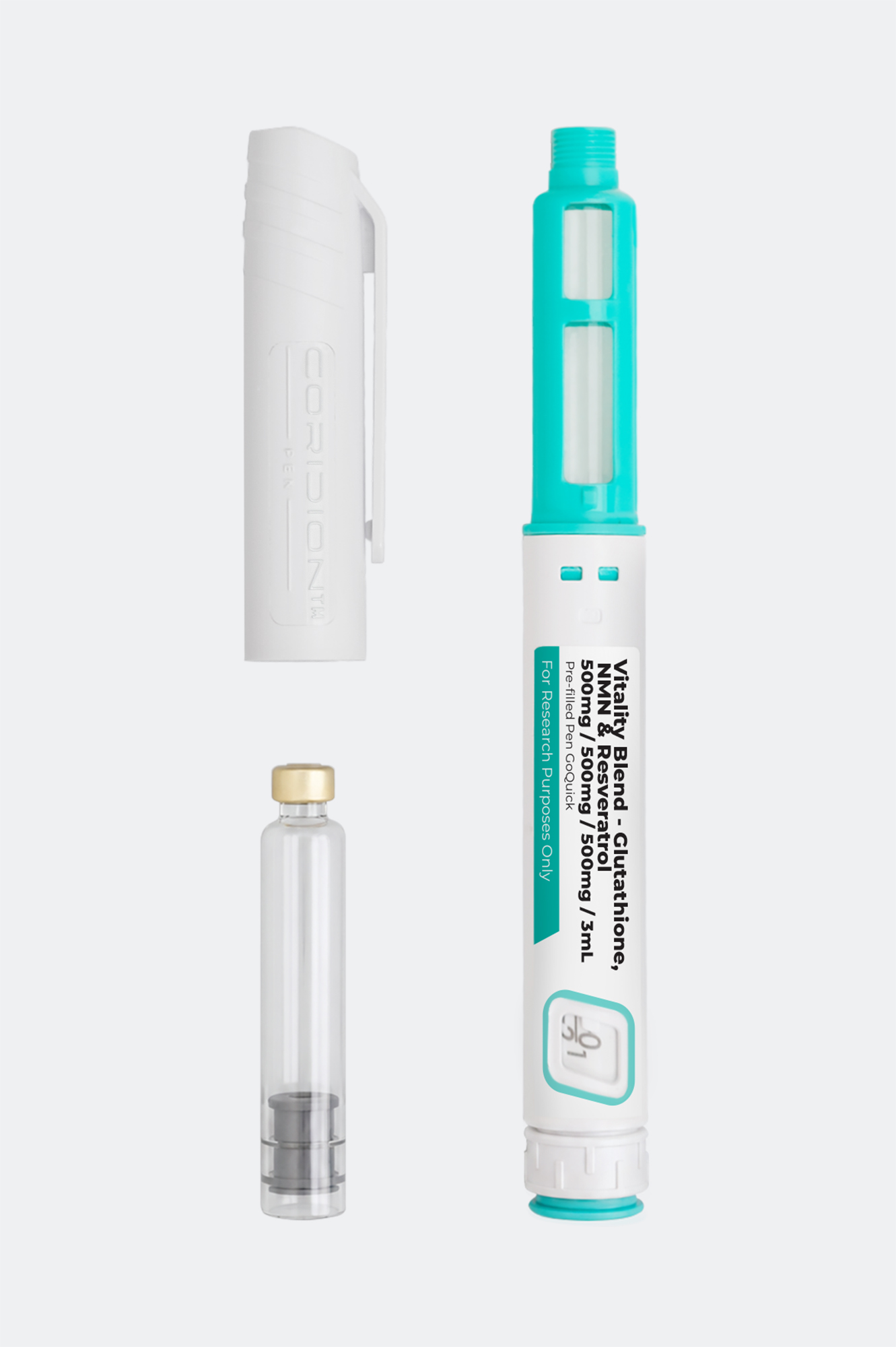
Vitality Blend (Glutathione / NMN / Resveratrol) – 500mg / 500mg / 500mg (3ml Pen)
The NAD+ precursor evolution. Swaps direct NAD+ for NMN — the biosynthetic precursor the cell uses via the salvage pathway. Research use only. Research use only.
£129.00
Blends

SS-31 + MOTS-c – 10mg / 10mg (3ml Pen)
Two mitochondrial compounds acting on different layers of the same biology — membrane structure and mitokine signalling. Research use only. Research use only.
£139.00
Blends

SS-31 + MOTS-c + NAD+ – 10mg / 10mg / 200mg (3ml Pen)
The flagship triple combination of mitochondrial research. SS-31, MOTS-c and NAD+ each act on a different layer of cellular energy biology — structure, signal. Research use only.
£159.00
Blends

KLOW Blend Peptide – BPC-157, TB-500, KPV & GHK-Cu (3ml Pen)
KLOW Blend Peptide combines BPC-157 10mg, TB-500 10mg, KPV 10mg and GHK-Cu 50mg in a four-component research formulation. The blend brings together compounds studied. Research use only.
£105.00
Blends

CJC-1295 (No DAC) + Ipamorelin + GHRP-2 – 3mg / 3mg / 3mg (3ml Pen)
A three-component preparation pairing a GHRH analogue with both a selective and a higher-potency ghrelin agonist. Research use only. Research use only.
£95.00
Blends
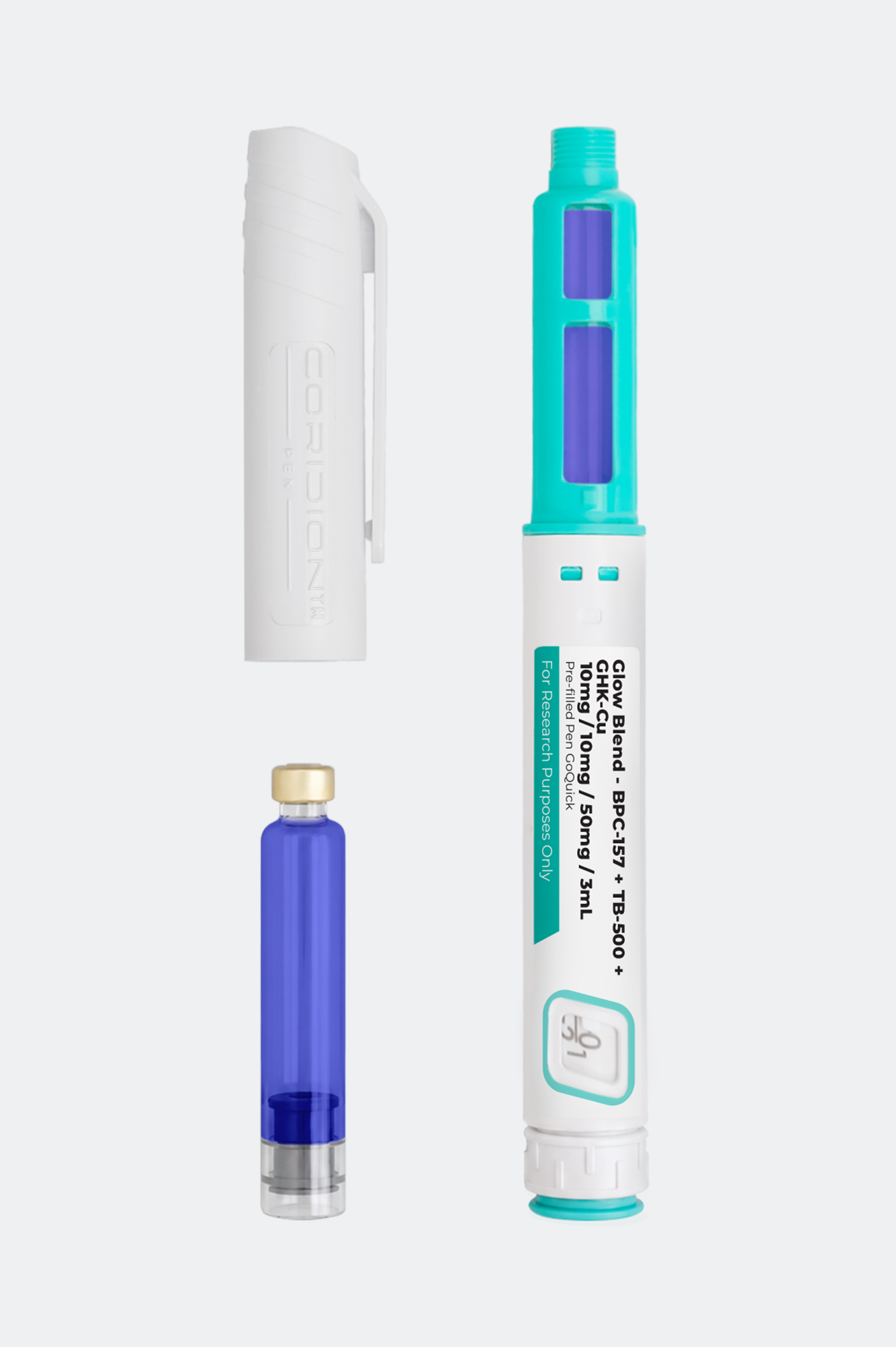
Glow Blend Peptide – BPC-157, TB-500 & GHK-Cu (3ml Pen)
Glow Blend Peptide combines GHK-Cu 50mg, BPC-157 10mg and TB-500 10mg in a three-component research formulation. Its ingredients have been investigated individually for extracellular. Research use only.
£95.00