DSIP 10mg (3ml Pen) – Delta Sleep-Inducing Peptide for Neuroscience Research
A nonapeptide isolated from cerebral venous blood during slow-wave sleep, and still one of the more mechanistically unresolved compounds in neuroscience. Research use only.
Sleep Architecture
Neuromodulation
Mood & Stress Axis
Description
DSIP (Delta Sleep-Inducing Peptide) is a synthetic nonapeptide investigated for its potential influence on sleep regulation, neurological signalling and neuroendocrine activity.
Originally identified during experimental investigations into sleep-associated biological factors in the 1970s, DSIP attracted scientific interest because of its reported effects on slow-wave sleep and electroencephalographic (EEG) activity.
Unlike compounds with well-characterised receptor targets, DSIP remains mechanistically unresolved. No specific receptor has been conclusively established, and research findings concerning its sleep-related activity have been inconsistent.
These unanswered questions make DSIP relevant to investigations examining sleep physiology, peptide signalling and the interaction between neurological and endocrine systems.
DSIP 10mg is available in a 3ml pen format from Coridion Sciences for scientific research.
What Is Delta Sleep-Inducing Peptide?
Delta Sleep-Inducing Peptide is a nine-amino-acid peptide originally isolated during research involving sleep-associated activity in animal models.
Its amino-acid sequence is:
Trp-Ala-Gly-Gly-Asp-Ala-Ser-Gly-Glu (WAGGDASGE)
DSIP received its name because early experimental findings suggested an association with delta-wave activity, an EEG pattern characteristic of deep non-rapid eye movement (NREM) sleep.
However, its name should not be interpreted as evidence that the compound reliably induces deep sleep.
Subsequent investigations have produced mixed findings, and researchers have not established a universally accepted mechanism explaining its reported biological effects.
DSIP and Sleep Architecture Research
Sleep architecture describes the organisation and progression of different sleep stages throughout the night.
These stages include lighter NREM sleep, slow-wave sleep and rapid eye movement (REM) sleep.
Slow-wave sleep is associated with prominent delta-frequency electrical activity and plays a role in several physiological processes, including aspects of memory consolidation and metabolic regulation.
DSIP has been investigated in relation to:
- Slow-wave sleep: Examining changes in delta-frequency EEG activity and deeper NREM sleep stages.
- Sleep latency: Investigating the interval between attempting sleep and sleep onset.
- Sleep efficiency: Studying the proportion of time spent asleep while in bed.
- Sleep continuity: Measuring interruptions and transitions between sleep stages.
- Sleep-wake regulation: Exploring biological mechanisms involved in transitions between wakefulness and sleep.
- Neuroendocrine activity: Investigating relationships between sleep-associated signalling and hormone regulation.
Early human studies reported changes in some objective sleep measurements following DSIP exposure.
However, later controlled investigations produced less consistent results, and its therapeutic value for insomnia remains unproven.
Researchers examining neurological signalling and sleep-related biological mechanisms can explore our cognitive function and neuroscience research peptides, including compounds investigated for neuropeptide activity, neuronal physiology and experimental brain research.
How Does DSIP Work?
An Unresolved Receptor Mechanism
Unlike many characterised neuropeptides, DSIP does not have a definitively established receptor target.
Researchers have proposed several possible pathways through which the peptide might influence neurological or endocrine activity.
These remain hypotheses rather than confirmed mechanisms.
Neurotransmitter Signalling
Experimental literature has explored possible relationships between DSIP and neurotransmitter systems involved in sleep regulation.
These include GABAergic and glutamatergic pathways, which contribute to the regulation of neuronal excitability.
However, direct and reproducible evidence identifying a specific neurotransmitter receptor mechanism for DSIP remains insufficient.
Hypothalamic-Pituitary-Adrenal Signalling
The hypothalamic-pituitary-adrenal (HPA) axis regulates important components of the physiological stress response.
A small human study reported changes in circulating ACTH-related measurements following DSIP administration, without corresponding changes in cortisol.
This finding suggests a possible neuroendocrine interaction but does not establish that DSIP consistently reduces stress or cortisol.
Peptide Stability and Distribution
DSIP is susceptible to enzymatic degradation, which may influence its availability in experimental biological systems.
Questions concerning peptide stability, tissue distribution and access to central nervous system targets complicate interpretation of its reported effects.
Detailed pharmacokinetic evidence for modern research formulations remains limited.
DSIP and Cognitive Function Research
Sleep and cognitive function are closely connected.
Normal sleep contributes to memory consolidation, attention regulation, emotional processing and broader neurological maintenance.
Disrupted sleep can influence cognitive performance through changes in neuronal activity and physiological regulation.
Consequently, compounds investigated in sleep research may also be relevant to the broader scientific study of brain function.
However, this relationship does not establish that DSIP directly improves memory, learning or concentration.
The connection between DSIP and cognitive research is primarily through its historical investigation in sleep physiology and neuroendocrine signalling.
Related research compounds such as Semax and Selank have different proposed neurological mechanisms and should not be considered interchangeable with DSIP.
Scientific Research Findings
1. Early Sleep Studies
Initial investigations into DSIP examined changes in slow-wave activity and other sleep-related physiological measurements.
Small human studies conducted during the early 1980s reported improvements in selected sleep parameters.
However, sample sizes were limited, and these findings require cautious interpretation.
2. Controlled Insomnia Research
A double-blind study involving 16 participants with chronic insomnia reported some differences in objective sleep efficiency and sleep latency.
The researchers also identified weaknesses in the findings and concluded that short-term DSIP treatment was unlikely to provide substantial therapeutic benefit.
This study illustrates the limitations of the clinical evidence.
3. Sleep-Wake Regulation
Other small clinical investigations examined DSIP in relation to nighttime sleep and daytime alertness.
Although certain studies reported favourable findings, the results have not established consistent, reproducible clinical effectiveness.
4. Endocrine Research
Experimental studies have examined DSIP’s potential interactions with ACTH and other endocrine pathways.
These investigations contribute to the historical literature concerning neuropeptide regulation but have not established a definitive endocrine mechanism.
5. Stress-Related Biological Responses
Animal studies have explored DSIP in experimental models involving physiological stress and adaptive responses.
Such findings remain preliminary and cannot be extrapolated to claims that DSIP treats anxiety, stress disorders or insomnia in humans.
DSIP Compared with Other Cognitive Research Peptides
DSIP (Delta Sleep-Inducing Peptide)
A nine-amino-acid peptide investigated for sleep architecture, neurological signalling and neuroendocrine activity. Its receptor mechanism remains unresolved.
Semax
An ACTH-derived synthetic peptide investigated in neurological research involving neurotrophic and neuronal signalling pathways.
Selank
A tuftsin-related synthetic peptide researched for interactions involving stress-associated signalling, neurotransmitter systems and neuroimmune activity.
Pinealon
A short synthetic peptide associated with experimental investigations into neural tissue and cellular stress responses.
These compounds differ in molecular structure, proposed activity and the strength of their supporting evidence.
DSIP 10mg Product Specifications
- Product: DSIP (Delta Sleep-Inducing Peptide)
- Quantity: 10mg
- Format: 3ml pen
- Peptide classification: Synthetic nonapeptide
- Amino-acid length: 9
- Sequence: WAGGDASGE
- Primary research focus: Sleep physiology and neuropeptide signalling
- Additional research areas: Sleep architecture, EEG activity, neuroendocrine regulation and stress-related pathways
- Receptor status: No definitively established specific receptor
- Evidence status: Limited and inconsistent preclinical and human research
Neuroscience Research at Coridion Sciences
Coridion Sciences provides a specialist research peptide catalogue covering cognitive function, neurological signalling, cellular physiology and endocrine regulation.
The DSIP 10mg formulation is listed in a 3ml pen format within the company’s neurological research range.
Research Use Only: DSIP is an investigational compound intended exclusively for scientific and laboratory research. It is not approved for human consumption, insomnia treatment, cognitive enhancement or other therapeutic applications. Its safety and clinical efficacy have not been established.
Mechanisms of Action
DSIP is a nonapeptide originally isolated on the basis of sleep-associated activity. Despite decades of investigation, research has not identified a specific receptor, and the mechanistic literature remains speculative. Studies have variously reported modulation of GABAergic and glutamatergic signalling, effects on corticotropin and somatotropin release, and interaction with opioid systems. Work also documents rapid enzymatic degradation and questions about blood-brain barrier penetration, both of which complicate interpretation of the reported central effects.
Research Status & Findings
An older literature with notably inconsistent replication. Mechanistic characterisation is weak and several foundational findings have not been reliably reproduced.
Sleep research
Original isolation studies and subsequent EEG work on slow-wave activity.
Endocrine effects
Research on interactions with corticotropin and growth hormone release.
Stress models
Animal studies examining stress adaptation and thermoregulatory endpoints.
Mechanistic gap
No specific receptor has been identified despite sustained investigation.
Replication issues
Several early findings have not been consistently reproduced in later work.
*For research purposes only – not for human consumption*

As Seen In The Press
Peptides can affect the way the body functions at a cellular level.

Our 3 Step System
Pre-filled Cartridges
Engineered for absolute accuracy and ease. Our pre-blended pens make precise dosing completely seamless in just three quick steps.
Step 1 - Remove the Pre-mixed pen from the box
Step 2 - Secure the needle tip
Step 3 - Twist to set the required dose
Blends
Blends
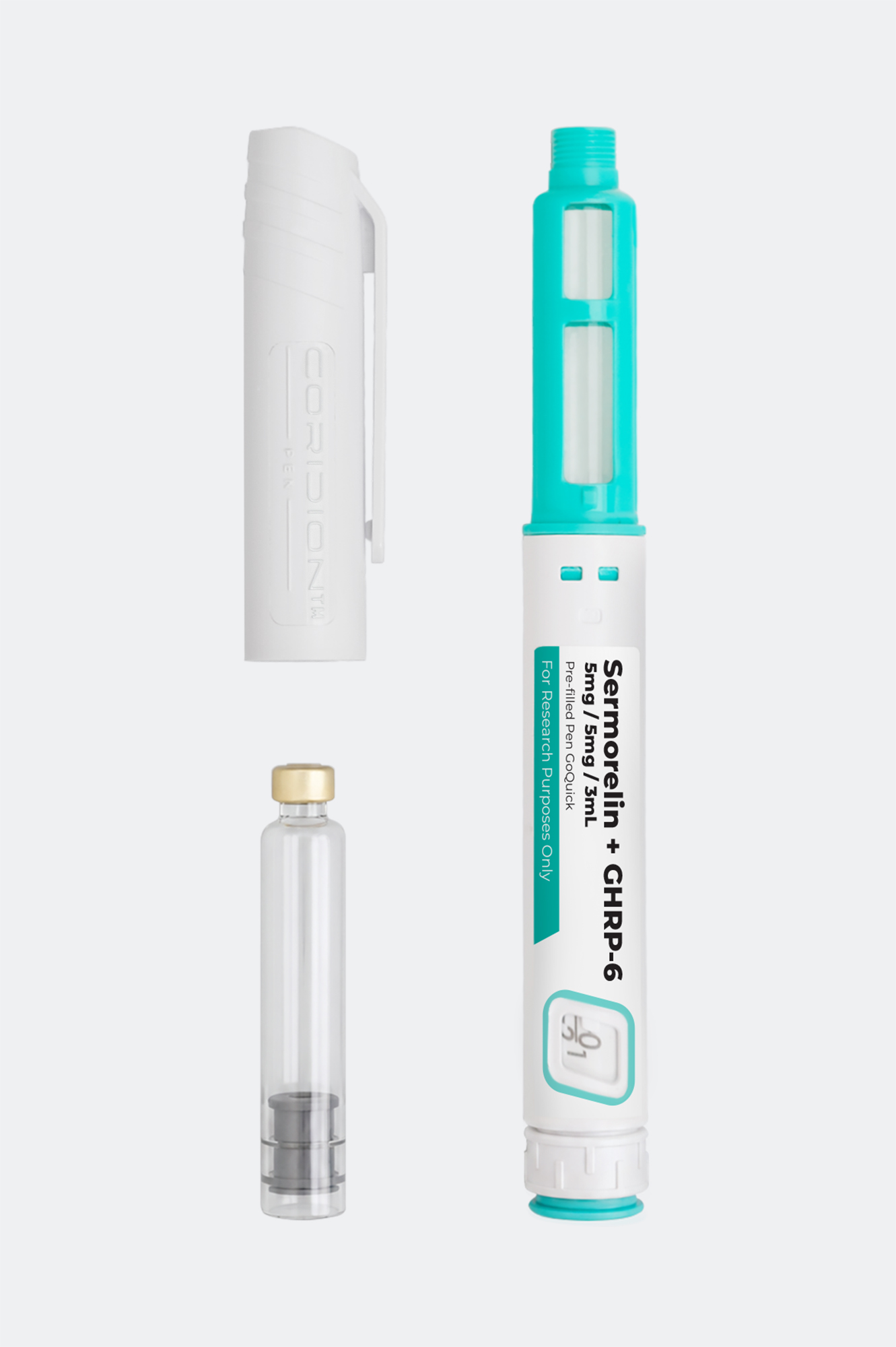
Sermorelin + GHRP-6 – 5mg / 5mg (3ml Pen)
Sermorelin + GHRP-6 5mg/5mg combines a 29-amino-acid GHRH analogue with a synthetic ghrelin receptor agonist. Investigated for complementary growth hormone signalling pathways, pituitary hormone. Research use only.
£95.00
Blends
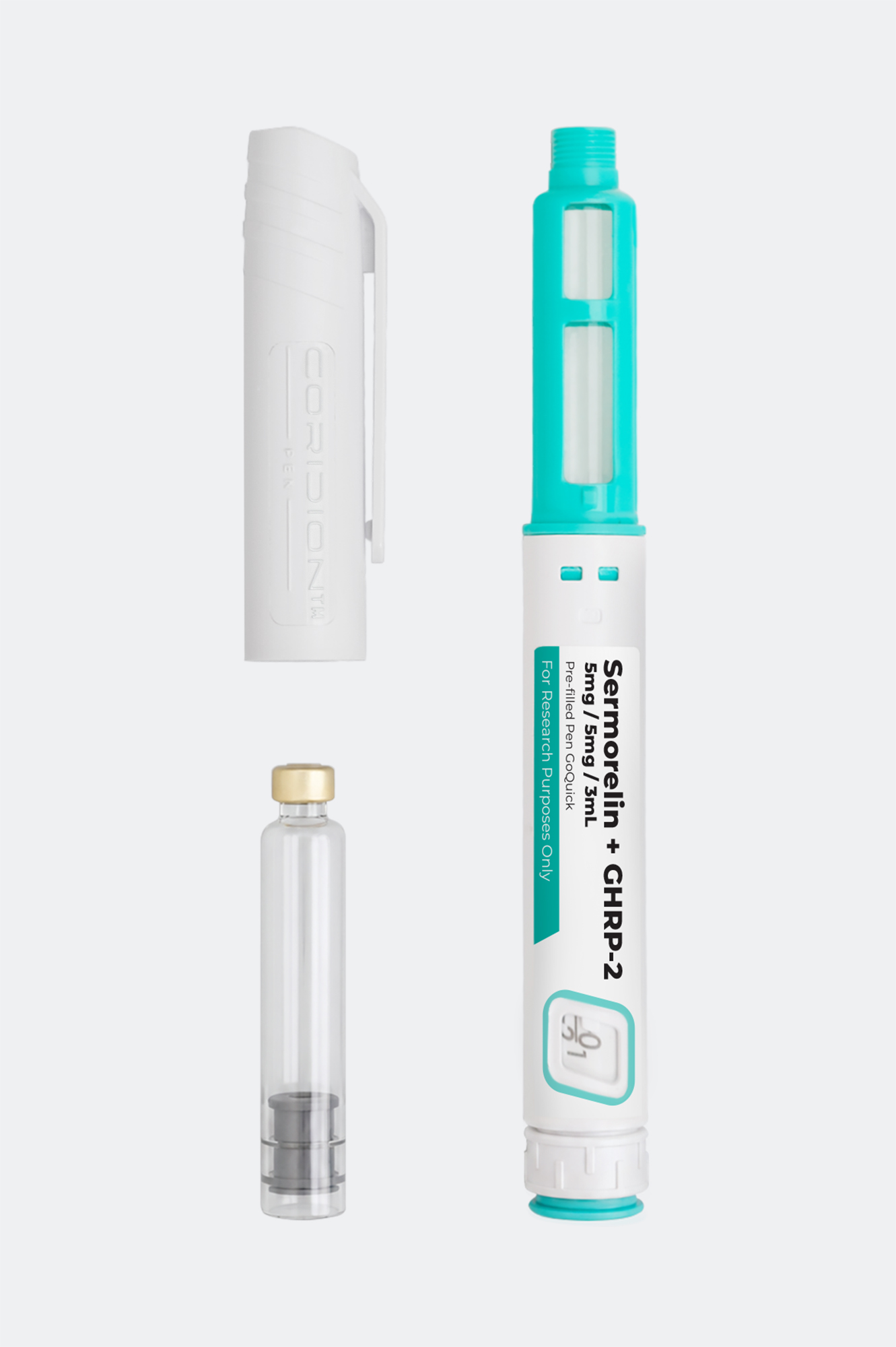
Sermorelin + GHRP-2 – 5mg / 5mg (3ml Pen)
Sermorelin + GHRP-2 5mg/5mg combines a 29-amino-acid GHRH analogue with a synthetic growth hormone secretagogue. Investigated for complementary pituitary signalling, ghrelin receptor activation and. Research use only.
£99.00
Blends
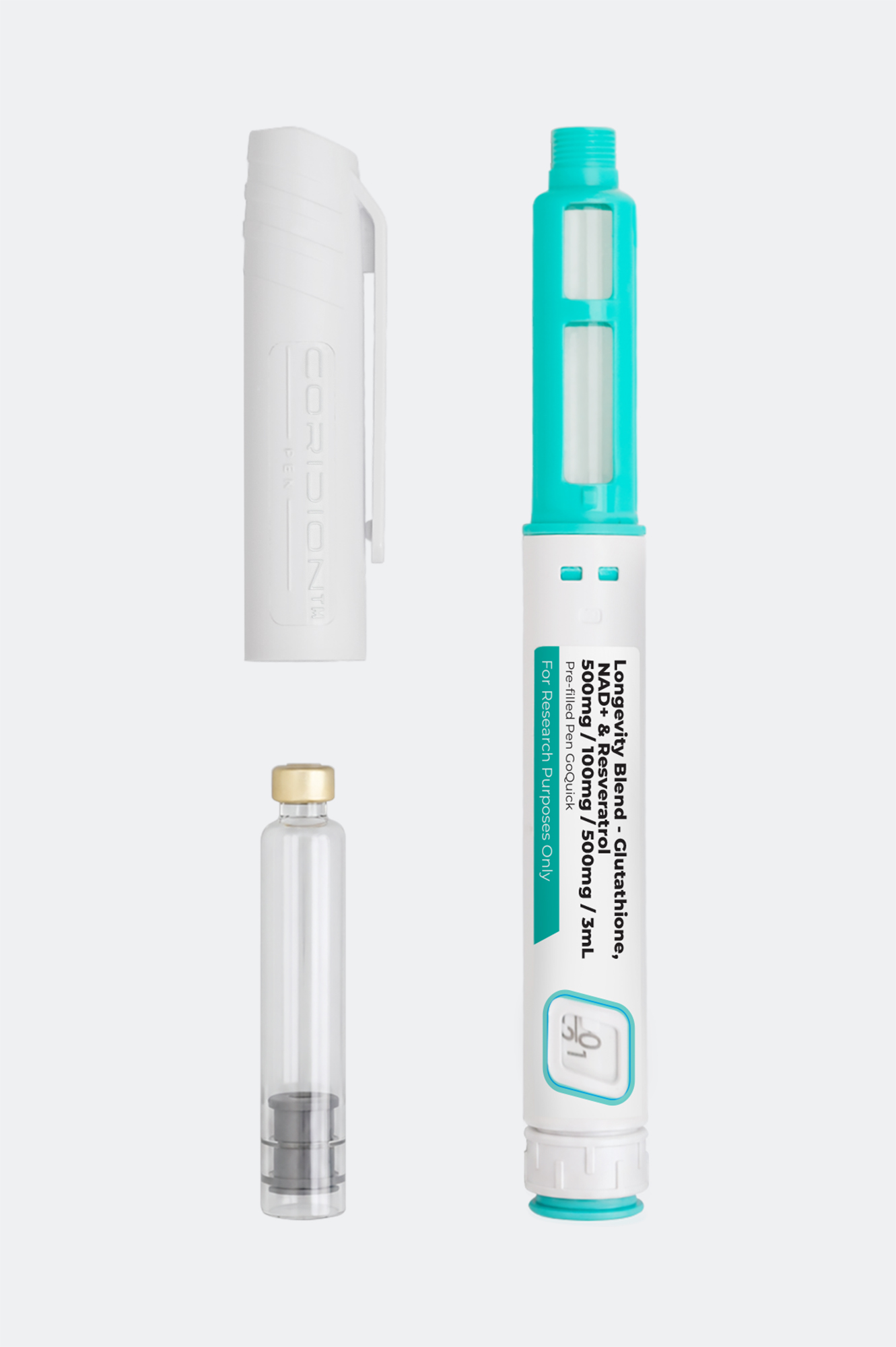
Longevity Blend (Glutathione / NAD+ / Resveratrol) – 500mg / 100mg / 500mg (3ml Pen)
Three pillars of cellular ageing research in one pen. Pairs antioxidant defence, NAD+ coenzyme power, and sirtuin-modulating activity. Research use only. Research use only.
£129.00
Blends
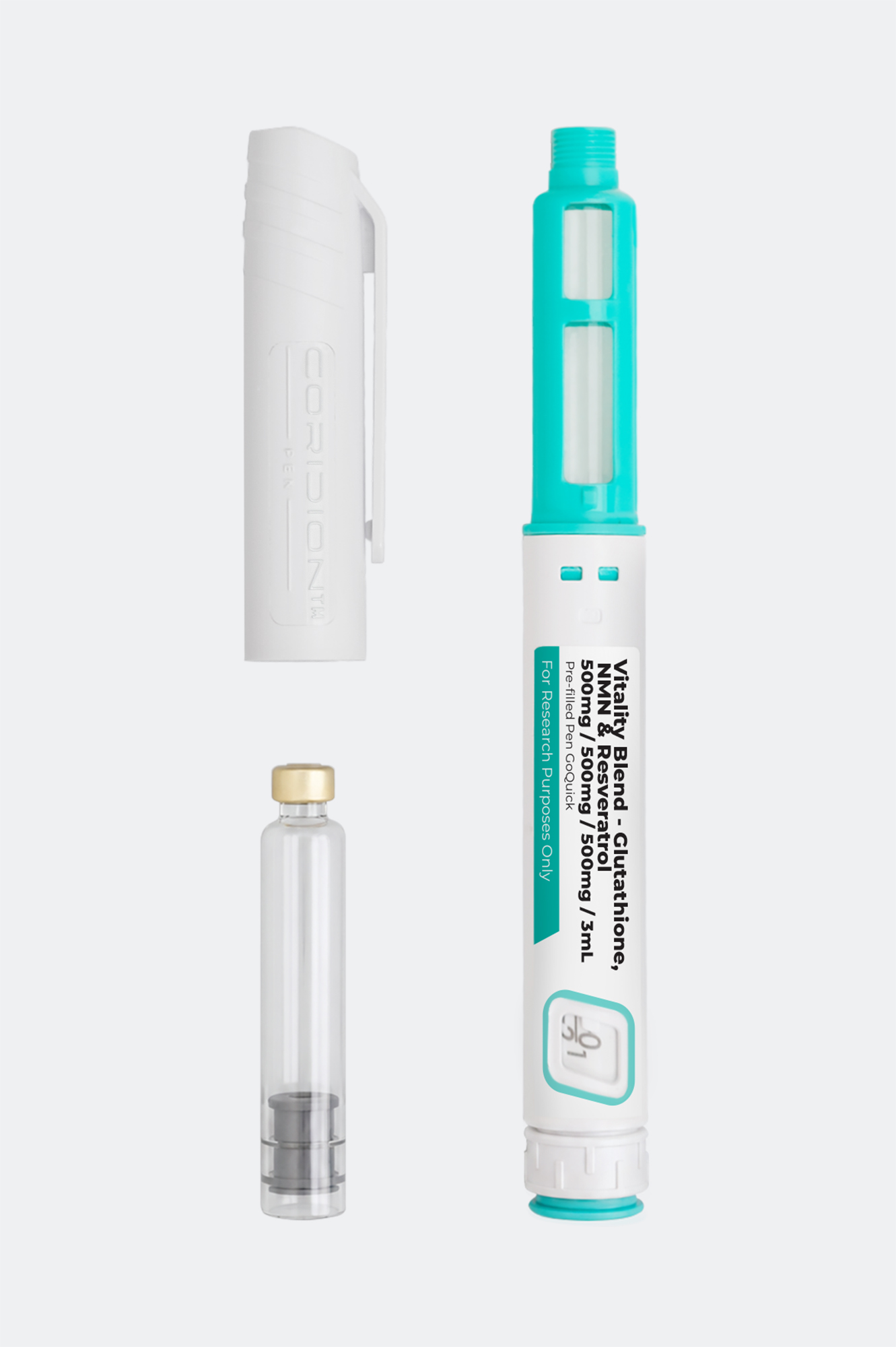
Vitality Blend (Glutathione / NMN / Resveratrol) – 500mg / 500mg / 500mg (3ml Pen)
The NAD+ precursor evolution. Swaps direct NAD+ for NMN — the biosynthetic precursor the cell uses via the salvage pathway. Research use only. Research use only.
£129.00
Blends

SS-31 + MOTS-c – 10mg / 10mg (3ml Pen)
Two mitochondrial compounds acting on different layers of the same biology — membrane structure and mitokine signalling. Research use only. Research use only.
£139.00
Blends

SS-31 + MOTS-c + NAD+ – 10mg / 10mg / 200mg (3ml Pen)
The flagship triple combination of mitochondrial research. SS-31, MOTS-c and NAD+ each act on a different layer of cellular energy biology — structure, signal. Research use only.
£159.00
Blends

KLOW Blend Peptide – BPC-157, TB-500, KPV & GHK-Cu (3ml Pen)
KLOW Blend Peptide combines BPC-157 10mg, TB-500 10mg, KPV 10mg and GHK-Cu 50mg in a four-component research formulation. The blend brings together compounds studied. Research use only.
£105.00
Blends

CJC-1295 (No DAC) + Ipamorelin + GHRP-2 – 3mg / 3mg / 3mg (3ml Pen)
A three-component preparation pairing a GHRH analogue with both a selective and a higher-potency ghrelin agonist. Research use only. Research use only.
£95.00
Blends
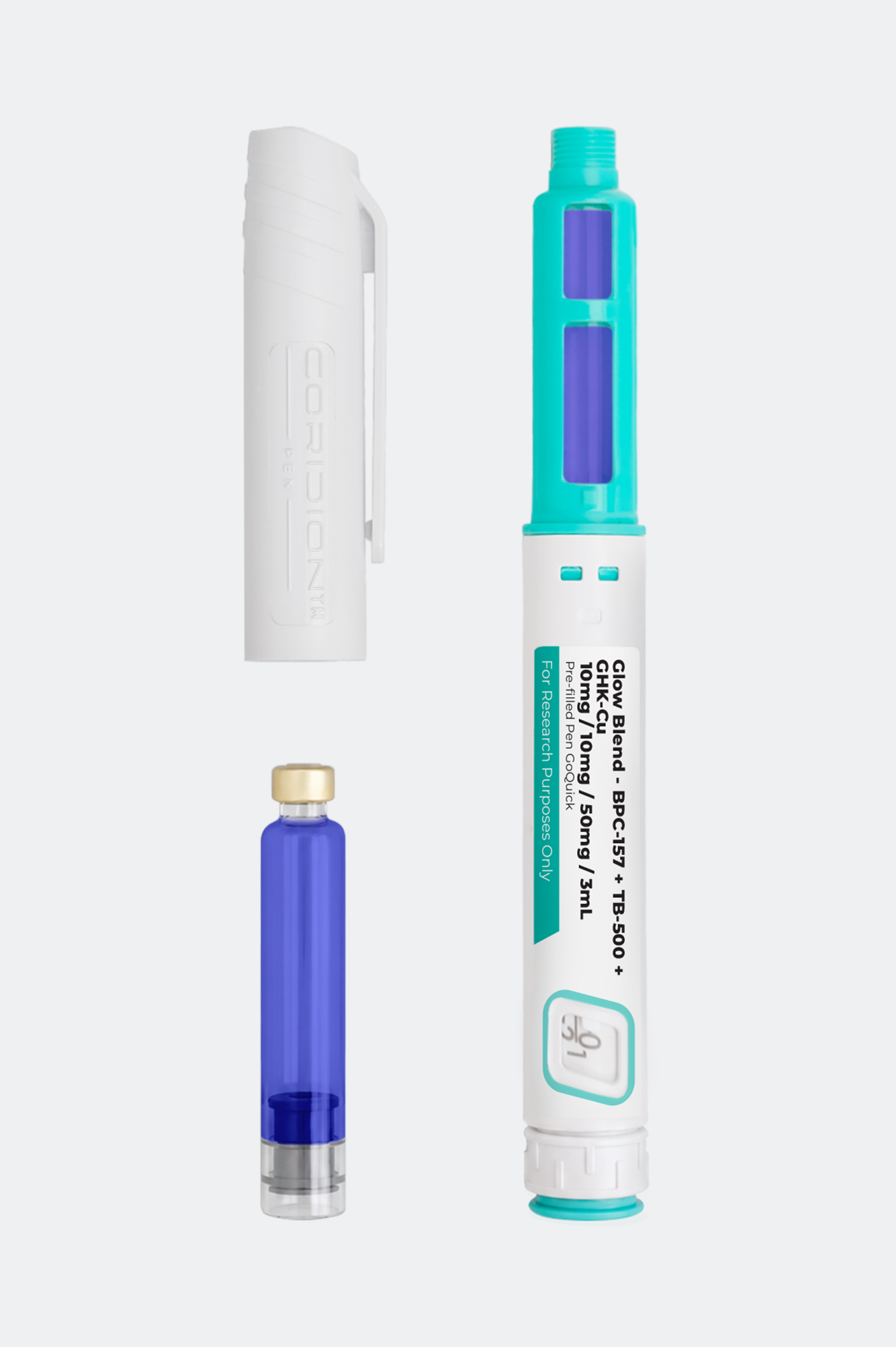
Glow Blend Peptide – BPC-157, TB-500 & GHK-Cu (3ml Pen)
Glow Blend Peptide combines GHK-Cu 50mg, BPC-157 10mg and TB-500 10mg in a three-component research formulation. Its ingredients have been investigated individually for extracellular. Research use only.
£95.00