HCG (Choriomon) – 5000IU (3ml Pen)
Human chorionic gonadotropin — a glycoprotein hormone with one of the longest and most formally documented research histories in endocrinology. Research use only.
Hormonal Axis
Gonadotropin Signalling
Reproductive Research
Description
HCG (Choriomon) 5000IU – Human Chorionic Gonadotropin Research
HCG (Choriomon) 5000IU is a human chorionic gonadotropin (hCG) preparation supplied in a 3ml pen format. Human chorionic gonadotropin is a naturally occurring glycoprotein hormone extensively studied for its role in reproductive endocrinology, gonadal function and hormonal regulation.
Produced primarily by placental trophoblast cells during pregnancy, hCG shares important structural and functional characteristics with luteinising hormone (LH). Both hormones activate the luteinising hormone/chorionic gonadotropin receptor (LHCGR), which regulates several aspects of reproductive physiology.
The extensive scientific literature surrounding hCG makes it particularly relevant to investigations involving steroid hormone production, reproductive signalling, gonadal cell function and endocrine regulation.
What Is Human Chorionic Gonadotropin (HCG)?
Human chorionic gonadotropin is a heterodimeric glycoprotein hormone consisting of two subunits: alpha and beta.
The alpha subunit is shared with other glycoprotein hormones, including luteinising hormone (LH), follicle-stimulating hormone (FSH) and thyroid-stimulating hormone (TSH). The beta subunit provides the distinctive molecular characteristics associated with hCG.
One important difference between hCG and native LH is their circulating half-life.
HCG has a more extensively glycosylated structure, contributing to its greater stability and longer persistence in circulation.
These characteristics have made hCG an important subject of research investigating reproductive hormone signalling and receptor activation.
HCG and Hormonal Regulation Research
HCG activates the LH/CG receptor, which is expressed in gonadal tissues and participates in the regulation of reproductive hormone production.
In male reproductive physiology, LH/CG receptor activation stimulates Leydig cells, influencing testosterone biosynthesis.
In female reproductive physiology, the receptor is involved in follicular maturation, ovulatory processes, luteal function and progesterone production.
Research involving hCG has contributed to understanding several biological mechanisms:
- Luteinising hormone receptor activation: Investigating how hCG interacts with LHCGR and stimulates downstream signalling.
- Testosterone biosynthesis: Examining steroid hormone production in Leydig cells.
- Ovarian function: Studying follicular maturation, ovulation and corpus luteum activity.
- Reproductive endocrinology: Understanding interactions between gonadotropins and gonadal tissues.
- Steroidogenesis: Investigating the enzymes and signalling pathways involved in steroid hormone synthesis.
- Placental biology: Exploring the physiological functions of hCG during pregnancy.
Although sex hormones contribute to aspects of muscle physiology and body composition, hCG should not be considered a proven muscle-building or athletic performance compound.
For a broader view of compounds investigated in endocrine and physiological performance pathways, explore Coridion Sciences’ growth and performance research collection.
Mechanism of Action: How Does HCG Work?
LH/CG Receptor Binding
HCG binds to the luteinising hormone/chorionic gonadotropin receptor, a G protein-coupled receptor involved in reproductive hormone regulation.
Receptor activation stimulates intracellular signalling pathways, particularly those associated with cyclic adenosine monophosphate (cAMP).
These pathways contribute to the regulation of steroidogenic enzyme activity and hormone biosynthesis.
Leydig Cell Steroidogenesis
Leydig cells in the testes express LH/CG receptors
Mechanisms of Action
HCG is a heterodimeric glycoprotein comprising an alpha subunit shared with LH, FSH and TSH, and a distinct beta subunit conferring receptor specificity. Research describes binding at the luteinising hormone/chorionic gonadotropin receptor, producing cAMP-mediated signalling in gonadal tissue with downstream effects on steroidogenesis. The extended half-life relative to native LH, attributed to greater glycosylation, is well documented. Studies also characterise its role as a pregnancy marker, which underpins its diagnostic applications.
Research Status & Findings
A mature and formally regulated literature spanning reproductive endocrinology, diagnostics and gonadal physiology, with extensive clinical trial and pharmacopoeial documentation.
Reproductive endocrinology
Extensive clinical research in ovulation induction and fertility protocols.
Gonadal signalling
Studies on Leydig and granulosa cell steroidogenesis via LH/CG receptor.
Diagnostic applications
Established use as a biomarker in pregnancy and oncology testing.
Structural biology
Characterisation of subunit assembly and glycosylation-dependent half-life.
Regulatory and anti-doping
A prescription medicine in most jurisdictions and listed by anti-doping authorities.
*For research purposes only – not for human consumption*

As Seen In The Press
Peptides can affect the way the body functions at a cellular level.

Our 3 Step System
Pre-filled Cartridges
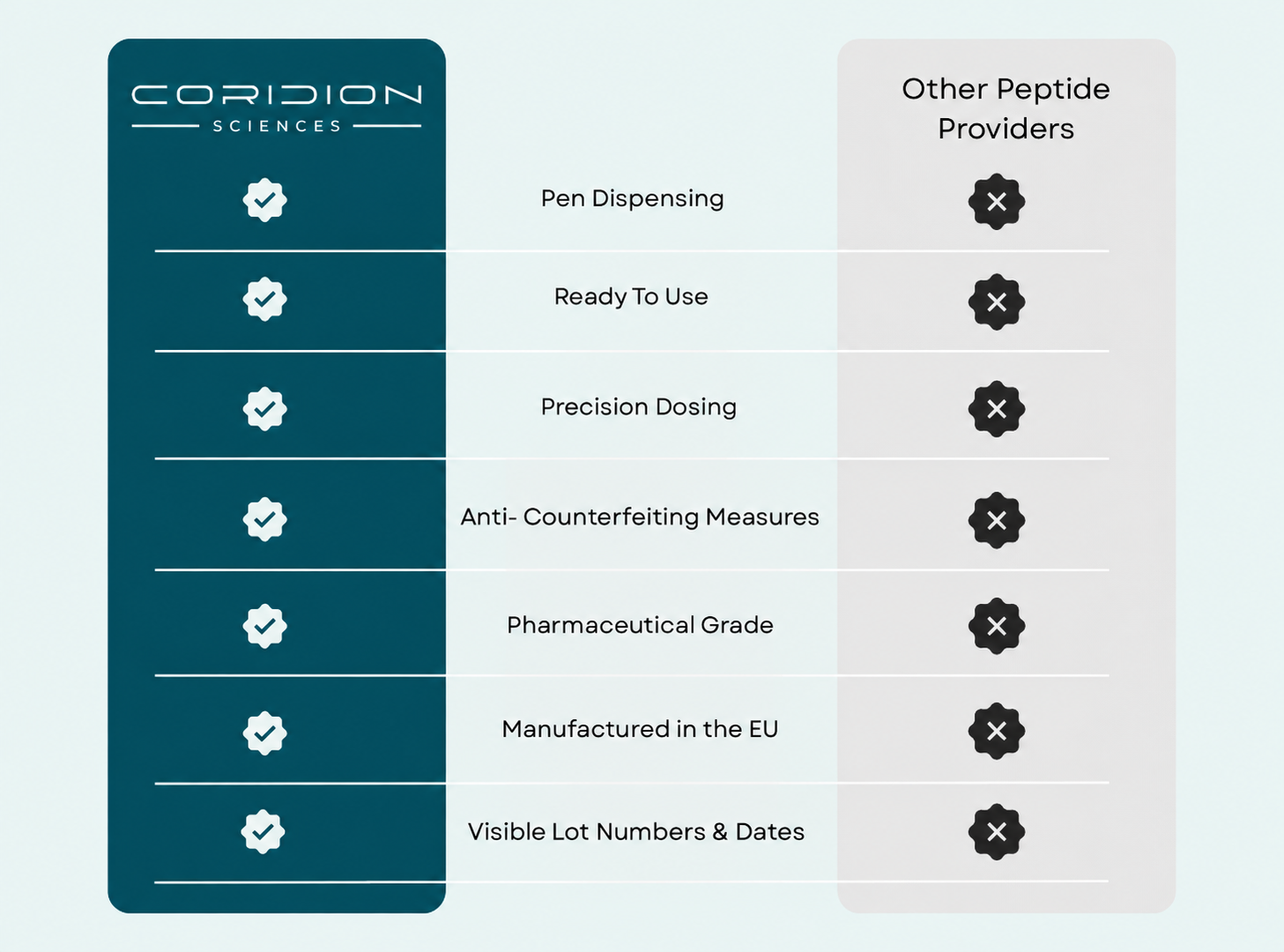
Engineered for absolute accuracy and ease. Our pre-blended pens make precise dosing completely seamless in just three quick steps.
Step 1 - Remove the Pre-mixed pen from the box
Step 2 - Secure the needle tip
Step 3 - Twist to set the required dose
Blends
Blends
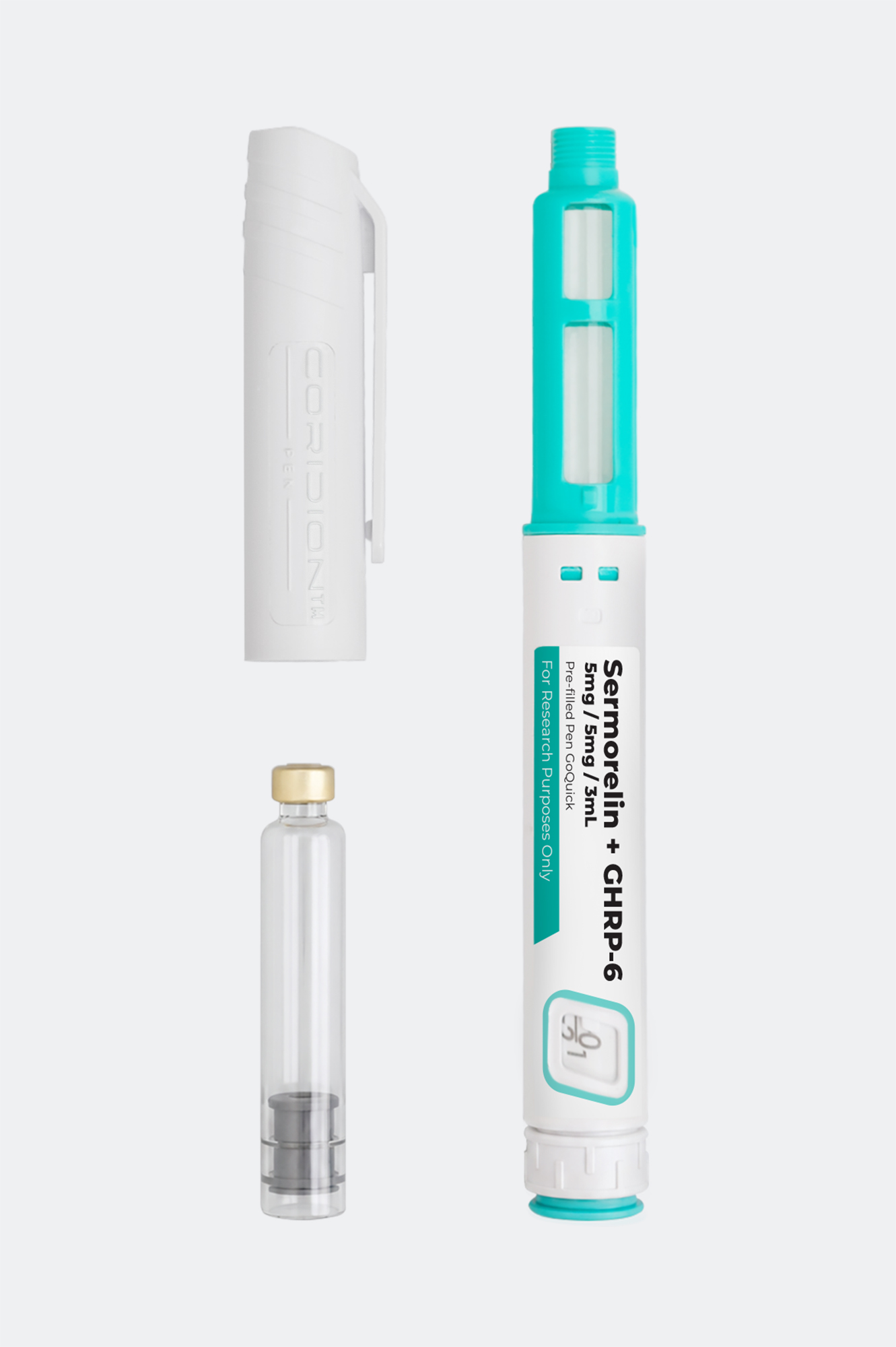
Sermorelin + GHRP-6 – 5mg / 5mg (3ml Pen)
Sermorelin + GHRP-6 5mg/5mg combines a 29-amino-acid GHRH analogue with a synthetic ghrelin receptor agonist. Investigated for complementary growth hormone signalling pathways, pituitary hormone. Research use only.
£95.00
Blends
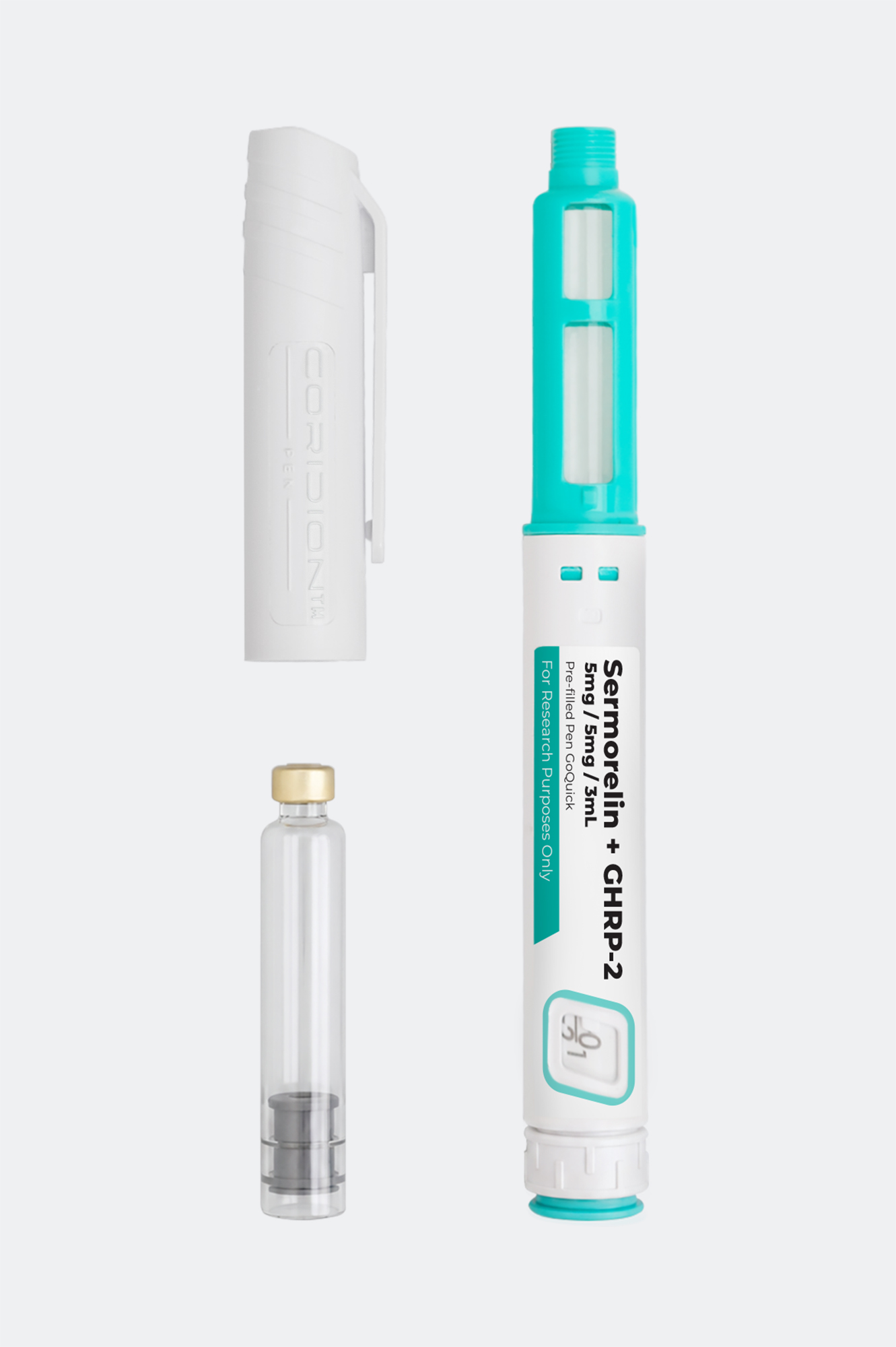
Sermorelin + GHRP-2 – 5mg / 5mg (3ml Pen)
Sermorelin + GHRP-2 5mg/5mg combines a 29-amino-acid GHRH analogue with a synthetic growth hormone secretagogue. Investigated for complementary pituitary signalling, ghrelin receptor activation and. Research use only.
£99.00
Blends
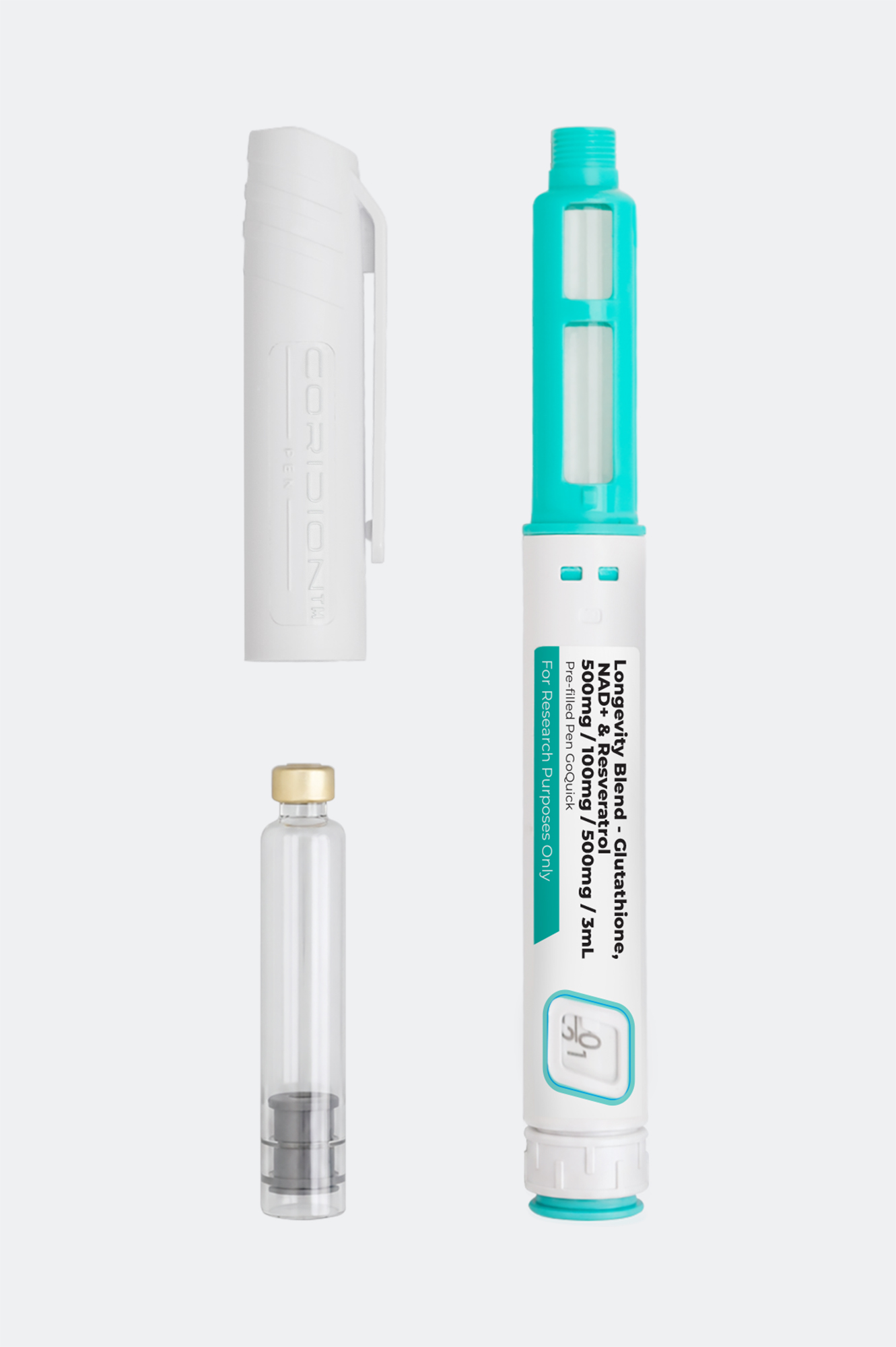
Longevity Blend (Glutathione / NAD+ / Resveratrol) – 500mg / 100mg / 500mg (3ml Pen)
Three pillars of cellular ageing research in one pen. Pairs antioxidant defence, NAD+ coenzyme power, and sirtuin-modulating activity. Research use only. Research use only.
£129.00
Blends
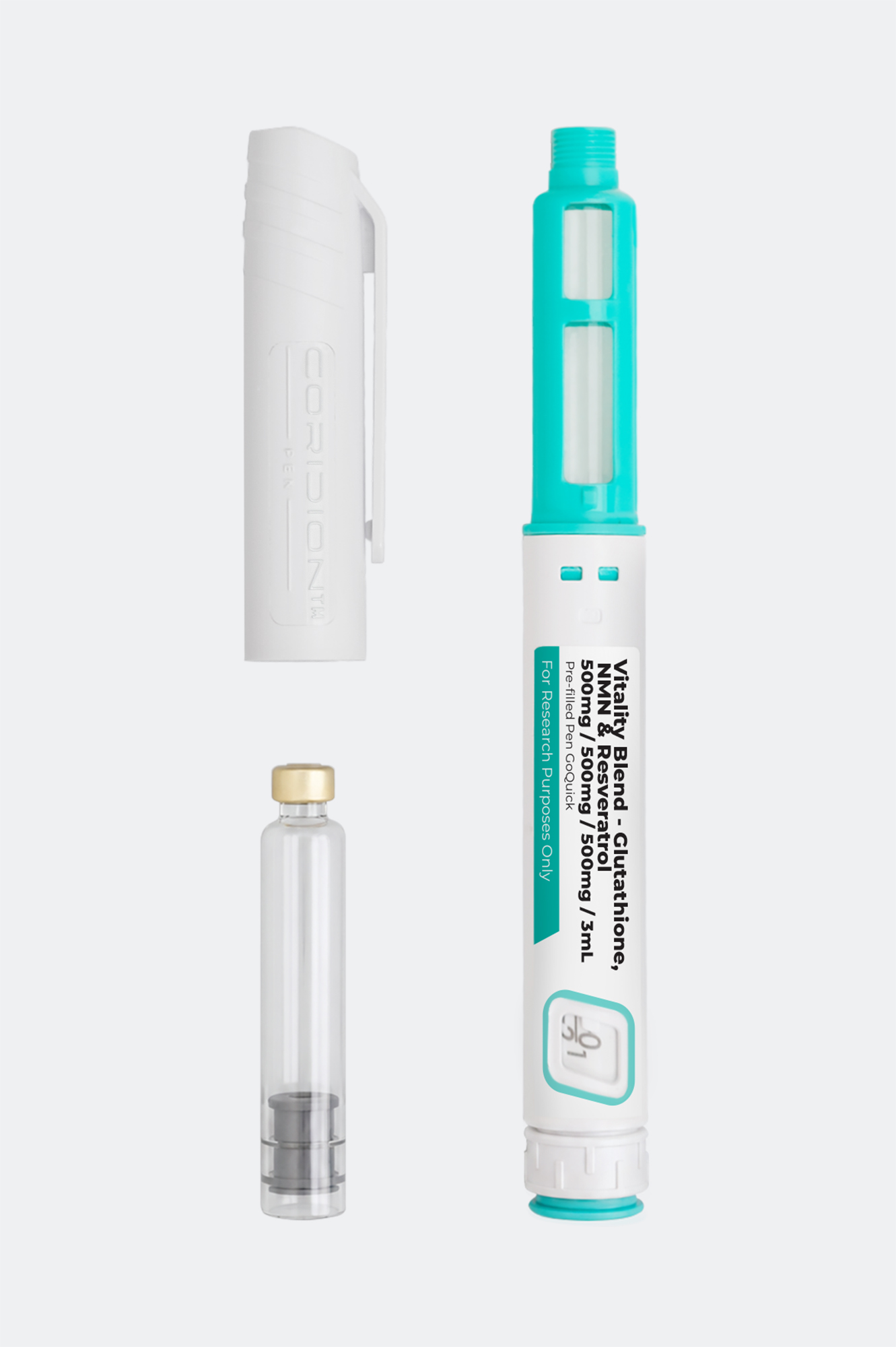
Vitality Blend (Glutathione / NMN / Resveratrol) – 500mg / 500mg / 500mg (3ml Pen)
The NAD+ precursor evolution. Swaps direct NAD+ for NMN — the biosynthetic precursor the cell uses via the salvage pathway. Research use only. Research use only.
£129.00
Blends

SS-31 + MOTS-c – 10mg / 10mg (3ml Pen)
Two mitochondrial compounds acting on different layers of the same biology — membrane structure and mitokine signalling. Research use only. Research use only.
£139.00
Blends

SS-31 + MOTS-c + NAD+ – 10mg / 10mg / 200mg (3ml Pen)
The flagship triple combination of mitochondrial research. SS-31, MOTS-c and NAD+ each act on a different layer of cellular energy biology — structure, signal. Research use only.
£159.00
Blends

KLOW Blend Peptide – BPC-157, TB-500, KPV & GHK-Cu (3ml Pen)
KLOW Blend Peptide combines BPC-157 10mg, TB-500 10mg, KPV 10mg and GHK-Cu 50mg in a four-component research formulation. The blend brings together compounds studied. Research use only.
£105.00
Blends

CJC-1295 (No DAC) + Ipamorelin + GHRP-2 – 3mg / 3mg / 3mg (3ml Pen)
A three-component preparation pairing a GHRH analogue with both a selective and a higher-potency ghrelin agonist. Research use only. Research use only.
£95.00
Blends
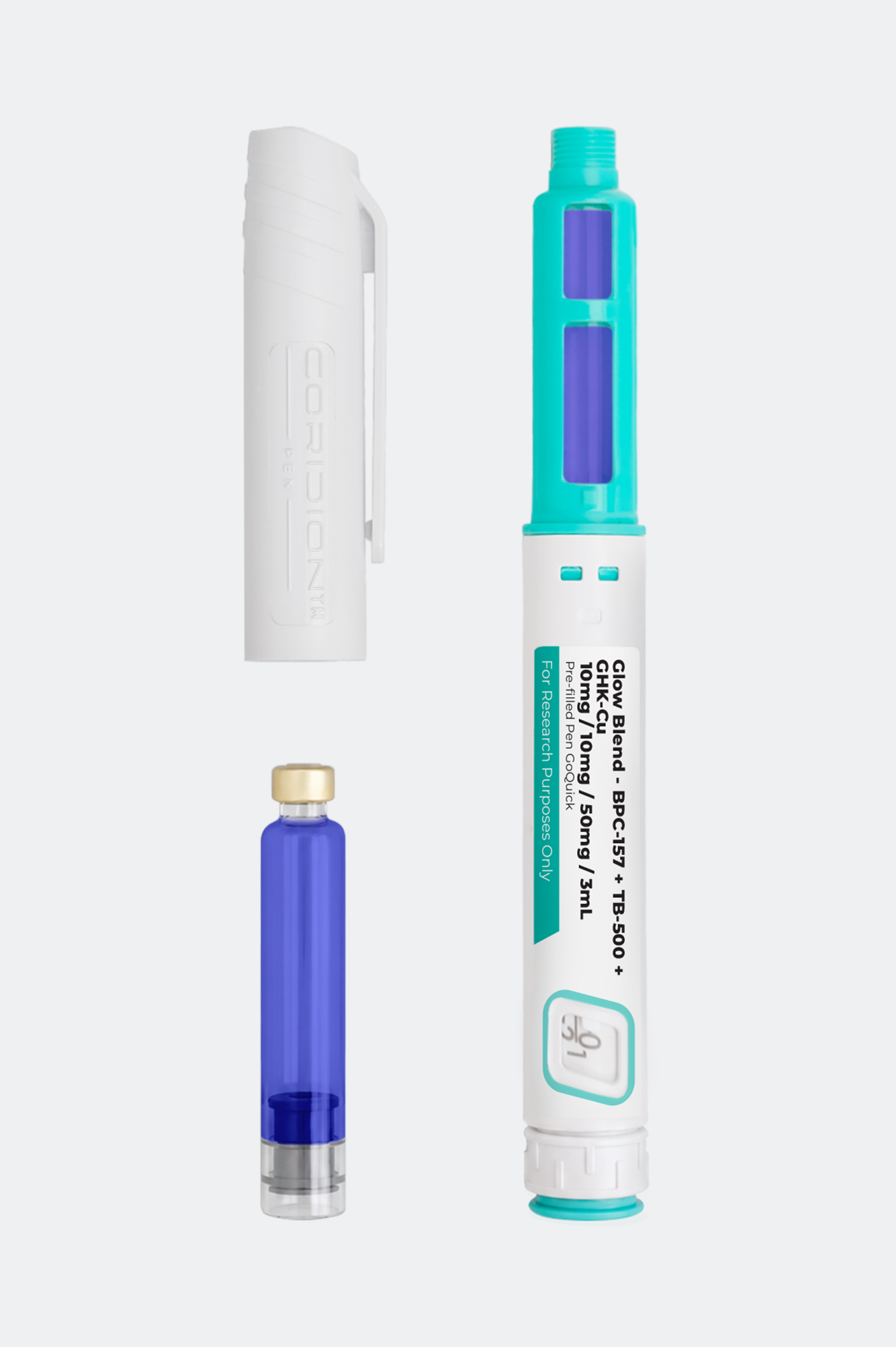
Glow Blend Peptide – BPC-157, TB-500 & GHK-Cu (3ml Pen)
Glow Blend Peptide combines GHK-Cu 50mg, BPC-157 10mg and TB-500 10mg in a three-component research formulation. Its ingredients have been investigated individually for extracellular. Research use only.
£95.00