Oxytocin Acetate 10mg (3ml Pen) – Neuropeptide and Social Cognition Research
One of the most studied neuropeptides in existence, with parallel literatures in obstetrics and social neuroscience. Research use only.
Neuromodulation
Hormonal Axis
Social Cognition
Description
Oxytocin Acetate is a synthetic preparation of oxytocin, a naturally occurring nine-amino-acid peptide hormone involved in reproductive physiology, neurological signalling and neuroendocrine regulation.
Oxytocin is produced primarily in the hypothalamus and released into the bloodstream through the posterior pituitary. It is also involved in signalling within the central nervous system, where researchers have investigated its relationship with social behaviour, emotional processing and responses to interpersonal stimuli.
Unlike many experimental cognitive peptides, oxytocin has an extensive scientific history spanning reproductive medicine, receptor pharmacology and human social neuroscience.
Oxytocin Acetate 10mg is supplied in a 3ml pen format by Coridion Sciences for scientific research.
What Is Oxytocin Acetate?
Oxytocin is a naturally occurring cyclic nonapeptide containing nine amino acids and an intramolecular disulfide bond.
Its structure is closely related to vasopressin, another peptide hormone involved in physiological regulation.
Oxytocin Acetate refers to oxytocin supplied in an acetate-associated form. The acetate designation does not, by itself, establish a different receptor mechanism or enhanced neurological activity.
Oxytocin signalling is involved in several established physiological processes, particularly uterine smooth muscle contraction and milk ejection.
Beyond these functions, researchers have investigated how oxytocin influences neural circuits associated with social interaction, emotional responses and behavioural regulation.
Oxytocin and Cognitive Function Research
Oxytocin has attracted considerable interest in neuroscience because of its involvement in social and emotional processing.
Studies have examined how oxytocin-related signalling influences the interpretation of social information and responses to emotionally relevant stimuli.
Major research areas include:
- Social cognition: Investigating the interpretation and processing of interpersonal information.
- Emotion recognition: Examining responses to facial expressions and emotional signals.
- Social reward processing: Studying neural activity associated with rewarding social experiences.
- Amygdala signalling: Exploring how oxytocin influences brain regions involved in emotional salience.
- Stress-related responses: Investigating interactions between oxytocin signalling and physiological stress systems.
- Neuroendocrine communication: Understanding the relationship between peptide hormones and central nervous system activity.
Although some human studies have reported changes in social cognition following oxytocin administration, results have been inconsistent.
Its effects may vary according to the experimental setting, individual characteristics and the type of social information being studied.
Oxytocin should therefore not be described as a proven memory enhancer, cognitive stimulant or treatment for social difficulties.
Researchers exploring related areas can browse our collection of neuropeptides for cognitive function and neuroscience research, featuring compounds investigated for neuronal signalling, stress-associated pathways and brain physiology.
How Does Oxytocin Work?
Oxytocin Receptor Activation
Oxytocin primarily acts through the oxytocin receptor (OXTR), a G protein-coupled receptor found in several peripheral tissues and regions of the nervous system.
Receptor activation is commonly associated with Gq/11-mediated intracellular signalling.
This stimulates phospholipase C activity and downstream mechanisms involving calcium mobilisation.
The resulting cellular responses depend on receptor location, tissue type and physiological conditions.
Reproductive Hormone Signalling
Oxytocin has well-established physiological functions in reproductive biology.
In uterine smooth muscle, oxytocin receptor activation promotes contractions through calcium-dependent mechanisms.
In mammary tissue, oxytocin stimulates myoepithelial cell contraction, contributing to milk ejection during lactation.
These established mechanisms underpin the clinical use of authorised oxytocin medicines in specific obstetric settings.
Central Nervous System Signalling
Oxytocin is also involved in neurological signalling through pathways associated with the hypothalamus and other brain regions.
Research has examined its influence on networks involving the amygdala, prefrontal cortex and reward-associated structures.
These investigations contribute to understanding the biological mechanisms associated with social and emotional processing.
However, an association with these neural circuits does not mean that oxytocin consistently increases empathy, trust or positive social behaviour.
Oxytocin and Vasopressin Receptors
Oxytocin and vasopressin are structurally related peptide hormones.
At certain concentrations, interactions with related receptor systems may occur.
Research into receptor selectivity helps clarify the differences between oxytocin-mediated signalling and vasopressin-related physiological responses.
Scientific Research Applications
1. Social Cognition and Emotional Processing
Oxytocin has been investigated in human studies examining emotion recognition, interpersonal trust and social interaction.
A 2025 systematic review evaluated research involving exogenous oxytocin and reported variable effects depending on experimental conditions and individual characteristics.
These findings demonstrate the complexity of oxytocin’s neurological activity rather than establishing a universal enhancement effect.
2. Social Reward Research
Researchers have investigated oxytocin’s involvement in the neural processing of social rewards.
Studies have examined changes in brain activity and behavioural responses associated with rewarding interpersonal experiences.
A systematic review identified mixed findings across human studies, with outcomes influenced by the type and timing of social reward processing.
3. Neuroendocrine and Stress Research
Oxytocin signalling interacts with broader neuroendocrine systems involved in physiological stress responses.
Experimental studies have investigated its relationship with hypothalamic-pituitary-adrenal signalling and emotional regulation.
Results remain context-dependent and do not establish oxytocin as an effective general treatment for anxiety or stress-related disorders.
4. Reproductive Physiology
Oxytocin has an extensive clinical and scientific history involving uterine contraction, childbirth and lactation.
These functions are supported by a substantially stronger evidence base than many proposed social or cognitive applications.
For related research involving reproductive endocrine regulation, explore our Hormone Vitality research collection.
5. Receptor Pharmacology
Oxytocin is an important research compound for investigating G protein-coupled receptor activity, intracellular calcium signalling and receptor selectivity.
Its structural relationship with vasopressin makes it particularly relevant to comparative peptide receptor research.
6. Neurological Research Methodology
One important area of oxytocin research concerns the interpretation of experimental findings.
Researchers continue to investigate how administration route, peripheral signalling and central nervous system exposure influence observed biological and behavioural responses.
These questions are especially relevant when interpreting studies involving externally administered oxytocin.
Oxytocin Compared with Other Neuropeptides
Oxytocin differs from many compounds commonly grouped under cognitive function research.
Oxytocin Acetate
A synthetic preparation of a naturally occurring peptide hormone, with established reproductive functions and a substantial research literature involving social and emotional processing.
A synthetic tuftsin-related peptide investigated for stress-associated signalling, neuroimmune interactions and neurotransmitter-related mechanisms.
An ACTH-derived synthetic peptide associated with research into neurotrophic signalling and neurological responses.
A reproductive neuropeptide investigated for KISS1R activation, GnRH signalling and hypothalamic regulation.
These compounds have different molecular structures and receptor mechanisms. Their scientific findings should not be treated as interchangeable.
Oxytocin Acetate 10mg Product Specifications
- Product: Oxytocin Acetate
- Quantity: 10mg
- Format: 3ml pen
- Classification: Synthetic peptide hormone
- Peptide structure: Cyclic nonapeptide
- Primary receptor: Oxytocin receptor (OXTR)
- Principal signalling: G protein-coupled receptor activation and calcium-mediated signalling
- Primary research focus: Neuroendocrine regulation and oxytocin receptor pharmacology
- Additional research areas: Social cognition, emotional processing, reproductive physiology and neurological signalling
- Research evidence: Extensive physiological and human research, with mixed findings concerning cognitive and behavioural effects
Oxytocin Research at Coridion Sciences
Coridion Sciences provides specialist research peptides and formulations for scientific investigation across neuroscience, endocrine regulation and cellular biology.
Oxytocin Acetate 10mg is listed in a 3ml pen format within the company’s research peptide catalogue.
Research and Regulatory Information: Oxytocin is a pharmacologically active hormone with established regulated medical uses. Those approvals do not automatically apply to this particular formulation. The product must not be represented as an approved cognitive enhancer, psychological treatment or substitute for authorised medical products. Its regulatory status and formulation-specific safety information require independent verification.
Mechanisms of Action
Oxytocin is a nonapeptide synthesised in the hypothalamus and released from the posterior pituitary. Research describes signalling at the oxytocin receptor, a G-protein coupled receptor, with well-characterised peripheral effects on uterine smooth muscle contraction and milk ejection. Central effects are described as involving amygdala, striatal and hypothalamic circuits with modulation of social salience processing. The literature extensively debates central bioavailability following peripheral administration, which remains a significant methodological question and a recognised confounder in interpreting the behavioural literature.
Research Status & Findings
A very large literature with a mature clinical obstetric component and a much more contested social neuroscience component, where replication problems have been widely documented.
Obstetric research
Extensive formal clinical documentation in uterine and lactation contexts.
Social neuroscience
Large body of work on trust, affiliation and social salience processing.
Replication debate
Documented failures to replicate several prominent behavioural findings.
Bioavailability
Ongoing methodological research on central penetration after peripheral administration.
Receptor pharmacology
Characterisation of OXTR signalling and cross-reactivity with vasopressin receptors.
*For research purposes only – not for human consumption*

As Seen In The Press
Peptides can affect the way the body functions at a cellular level.

Our 3 Step System
Pre-filled Cartridges
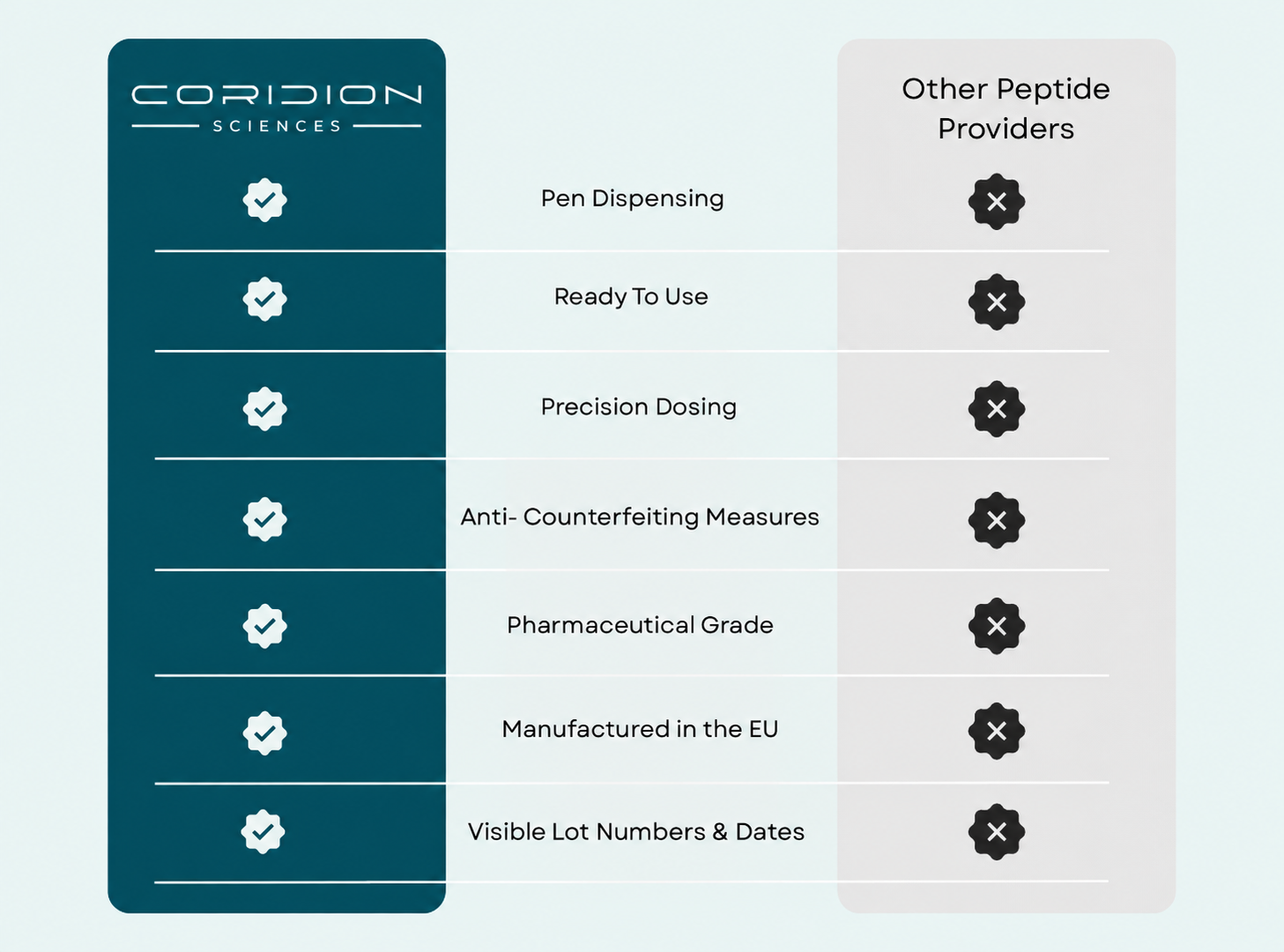
Engineered for absolute accuracy and ease. Our pre-blended pens make precise dosing completely seamless in just three quick steps.
Step 1 - Remove the Pre-mixed pen from the box
Step 2 - Secure the needle tip
Step 3 - Twist to set the required dose
Blends
Blends

Sermorelin + GHRP-6 – 5mg / 5mg (3ml Pen)
Sermorelin + GHRP-6 5mg/5mg combines a 29-amino-acid GHRH analogue with a synthetic ghrelin receptor agonist. Investigated for complementary growth hormone signalling pathways, pituitary hormone. Research use only.
£95.00
Blends

Sermorelin + GHRP-2 – 5mg / 5mg (3ml Pen)
Sermorelin + GHRP-2 5mg/5mg combines a 29-amino-acid GHRH analogue with a synthetic growth hormone secretagogue. Investigated for complementary pituitary signalling, ghrelin receptor activation and. Research use only.
£99.00
Blends
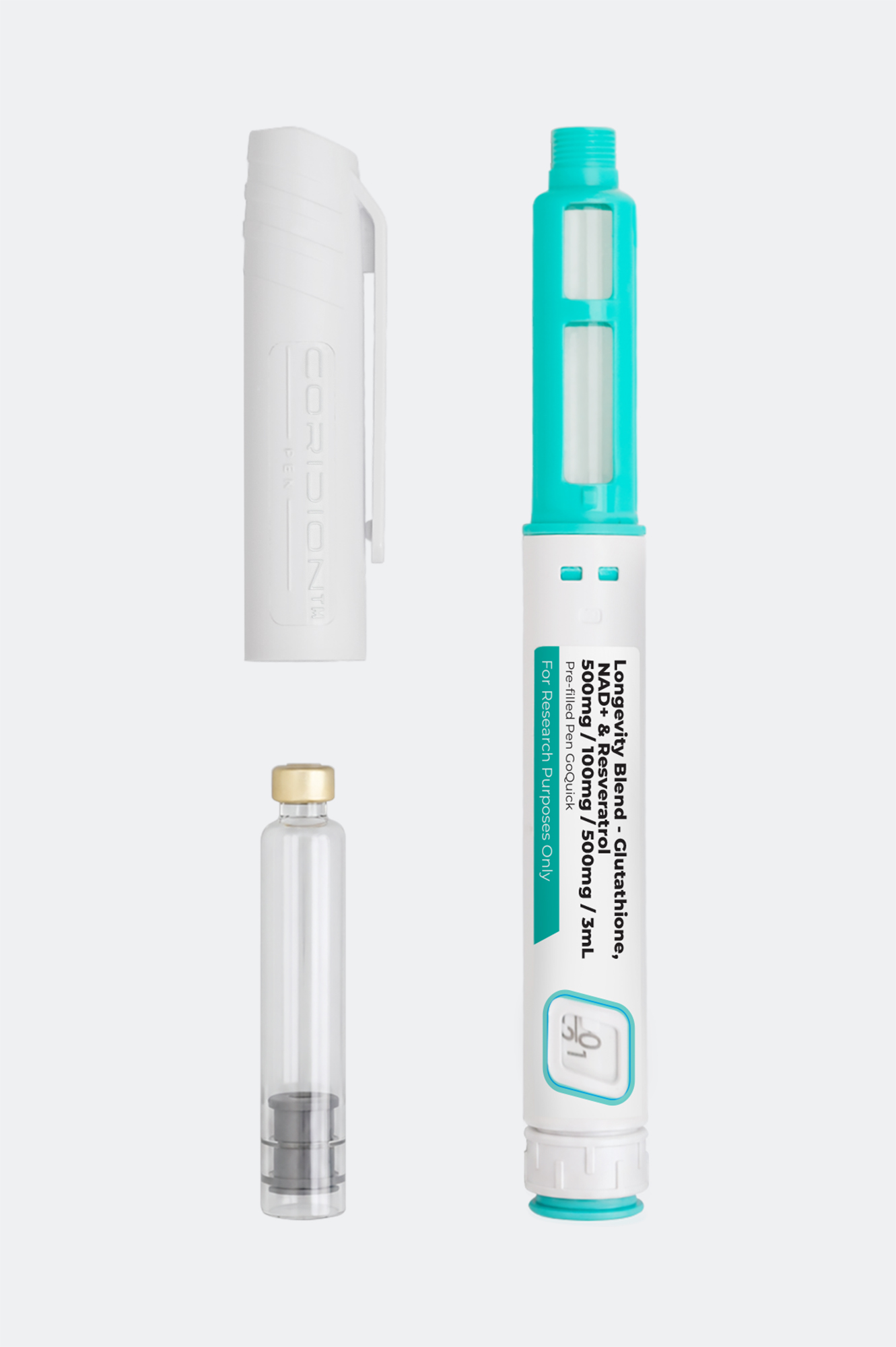
Longevity Blend (Glutathione / NAD+ / Resveratrol) – 500mg / 100mg / 500mg (3ml Pen)
Three pillars of cellular ageing research in one pen. Pairs antioxidant defence, NAD+ coenzyme power, and sirtuin-modulating activity. Research use only. Research use only.
£129.00
Blends

Vitality Blend (Glutathione / NMN / Resveratrol) – 500mg / 500mg / 500mg (3ml Pen)
The NAD+ precursor evolution. Swaps direct NAD+ for NMN — the biosynthetic precursor the cell uses via the salvage pathway. Research use only. Research use only.
£129.00
Blends

SS-31 + MOTS-c – 10mg / 10mg (3ml Pen)
Two mitochondrial compounds acting on different layers of the same biology — membrane structure and mitokine signalling. Research use only. Research use only.
£139.00
Blends

SS-31 + MOTS-c + NAD+ – 10mg / 10mg / 200mg (3ml Pen)
The flagship triple combination of mitochondrial research. SS-31, MOTS-c and NAD+ each act on a different layer of cellular energy biology — structure, signal. Research use only.
£159.00
Blends

KLOW Blend Peptide – BPC-157, TB-500, KPV & GHK-Cu (3ml Pen)
KLOW Blend Peptide combines BPC-157 10mg, TB-500 10mg, KPV 10mg and GHK-Cu 50mg in a four-component research formulation. The blend brings together compounds studied. Research use only.
£105.00
Blends

CJC-1295 (No DAC) + Ipamorelin + GHRP-2 – 3mg / 3mg / 3mg (3ml Pen)
A three-component preparation pairing a GHRH analogue with both a selective and a higher-potency ghrelin agonist. Research use only. Research use only.
£95.00
Blends
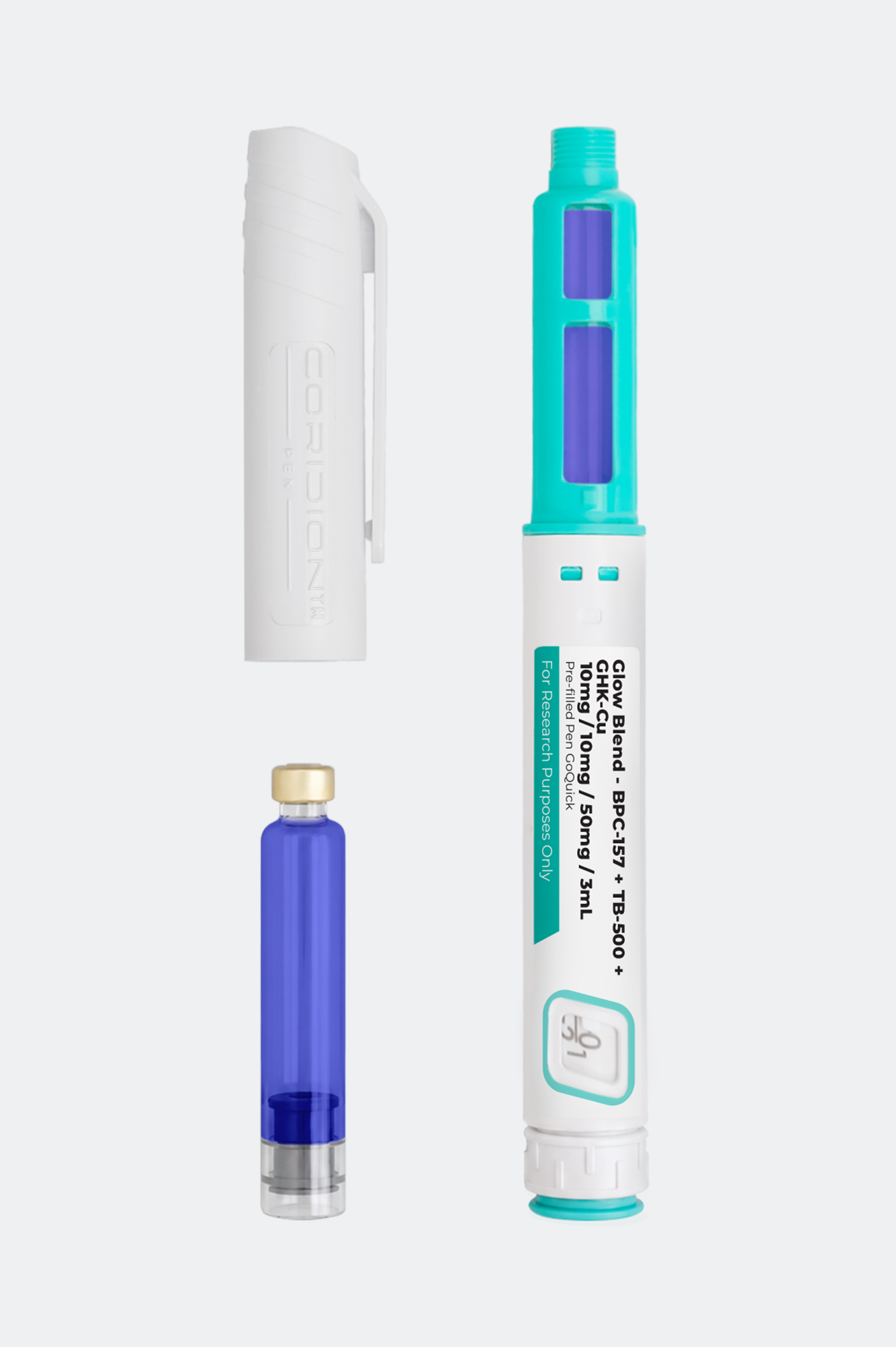
Glow Blend Peptide – BPC-157, TB-500 & GHK-Cu (3ml Pen)
Glow Blend Peptide combines GHK-Cu 50mg, BPC-157 10mg and TB-500 10mg in a three-component research formulation. Its ingredients have been investigated individually for extracellular. Research use only.
£95.00