Selank 10mg (3ml Pen) – Neuropeptide for Cognitive and Stress Research
A synthetic tuftsin analogue developed in Russian neuropharmacology, studied at the intersection of anxiolytic and immune signalling. Research use only.
Mood & Stress Axis
Neuromodulation
Cognitive Function
Description
Selank is a synthetic heptapeptide developed from the naturally occurring immunomodulatory peptide tuftsin. It has been investigated for its interactions with neurotransmitter signalling, stress-associated biological pathways and neuroimmune regulation.
Developed through Russian neuropharmacological research, Selank has a published scientific history spanning experimental neuroscience, molecular pharmacology and limited human clinical investigations.
Unlike many newer experimental cognitive peptides, Selank has been examined in both laboratory models and human research. However, much of the literature originates from a relatively small group of institutions, and independent international replication remains limited.
Selank 10mg is supplied in a 3ml pen format by Coridion Sciences for scientific and laboratory investigation.
What Is Selank?
Selank is a seven-amino-acid synthetic peptide derived from tuftsin, a naturally occurring tetrapeptide associated with immune system regulation.
The amino-acid sequence of Selank is:
Thr-Lys-Pro-Arg-Pro-Gly-Pro (TKPRPGP)
Its structure consists of the tuftsin sequence, Thr-Lys-Pro-Arg, extended at the C-terminus by the tripeptide Pro-Gly-Pro.
This extension distinguishes Selank from the parent immunopeptide and has been investigated in relation to peptide degradation and biological activity.
The compound’s origins in immunological research are particularly interesting because subsequent investigations expanded into neurological signalling and stress-related biological mechanisms.
Selank and Cognitive Function Research
Research into cognitive function involves several interconnected biological processes, including neurotransmitter regulation, neuronal communication, stress responses and neuroimmune interactions.
Selank has been investigated for its possible influence on selected pathways associated with these mechanisms.
Areas of scientific interest include:
- GABAergic signalling: Investigating interactions between Selank and gamma-aminobutyric acid receptor systems.
- Stress-related neuroscience: Examining biological mechanisms associated with physiological and behavioural stress responses.
- Neurotransmitter regulation: Exploring gene expression and signalling associated with monoamine metabolism.
- Neuroimmune interactions: Studying relationships between peptide activity and immune-associated pathways.
- Neurotrophic signalling: Investigating experimental changes in factors associated with neuronal maintenance.
- Peptide metabolism: Understanding how the Selank sequence influences enzymatic degradation.
Although Selank has been associated with cognitive and stress-related research, clinical evidence does not establish that it reliably improves memory, concentration or general cognitive performance in humans.
Researchers exploring related compounds can browse our collection of neuropeptides for cognitive function research, including peptides investigated for neurological signalling, neuroplasticity and cellular processes associated with brain physiology.
How Does Selank Work?
GABA Receptor Modulation
Gamma-aminobutyric acid (GABA) is the principal inhibitory neurotransmitter in the mature central nervous system.
GABA receptors play an important role in regulating neuronal excitability and maintaining the balance between excitatory and inhibitory activity.
Research involving Selank has investigated its influence on GABA receptor interactions.
A 2018 experimental study reported that Selank altered radiolabelled GABA binding in rat brain membrane preparations, with findings consistent with concentration-dependent allosteric modulation.
The researchers proposed that this interaction might contribute to Selank’s stress-related biological effects.
However, receptor-binding findings do not establish therapeutic effectiveness or a fully characterised receptor mechanism in humans.
Monoamine-Related Signalling
Monoamines, including serotonin, dopamine and noradrenaline, participate in several neurological processes associated with mood, motivation and behavioural regulation.
Experimental studies involving Selank have examined changes in the expression of genes associated with neurotransmitter systems.
These findings provide insight into potential interactions between peptide signalling and neurochemical regulation.
However, gene-expression changes do not necessarily establish corresponding changes in neurotransmitter concentrations or human behavioural outcomes.
Neuroimmune Regulation
Selank’s relationship with tuftsin has prompted research into possible interactions between neurological and immune pathways.
Tuftsin is associated with immunological activity, particularly interactions involving phagocytic immune cells.
Experimental studies involving Selank have examined selected immune markers and gene-expression responses.
These investigations help clarify the peptide’s broader research profile, but do not establish that Selank improves immune function or treats inflammatory conditions.
Neuropeptide Degradation
Peptides are susceptible to enzymatic degradation, which can influence their persistence and biological activity.
The Pro-Gly-Pro extension of Selank has been investigated in relation to the stability and metabolism of tuftsin-related peptide sequences.
Specific claims about extended circulating half-life or enhanced brain penetration require compound- and formulation-specific pharmacokinetic evidence.
Selank and Stress-Associated Research
One of Selank’s most extensively investigated research areas concerns stress-related neurological and behavioural responses.
Russian clinical research programmes have examined Selank in populations with anxiety-related diagnoses, including comparisons with established medications.
Some studies reported favourable outcomes on selected anxiety-related measurements.
However, the available human research has several limitations:
- Small study populations and relatively short investigation periods.
- Limited reporting of blinding and randomisation methods in some publications.
- Few independently replicated placebo-controlled studies.
- Limited information concerning long-term clinical safety.
- Differences between the formulations and administration methods studied.
Consequently, Selank’s research history should not be interpreted as establishing effectiveness or safety for treating anxiety disorders in the UK.
Scientific Research Applications
1. GABAergic Receptor Research
Selank has been investigated for its influence on GABA receptor binding and related neurological signalling.
Research in this area contributes to understanding interactions between synthetic neuropeptides and inhibitory neurotransmitter systems.
2. Stress-Related Neuroscience
Experimental and limited clinical studies have examined Selank in relation to stress-associated responses.
These investigations provide a basis for understanding its research history while highlighting the need for stronger independent clinical trials.
3. Neuroimmune Communication
The relationship between Selank and tuftsin makes it relevant to investigations examining the interaction between immune-associated peptides and neurological signalling.
4. Gene Expression and Neuronal Regulation
Laboratory studies have examined Selank-associated changes in gene expression involving neurotransmitter-related pathways.
Such research helps generate hypotheses about peptide activity but does not establish specific clinical effects.
5. Comparative Neuropeptide Pharmacology
Selank is particularly useful for comparing the scientific characteristics of tuftsin-related peptides with other synthetic neuropeptides.
Researchers can examine differences in peptide sequence, molecular modifications, signalling pathways and the strength of available evidence.
Selank Compared with Related Cognitive Research Peptides
Selank – The Standard Heptapeptide
Selank has the sequence TKPRPGP and a published history of experimental and limited human research involving GABA-related signalling and stress-associated mechanisms.
N-Acetyl Selank Amidate – A Modified Analogue
N-Acetyl Selank Amidate incorporates terminal chemical modifications into the parent Selank sequence.
These modifications are relevant to peptide stability research, but they do not establish superior potency or clinical effectiveness.
The modified analogue also has substantially less direct published research than standard Selank.
Semax – A Different Neuropeptide Family
Semax is a synthetic ACTH-derived peptide investigated for neurotrophic signalling and neurological research.
Although Semax and Selank emerged from related Russian research programmes, their amino-acid sequences, biological origins and proposed mechanisms are different.
N-Acetyl Semax Amidate – Modified Semax Research
N-Acetyl Semax Amidate is a terminally modified form of Semax investigated in the broader context of peptide chemistry and molecular structure.
Its scientific evidence should be distinguished from research involving standard Semax.
Selank 10mg Product Specifications
- Product: Selank
- Quantity: 10mg
- Format: 3ml pen
- Classification: Synthetic tuftsin-derived heptapeptide
- Amino-acid sequence: TKPRPGP
- Peptide length: 7 amino acids
- Primary research focus: GABA-related signalling and stress-associated neuroscience
- Additional research areas: Neuroimmune regulation, neurotransmitter-associated gene expression and peptide metabolism
- Evidence status: Preclinical and limited human research, with restricted independent replication
Selank Research at Coridion Sciences
Coridion Sciences provides specialist research peptides and experimental formulations covering cognitive function, neurological signalling and cellular physiology.
The company’s Cognitive Function collection includes standard and modified neuropeptides investigated across different areas of experimental neuroscience.
Selank 10mg is supplied in a 3ml pen format for scientific and laboratory research.
Research Use Only: This product is intended exclusively for laboratory investigation. It is not approved for human consumption, anxiety treatment, cognitive enhancement or other therapeutic applications in the UK. Its formulation-specific clinical safety and efficacy have not been established.
Mechanisms of Action
Selank is a synthetic heptapeptide comprising the tuftsin sequence with a proline-glycine-proline extension added to improve stability. Research describes modulation of GABAergic signalling and effects on the expression of genes involved in monoamine metabolism, alongside reported influence on brain-derived neurotrophic factor. Studies also document interleukin-6 modulation and effects on T-helper cell balance, reflecting the immunological activity of the parent tuftsin sequence. The added tripeptide extension is reported to substantially extend degradation half-life.
Research Status & Findings
A substantial literature originating predominantly from Russian research institutions, including clinical work in anxiety endpoints. Independent international replication remains limited.
Anxiolytic research
Clinical and preclinical studies on anxiety endpoints in Russian trial programmes.
Immune modulation
Research on interleukin expression and T-helper cell balance.
Neurotransmitter systems
Studies on GABAergic signalling and monoamine metabolism gene expression.
BDNF research
Work reporting effects on neurotrophic factor expression in hippocampal models.
Replication context
Independent characterisation outside the originating research tradition is limited.
*For research purposes only – not for human consumption*

As Seen In The Press
Peptides can affect the way the body functions at a cellular level.

Our 3 Step System
Pre-filled Cartridges
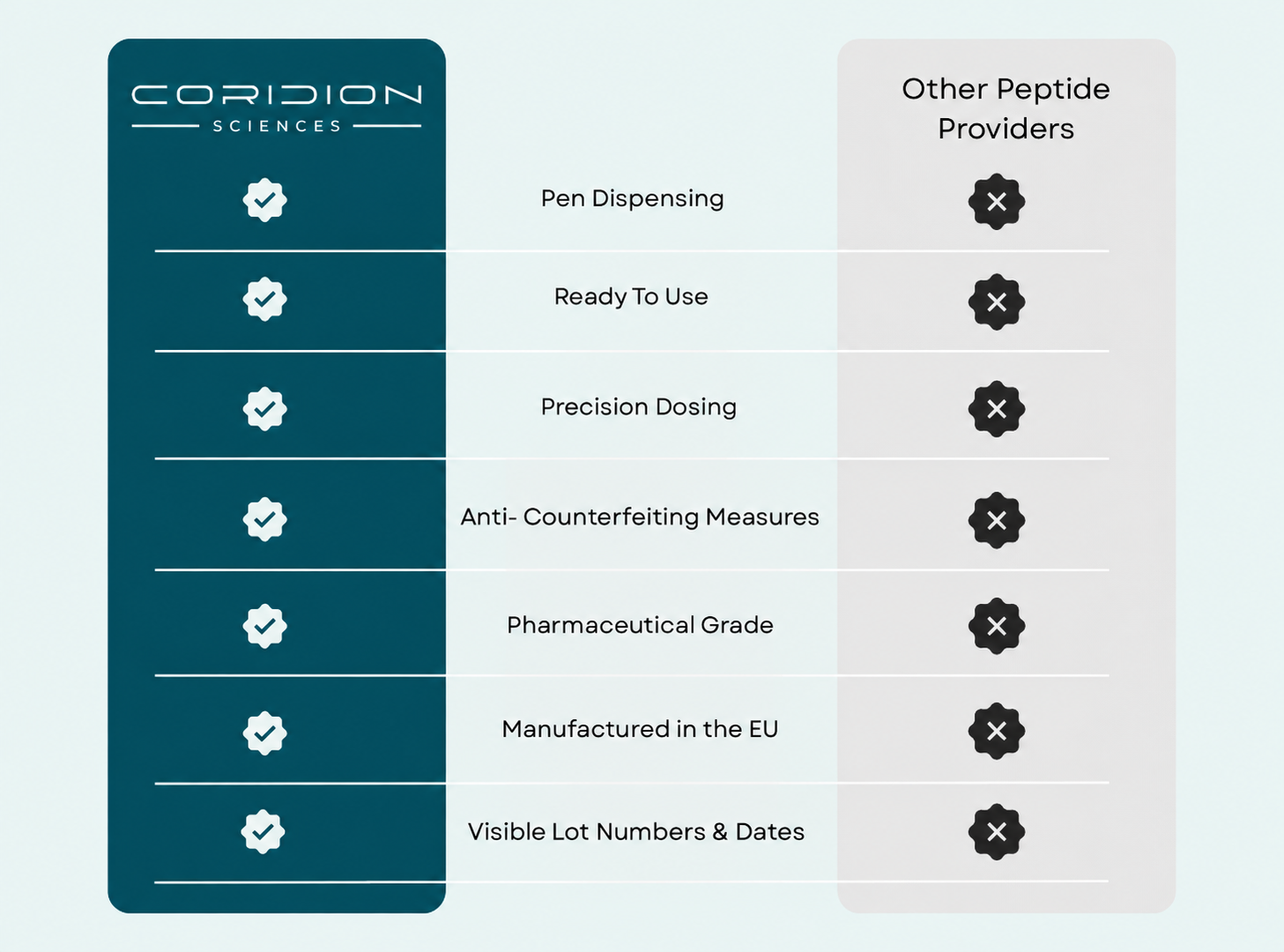
Engineered for absolute accuracy and ease. Our pre-blended pens make precise dosing completely seamless in just three quick steps.
Step 1 - Remove the Pre-mixed pen from the box
Step 2 - Secure the needle tip
Step 3 - Twist to set the required dose
Blends
Blends
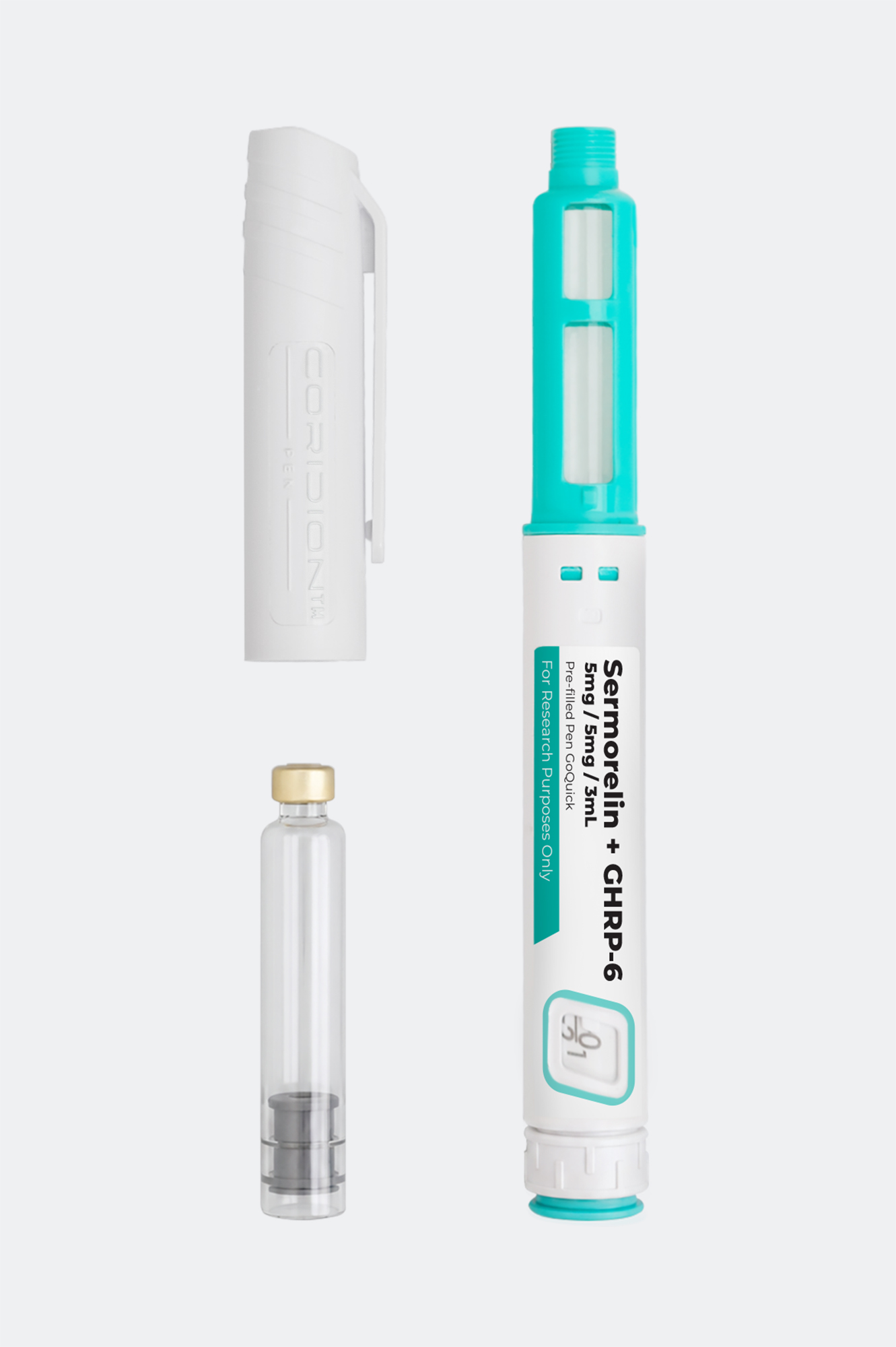
Sermorelin + GHRP-6 – 5mg / 5mg (3ml Pen)
Sermorelin + GHRP-6 5mg/5mg combines a 29-amino-acid GHRH analogue with a synthetic ghrelin receptor agonist. Investigated for complementary growth hormone signalling pathways, pituitary hormone. Research use only.
£95.00
Blends
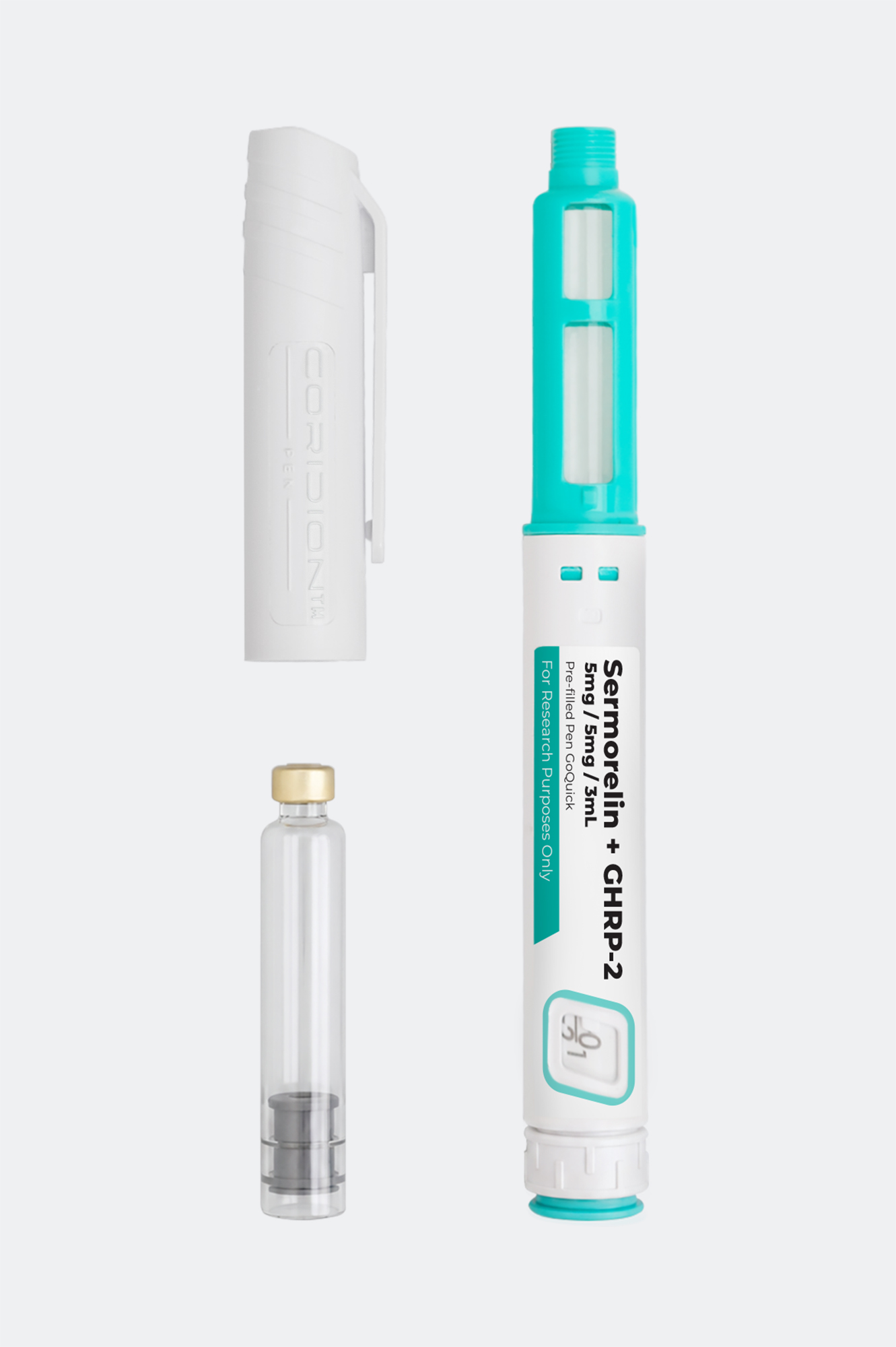
Sermorelin + GHRP-2 – 5mg / 5mg (3ml Pen)
Sermorelin + GHRP-2 5mg/5mg combines a 29-amino-acid GHRH analogue with a synthetic growth hormone secretagogue. Investigated for complementary pituitary signalling, ghrelin receptor activation and. Research use only.
£99.00
Blends
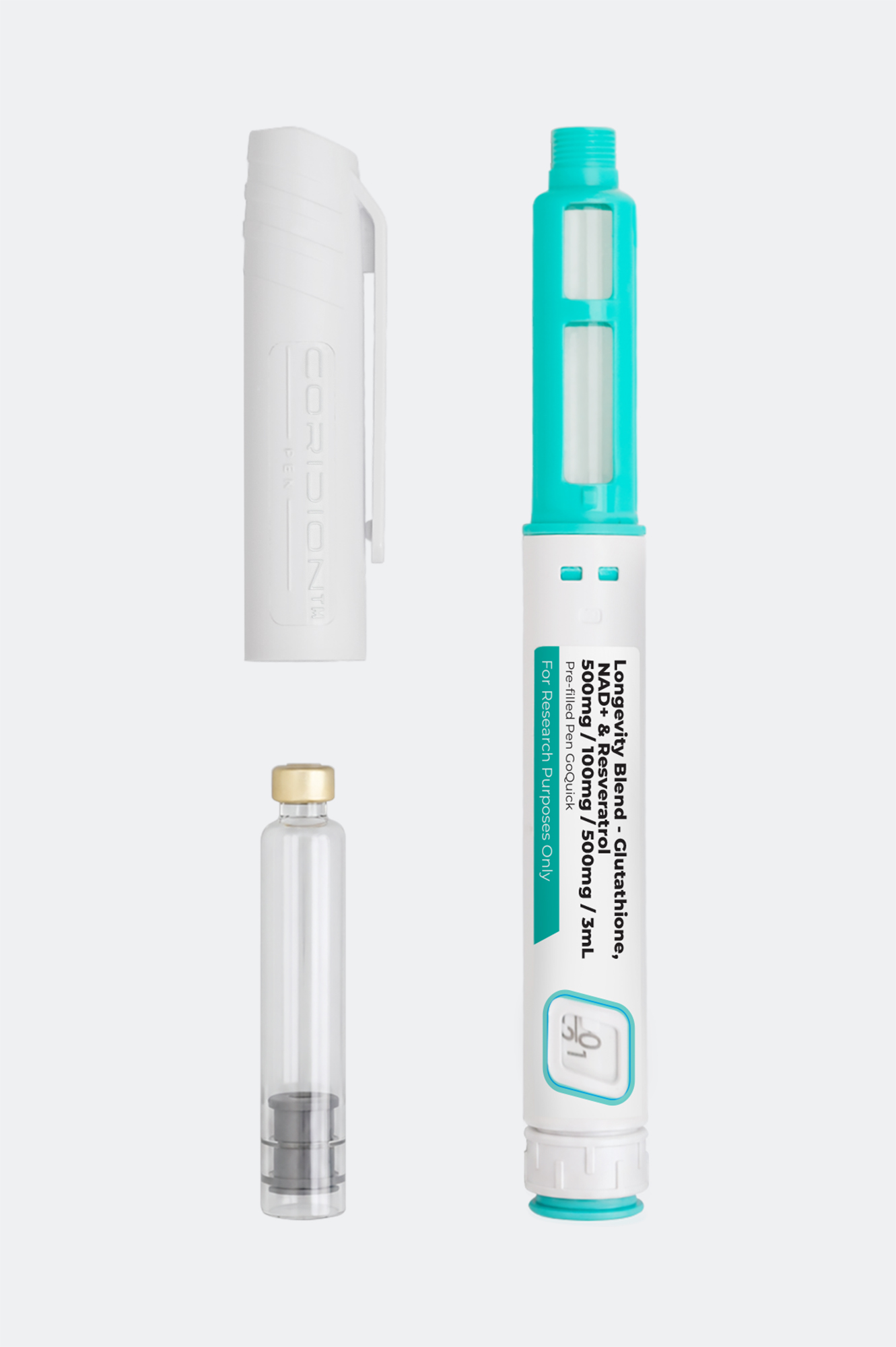
Longevity Blend (Glutathione / NAD+ / Resveratrol) – 500mg / 100mg / 500mg (3ml Pen)
Three pillars of cellular ageing research in one pen. Pairs antioxidant defence, NAD+ coenzyme power, and sirtuin-modulating activity. Research use only. Research use only.
£129.00
Blends
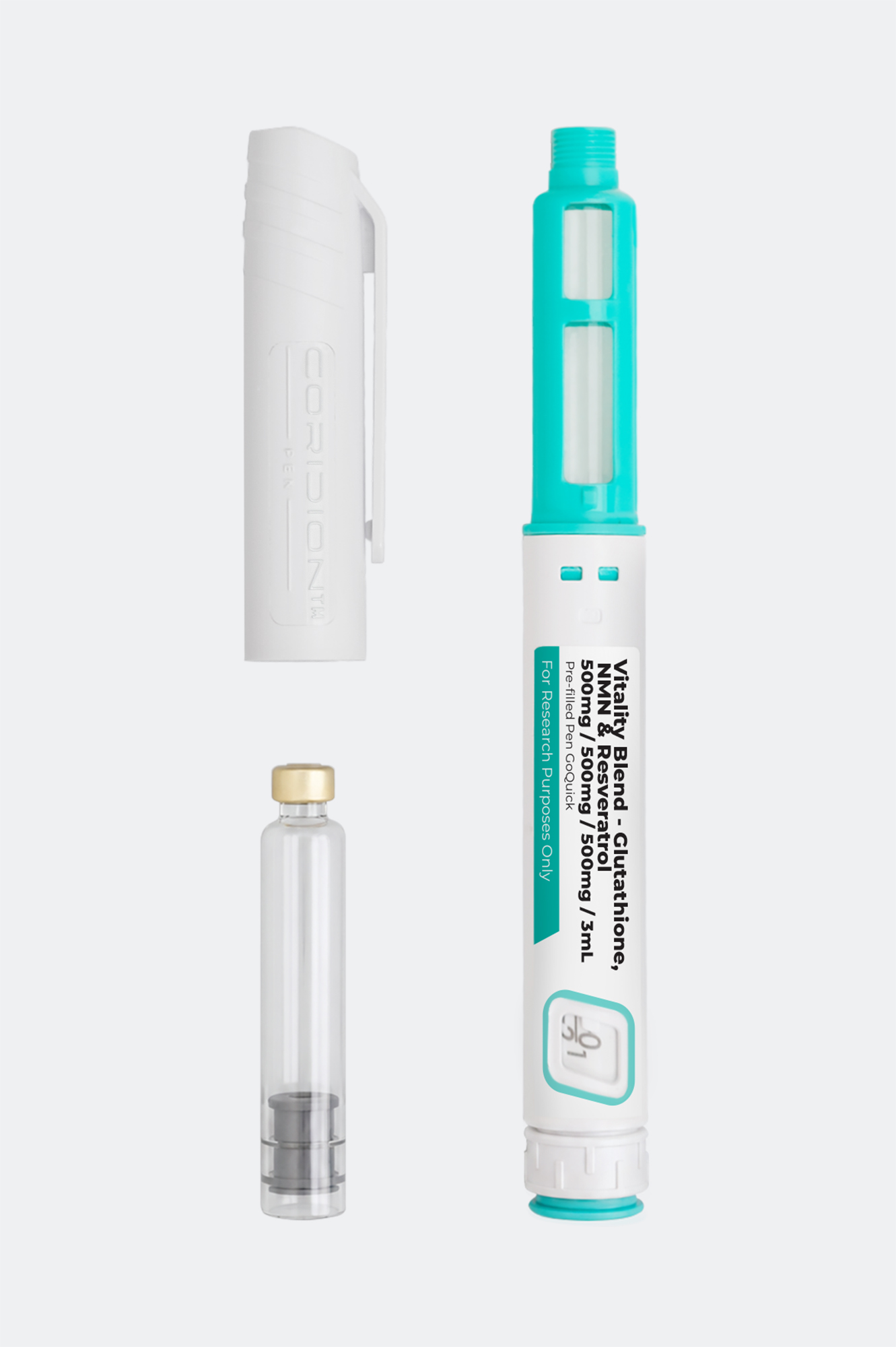
Vitality Blend (Glutathione / NMN / Resveratrol) – 500mg / 500mg / 500mg (3ml Pen)
The NAD+ precursor evolution. Swaps direct NAD+ for NMN — the biosynthetic precursor the cell uses via the salvage pathway. Research use only. Research use only.
£129.00
Blends

SS-31 + MOTS-c – 10mg / 10mg (3ml Pen)
Two mitochondrial compounds acting on different layers of the same biology — membrane structure and mitokine signalling. Research use only. Research use only.
£139.00
Blends

SS-31 + MOTS-c + NAD+ – 10mg / 10mg / 200mg (3ml Pen)
The flagship triple combination of mitochondrial research. SS-31, MOTS-c and NAD+ each act on a different layer of cellular energy biology — structure, signal. Research use only.
£159.00
Blends

KLOW Blend Peptide – BPC-157, TB-500, KPV & GHK-Cu (3ml Pen)
KLOW Blend Peptide combines BPC-157 10mg, TB-500 10mg, KPV 10mg and GHK-Cu 50mg in a four-component research formulation. The blend brings together compounds studied. Research use only.
£105.00
Blends

CJC-1295 (No DAC) + Ipamorelin + GHRP-2 – 3mg / 3mg / 3mg (3ml Pen)
A three-component preparation pairing a GHRH analogue with both a selective and a higher-potency ghrelin agonist. Research use only. Research use only.
£95.00
Blends
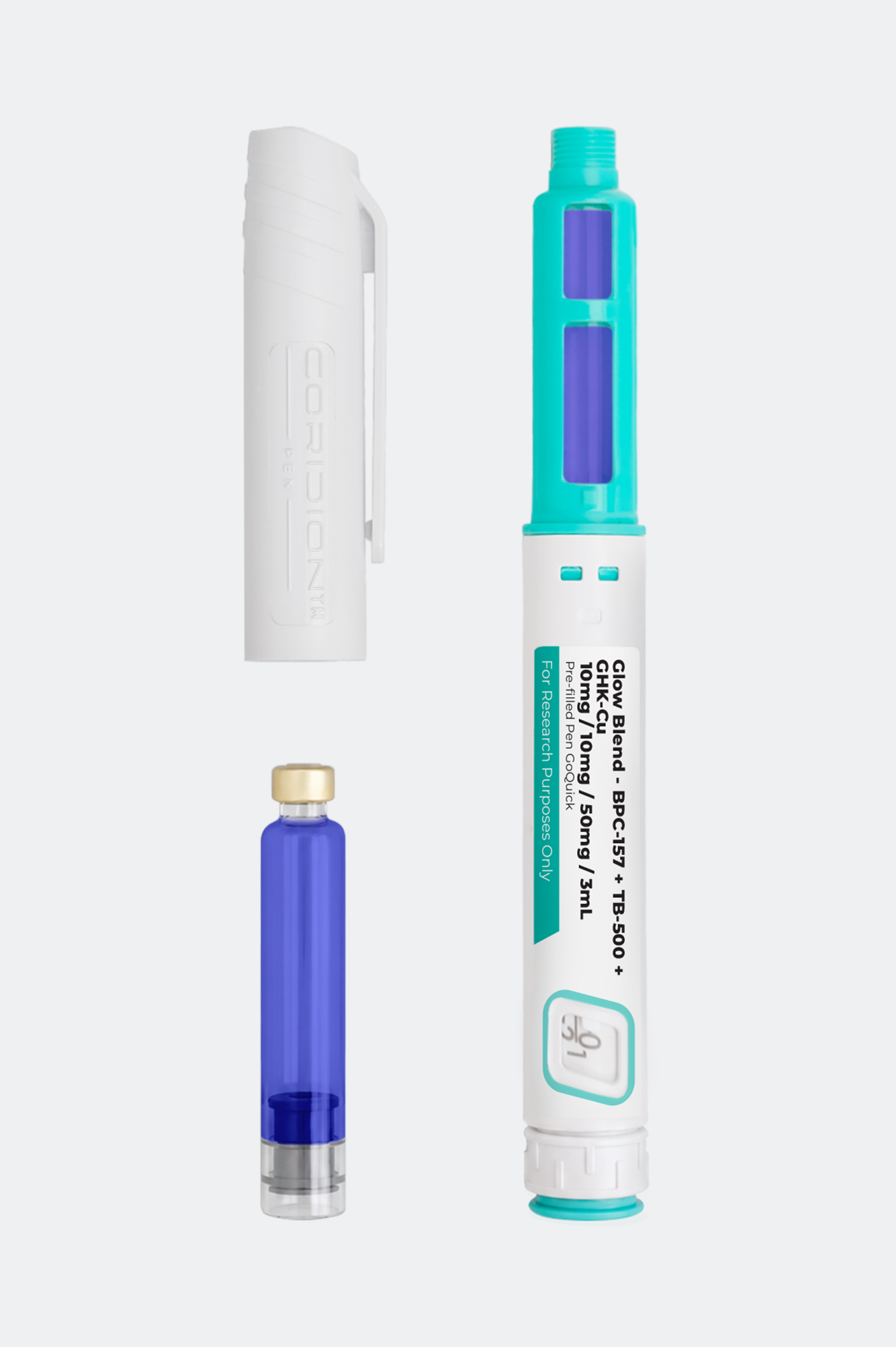
Glow Blend Peptide – BPC-157, TB-500 & GHK-Cu (3ml Pen)
Glow Blend Peptide combines GHK-Cu 50mg, BPC-157 10mg and TB-500 10mg in a three-component research formulation. Its ingredients have been investigated individually for extracellular. Research use only.
£95.00