
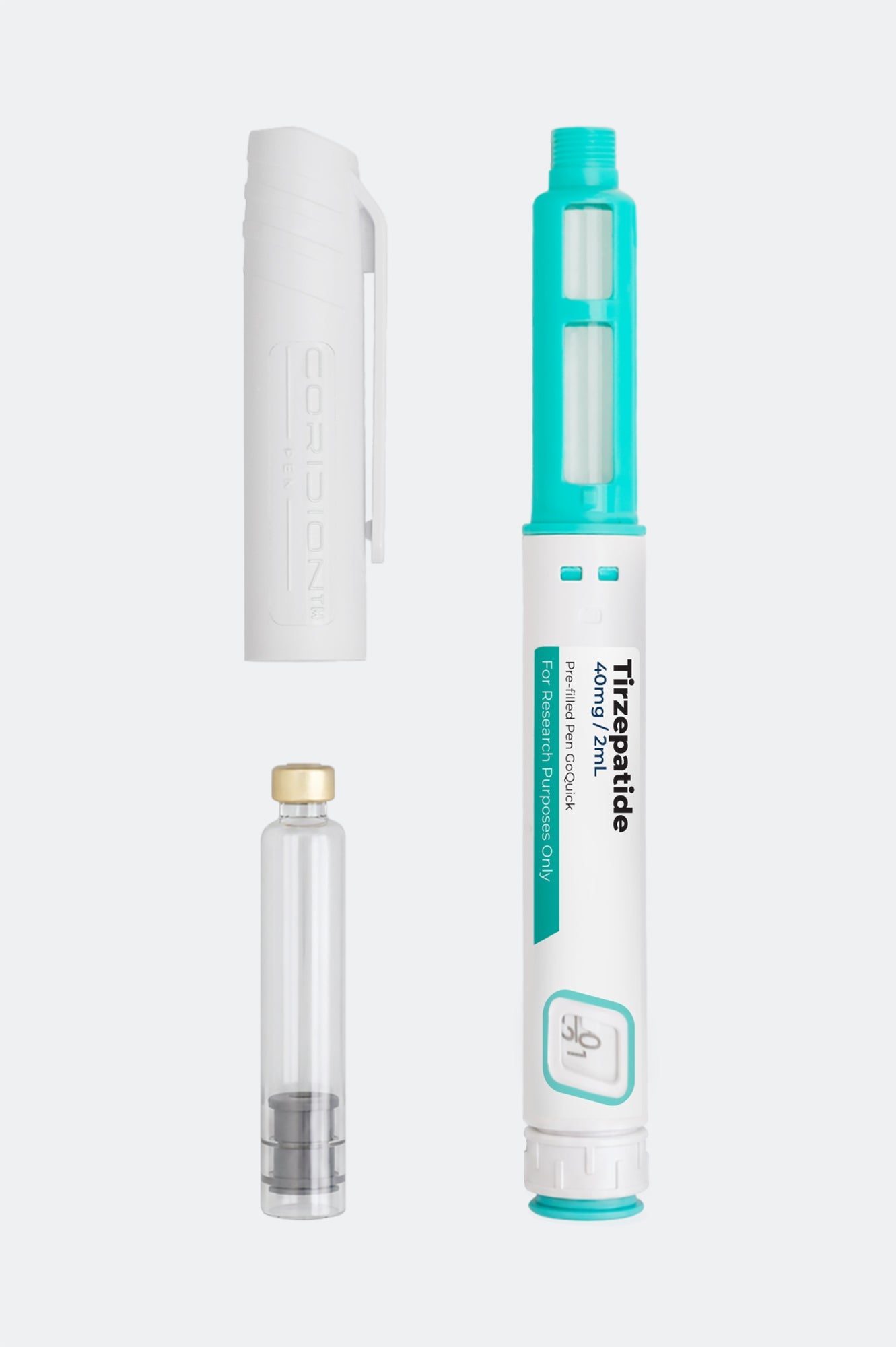

The Phase 2 Retatrutide Obesity Trial
-
Study Objective: To determine the efficacy, safety, and dose-response relationship of once-weekly subcutaneous Retatrutide across various doses and escalation regimens in adults with obesity or overweight (Jastreboff et al., 2023).
-
Methodology: A 48-week, double-blind, randomized, placebo-controlled human trial (Jastreboff et al., 2023). The study evaluated 338 adult participants with a body-mass index (BMI) of 30 or higher, or a BMI of 27 to less than 30 with at least one weight-related condition (excluding type 2 diabetes) (Jastreboff et al., 2023). Participants were randomized to receive a weekly placebo or varying maintenance doses of Retatrutide ($1\text{ mg}$, $4\text{ mg}$, $8\text{ mg}$, or $12\text{ mg}$) utilizing different starting escalation doses ($2\text{ mg}$ vs. $4\text{ mg}$) to check for tolerability (Jastreboff et al., 2023).
-
Primary Weight Loss Outcomes:
-
At 24 Weeks (Primary Endpoint): The average change in body weight was $-7.2\%$ in the $1\text{ mg}$ group, $-12.9\%$ in the $4\text{ mg}$ group, $-17.3\%$ in the $8\text{ mg}$ group, and $-17.5\%$ in the maximum $12\text{ mg}$ group (compared to just $-1.6\%$ in the placebo group) (Jastreboff et al., 2023).
-
At 48 Weeks (Sustained Efficacy): Weight reduction continued progressively to $-8.7\%$ ($1\text{ mg}$ group), $-17.1\%$ ($4\text{ mg}$ group), $-22.8\%$ ($8\text{ mg}$ group), and a striking $-24.2\%$ in the $12\text{ mg}$ group, compared to a baseline loss of $-2.1\%$ in the placebo group (Jastreboff et al., 2023).
-
-
Success Rate Thresholds (At 48 Weeks):
-
Among the participants who received the maximum $12\text{ mg}$ dose of Retatrutide, $100\%$ achieved a weight loss of $\ge 5\%$, $93\%$ achieved a loss of $\ge 10\%$, and $83\%$ achieved a total body weight reduction of $\ge 15\%$ (Jastreboff et al., 2023).
-
-
Adverse Events & Mitigation Findings: The most common adverse events were gastrointestinal (nausea, diarrhea, vomiting, and constipation) (Jastreboff et al., 2023). These events were strictly dose-related and mostly mild-to-moderate in severity (Jastreboff et al., 2023).
-
The Escalation Dynamic: The data uniquely showed that gastrointestinal side effects were significantly mitigated when participants utilized a lower initial starting dose of $2\text{ mg}$ before stepping up to higher target doses, rather than starting directly at $4\text{ mg}$ (Jastreboff et al., 2023).
-
Heart Rate Observations: Dose-dependent increases in heart rate were noted, which peaked at week 24 and gradually declined as the trial progressed (Jastreboff et al., 2023).
-
References
Jastreboff, A. M., Kaplan, L. M., Frías, J. P., Wu, Q., Du, Y., Gurbuz, S., Coskun, T., Haupt, A., Milicevic, Z., & Hartman, M. L. (2023). Triple–Hormone-Receptor Agonist Retatrutide for Obesity — A Phase 2 Trial. New England Journal of Medicine, 389(6), 514–526. https://doi.org/10.1056/nejmoa2301972
Cited by: 1232