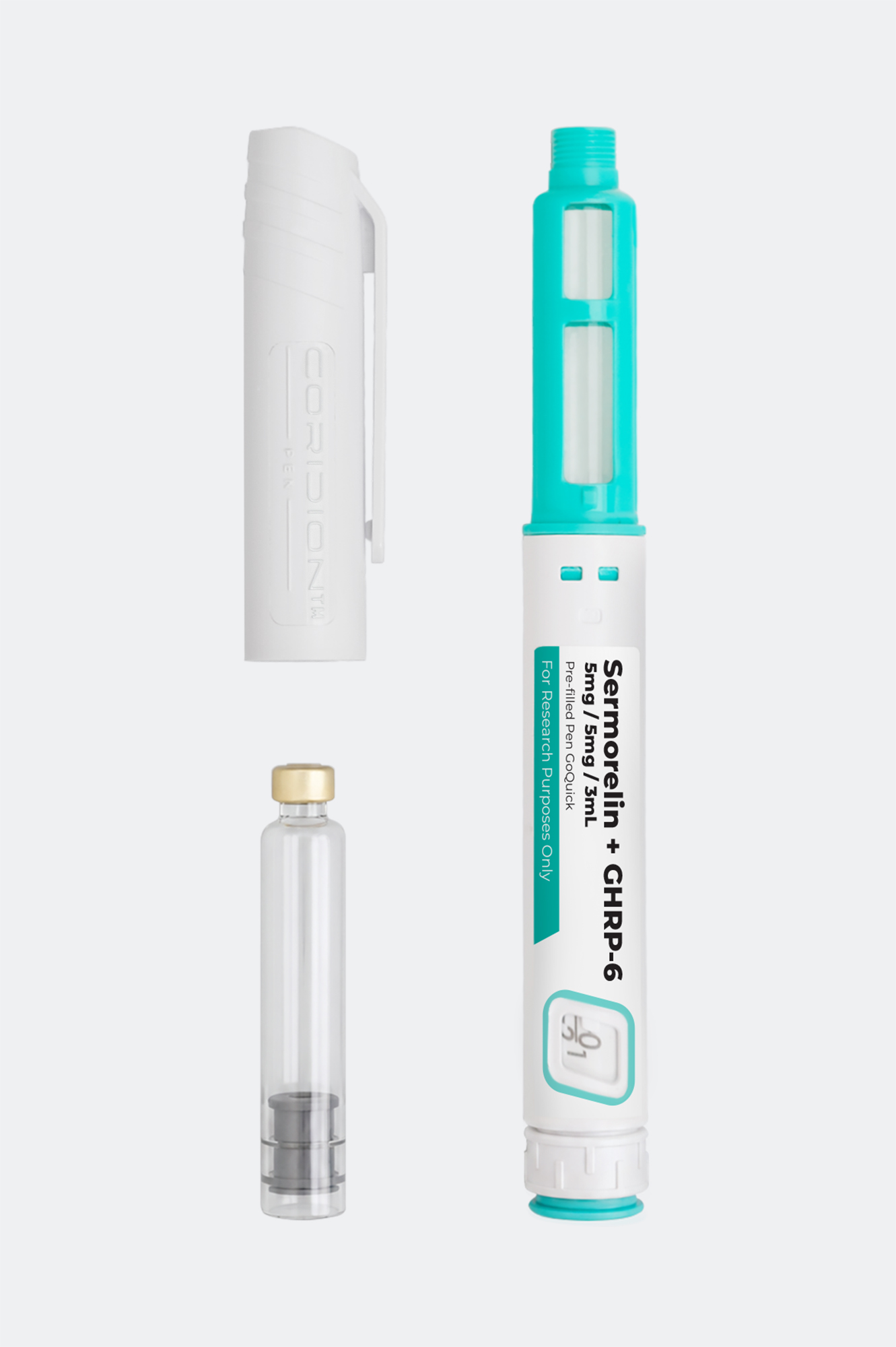
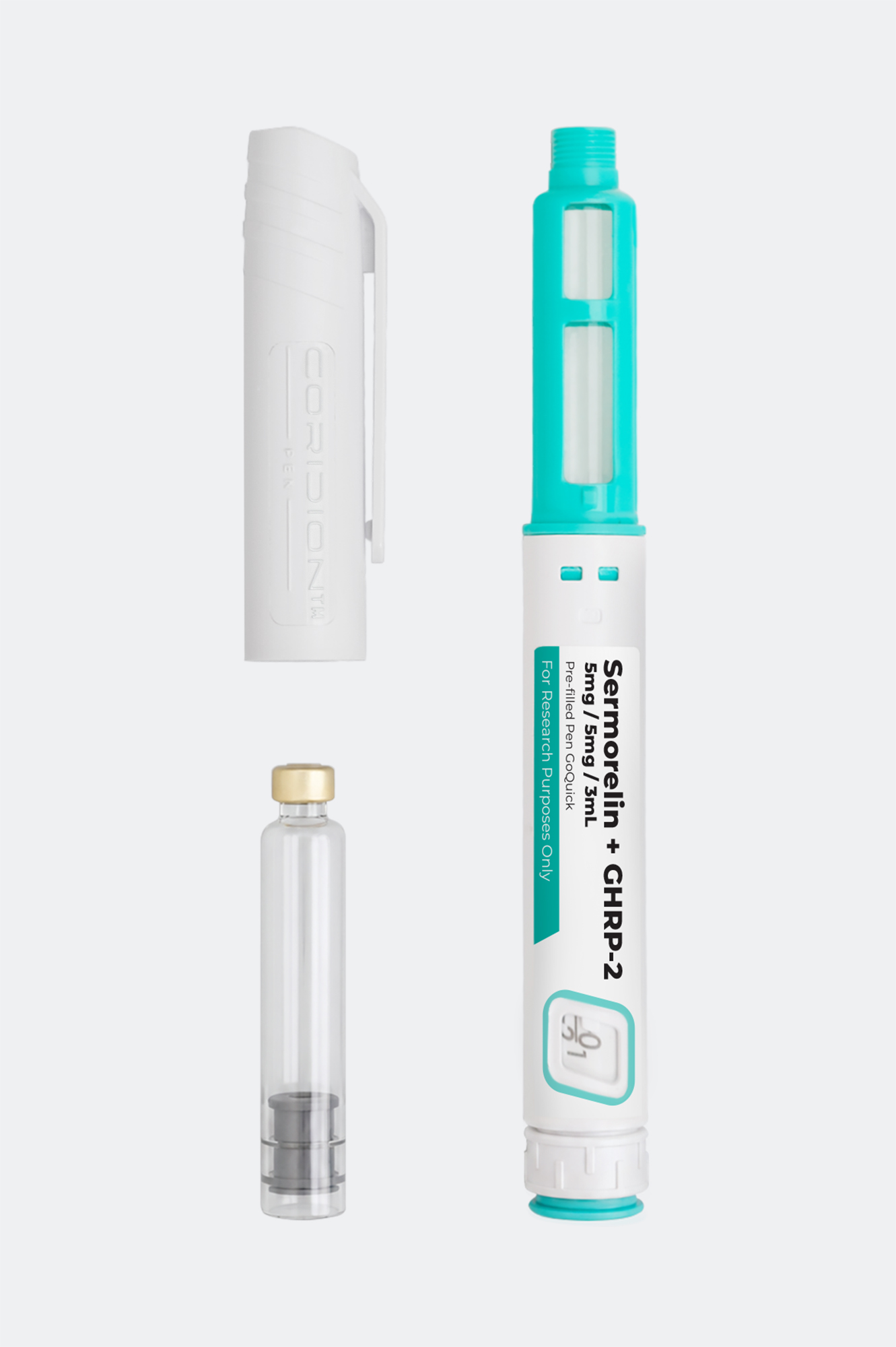
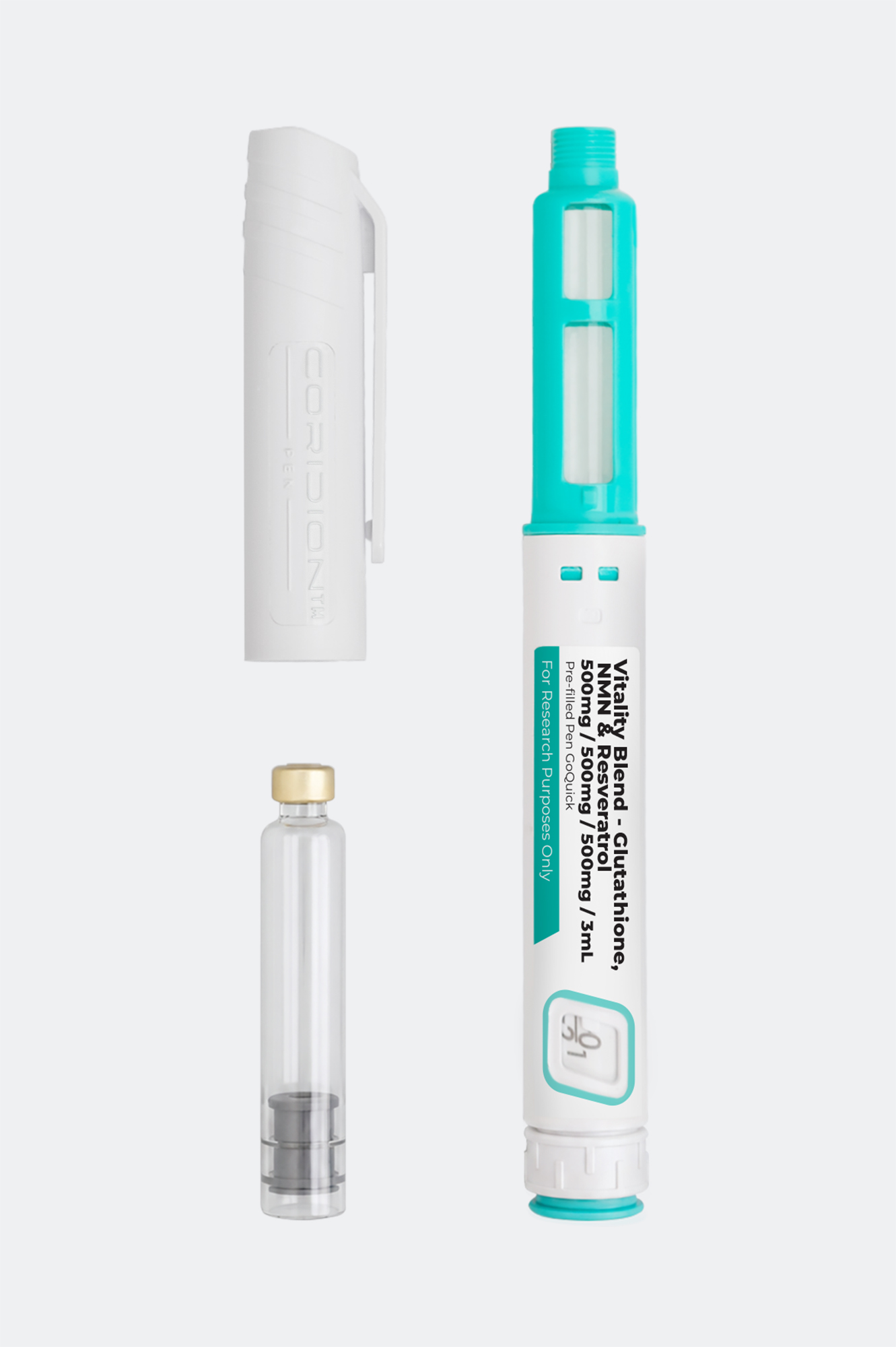
The BPC-157 + TB-500 Wolverine Stack is a two-component research peptide formulation containing 10mg of BPC-157 and 10mg of TB-500 in a single 3ml pen.
Known commercially as the Wolverine Stack peptide blend, this combination brings together two compounds with different scientific research backgrounds. BPC-157 has primarily been investigated in experimental models involving connective tissue, gastrointestinal physiology and vascular signalling. TB-500 is associated with research into thymosin beta-4-derived peptides, cellular migration and cytoskeletal biology.
The interest in combining these compounds arises from the possibility of investigating different biological processes within the same experimental framework.
However, their individual research histories do not establish that the combination produces stronger or complementary effects. Direct studies of the blend remain limited.
What Is the BPC-157 + TB-500 Wolverine Stack?
The Wolverine Stack is the commercial name commonly used for formulations containing BPC-157 and TB-500.
Unlike a standalone research peptide, this product contains two separate compounds:
- BPC-157 – 10mg: A synthetic 15-amino-acid peptide investigated in preclinical models of gastrointestinal, connective tissue and vascular biology.
- TB-500 – 10mg: A research peptide associated with thymosin beta-4-derived sequences and investigations into cell movement and cytoskeletal regulation.
The combination contains a total of 20mg of labelled peptide material.
Although the compounds are grouped together in recovery-related research catalogues, they have distinct chemical identities and research histories.
For detailed information about the individual pentadecapeptide, explore our BPC-157 peptide 10mg, which covers its molecular structure, gastrointestinal research and proposed signalling pathways.
Why Are BPC-157 and TB-500 Studied Together?
Cellular responses to tissue injury involve several interconnected mechanisms.
These include vascular responses, inflammatory signalling, cell migration, extracellular matrix organisation and changes in local tissue structure.
BPC-157 and TB-500 have attracted interest because their respective preclinical research histories overlap with some of these processes.
BPC-157: Vascular and Connective Tissue Research
BPC-157 has been investigated in laboratory and animal models examining fibroblast activity, blood vessel responses and extracellular matrix regulation.
Researchers have explored its possible interactions with nitric oxide-related mechanisms and vascular endothelial growth factor signalling.
These findings remain experimental, and BPC-157 does not have a fully characterised primary receptor or established human therapeutic efficacy.
TB-500: Cellular Migration and Cytoskeletal Research
TB-500 is commonly associated with thymosin beta-4, a peptide involved in actin-related cellular biology.
Actin contributes to cell structure, movement and the reorganisation of the cytoskeleton.
Studies involving thymosin beta-4 and related sequences have investigated cellular migration and tissue responses.
However, commercial TB-500 may contain a shorter peptide fragment rather than full-length thymosin beta-4.
Because peptide sequence influences biological activity, the molecular identity of the specific TB-500 preparation must be confirmed before attributing findings from full-length thymosin beta-4 studies to it.
The Rationale for Combination Research
The proposed rationale for investigating BPC-157 and TB-500 together involves comparing two compounds associated with overlapping biological research areas.
Researchers may be interested in whether their respective signalling effects are independent, overlapping or interactive.
However, the existence of distinct proposed mechanisms does not establish synergy.
Combination-specific experiments are required to determine whether the compounds produce additive, neutral or opposing responses.
Wolverine Stack Research: What Does the Evidence Show?
The Wolverine Stack is frequently described in commercial literature as a complementary peptide pairing.
Scientific evidence for this claim is substantially more limited than the separate research literature for its constituent compounds.
A 2026 Combination Study
A study published in the Journal of Joint Diseases and Related Surgery in 2026 directly investigated BPC-157, TB-500 and their combination in an experimental Achilles tendon model.
The researchers divided 32 rats into four groups:
- Control
- BPC-157
- TB-500
- BPC-157 + TB-500
After four weeks, they assessed biomechanical measurements, histological changes and collagen-related markers.
The investigators reported improvements in selected experimental measurements, particularly within the TB-500 group.
Importantly, the combination did not demonstrate additional benefit compared with the individual compounds in this model.
The study was small, involved animals rather than humans and cannot establish the properties of commercial Wolverine Stack formulations.
Why These Findings Matter
The study illustrates an important principle in combination peptide research: combining two biologically active experimental compounds does not automatically improve their effects.
The results support further investigation into the interactions between BPC-157 and TB-500, rather than claims of proven complementary activity.
Scientific Research Areas
1. Combination Peptide Pharmacology
One of the most relevant research applications is examining the interaction between two experimental peptides within a shared biological model.
Questions include whether their effects overlap, influence the same downstream pathways or produce distinct cellular responses.
2. Cellular Migration
Cell migration is involved in tissue organisation, development and responses to injury.
Thymosin beta-4-related research has explored actin-associated processes that contribute to cell movement.
BPC-157 has separately been investigated in fibroblast migration models.
However, these individual findings do not establish that the combined formulation increases cellular migration.
3. Extracellular Matrix Research
The extracellular matrix contains structural components such as collagen that support tissues and influence cell behaviour.
Experimental studies involving BPC-157 and TB-500 have examined connective tissue organisation and collagen-associated measurements.
Combination research can investigate whether the simultaneous presence of the two compounds changes these experimental endpoints.
4. Vascular Biology
Vascular signalling involves complex interactions between endothelial cells, signalling molecules and extracellular tissue structures.
BPC-157 has been studied in relation to VEGF-associated and nitric oxide-related mechanisms.
Research into the combined formulation may examine whether these pathways interact with processes associated with TB-500.
Such interactions remain insufficiently characterised.
5. Peptide Formulation Research
Multi-component peptide formulations introduce scientific questions beyond the biological activity of their individual ingredients.
Relevant considerations include chemical compatibility, formulation stability, compound identity and analytical testing.
A combined product should not be assumed to reproduce the exact characteristics observed when each peptide is studied separately.
BPC-157 vs TB-500 vs Wolverine Stack
Although frequently discussed together, these are not interchangeable research materials.
BPC-157 – Standalone Compound
BPC-157 is a synthetic pentadecapeptide with a primarily preclinical research history involving gastrointestinal tissues, connective tissue and vascular mechanisms.
Its individual properties are covered in greater detail on our standalone BPC-157 research product page.
TB-500 – Thymosin Beta-4-Related Peptide
TB-500 is associated with research into thymosin beta-4-derived peptide chemistry and selected cellular processes.
Its exact molecular sequence is essential when interpreting the available literature.
Wolverine Stack – Dual-Peptide Formulation
The Wolverine Stack combines 10mg BPC-157 and 10mg TB-500 within a single product.
Its distinguishing research feature is the presence of both compounds, making formulation-specific analysis and comparative investigations relevant.
The available scientific evidence does not establish that the blend is superior to either peptide individually.
Other Multi-Peptide Formulations
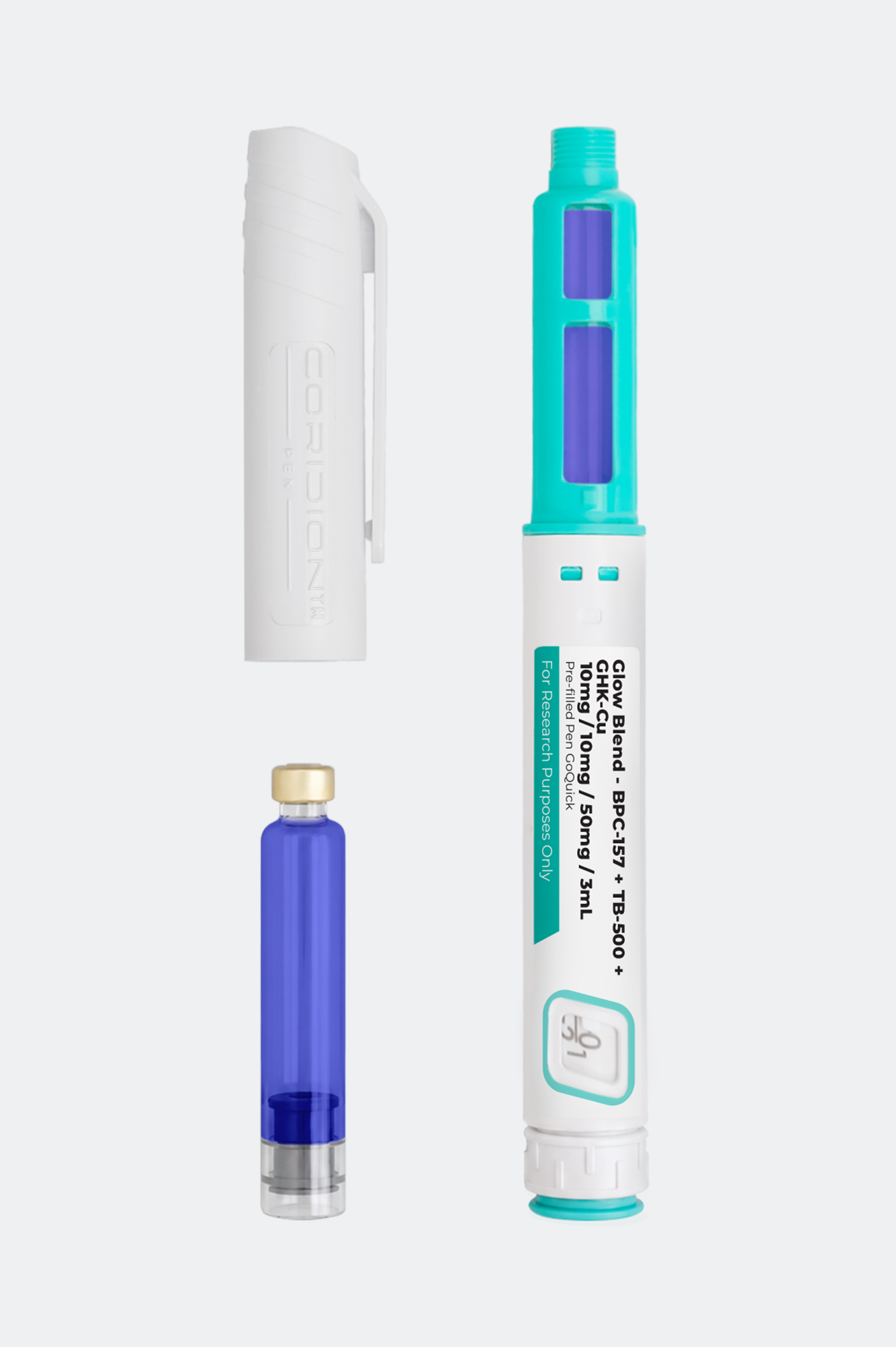
Researchers examining formulations containing additional compounds may also explore the Glow Blend containing BPC-157, TB-500 and GHK-Cu.
The Glow formulation contains a third peptide component and therefore has a different composition from the two-peptide Wolverine Stack.
Evidence from one formulation should not automatically be transferred to another.
BPC-157 + TB-500 Wolverine Stack Product Specifications
- Product: BPC-157 + TB-500 Wolverine Stack
- Alternative name: Wolverine Stack peptide blend
- BPC-157 content: 10mg
- TB-500 content: 10mg
- Total labelled peptide content: 20mg
- Format: 3ml pen
- Classification: Dual-component experimental research peptide formulation
- BPC-157 structure: Synthetic 15-amino-acid peptide
- TB-500 structure: Exact sequence requires product-specific confirmation
- Research focus: Combination peptide pharmacology and cellular signalling
- Additional research areas: Cellular migration, extracellular matrix biology and vascular research
- Evidence status: Limited direct combination research; no established human clinical efficacy
Wolverine Stack Research at Coridion Sciences
Coridion Sciences supplies s