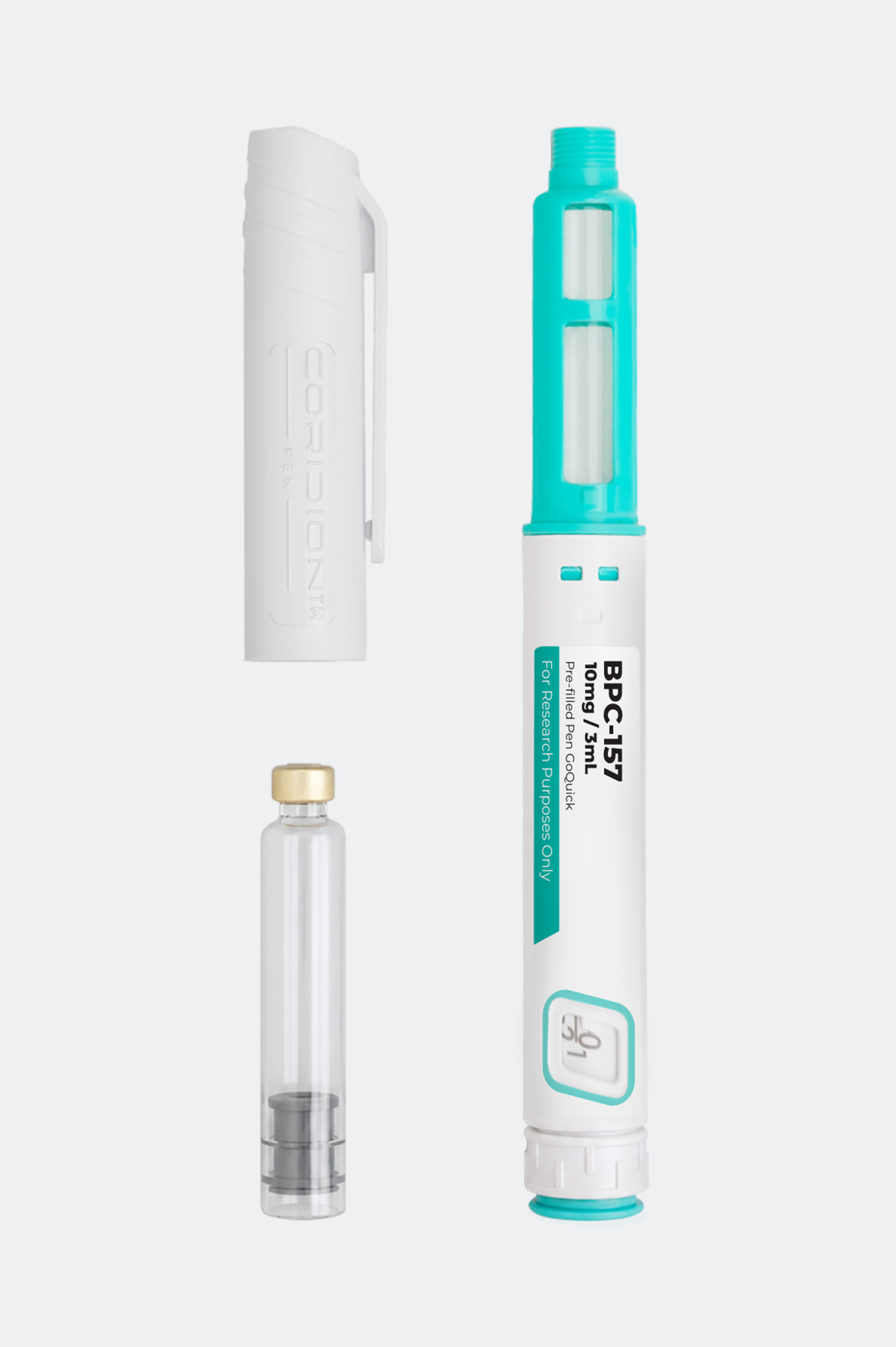
BPC-157 Peptide 10mg (3ml Pen) – Research Compound
The most widely studied tissue repair peptide in the category, with a preclinical literature spanning gut, tendon, vascular and neural models. Research use only.
Wound Healing
Angiogenesis
Gut Lining
Description
BPC-157 peptide (Body Protection Compound-157) is a synthetic pentadecapeptide investigated for its involvement in tissue-related signalling, gastrointestinal physiology and vascular biology. Containing 15 amino acids, BPC-157 has attracted scientific attention through experimental studies examining cellular migration, connective tissue organisation and biological responses to injury.
Research into BPC-157 spans several preclinical models, including gastrointestinal tissue, tendons, ligaments, skeletal muscle and blood vessels. These investigations have explored cellular pathways involved in tissue maintenance and repair.
Despite the breadth of experimental research, human clinical evidence remains extremely limited. BPC-157 is not an approved medicine, and its effectiveness for treating injuries or other medical conditions has not been established.
Available from Coridion Sciences in a 10mg, 3ml pen format, BPC-157 is supplied exclusively for scientific and laboratory investigation.
What Is BPC-157 Peptide?
BPC-157, also known as Body Protection Compound-157, is a synthetic peptide consisting of 15 amino acids.
Its reported amino-acid sequence is:
Gly-Glu-Pro-Pro-Pro-Gly-Lys-Pro-Ala-Asp-Asp-Ala-Gly-Leu-Val
Abbreviated sequence: GEPPPGKPADDAGLV
BPC-157 originated from research into gastric peptides and biological factors associated with gastrointestinal tissue protection.
Unlike peptide hormones with well-characterised receptor targets, BPC-157 does not have a definitively established primary receptor.
Researchers have instead investigated several possible pathways associated with its activity, including vascular signalling, nitric oxide regulation and cellular migration.
Its experimental history makes it relevant to laboratory investigations into peptide-mediated tissue physiology.
BPC-157 Peptide Research and Scientific Applications
BPC-157 has been investigated in several areas of preclinical biology. Much of the available research involves laboratory experiments and rodent models rather than controlled human clinical trials.
Tendon and Ligament Research
Tendons and ligaments contain collagen-rich connective tissue responsible for transmitting forces and stabilising joints.
Research into tendon biology examines fibroblast activity, extracellular matrix organisation, collagen alignment and the cellular responses associated with experimental injury.
Studies involving BPC-157 have investigated these processes in animal models of tendon and ligament damage.
Some experiments have reported differences in structural or functional measurements compared with untreated controls.
However, these observations have not established BPC-157 as an effective treatment for tendon injuries in humans.
Gastrointestinal Tissue Research
Gastrointestinal physiology is one of the earliest areas associated with BPC-157 research.
Experimental investigations have examined the compound in models involving gastric lesions, intestinal mucosal injury and tissue integrity.
These studies have explored potential interactions involving vascular regulation, cellular responses and inflammatory signalling.
The findings remain predominantly preclinical and do not demonstrate that BPC-157 treats gastrointestinal diseases in humans.
Fibroblast Migration and Connective Tissue Biology
Fibroblasts contribute to the maintenance of connective tissue by producing components of the extracellular matrix, including collagen.
Cell migration is an important component of tissue organisation and responses to injury.
Laboratory studies involving BPC-157 have examined changes in fibroblast movement and selected signalling markers.
These findings provide research context for the compound but cannot establish clinical tissue-repair benefits.
Vascular and Angiogenesis Research
Angiogenesis is the process through which new blood vessels develop from existing vascular structures.
Research involving BPC-157 has examined pathways associated with angiogenesis, including vascular endothelial growth factor signalling.
Some experimental findings suggest changes in endothelial responses and vascular-related molecular markers.
However, a complete causal mechanism has not been established.
How Does BPC-157 Work?
The precise mechanism of action of BPC-157 remains incompletely characterised.
The peptide has been investigated in relation to several biological pathways, although most evidence remains experimental.
VEGF and VEGFR2 Signalling
Vascular endothelial growth factor (VEGF) contributes to blood vessel formation and vascular regulation.
Preclinical research has examined whether BPC-157 influences VEGF-associated signalling, including VEGFR2-related pathways.
Selected experimental findings have reported changes in vascular signalling markers.
These observations require further independent investigation before definitive conclusions can be drawn.
Nitric Oxide Regulation
Nitric oxide is a biological signalling molecule involved in vascular tone, cellular communication and other physiological processes.
Research involving BPC-157 has investigated interactions with nitric oxide-related pathways.
These findings provide a possible explanation for certain experimental vascular responses but do not establish a complete mechanism.
Collagen and Extracellular Matrix Activity
The extracellular matrix provides structural support to tissues and plays a role in cellular communication.
Studies involving BPC-157 have examined fibroblast-related processes and collagen organisation in experimental connective tissue models.
These findings are relevant to understanding cellular responses but remain insufficient to demonstrate improved human tissue repair.
Growth Hormone Receptor Expression
Some laboratory investigations have reported changes in growth hormone receptor expression following BPC-157 exposure.
This research examines potential interactions between peptide signalling and growth-related cellular pathways.
However, BPC-157 is not classified as a conventional growth hormone secretagogue, and these findings should not be confused with the mechanisms of GHRP-2, GHRP-6 or Ipamorelin.
What Does the Scientific Evidence Say About BPC-157?
BPC-157 has an extensive experimental research history relative to its limited human clinical evidence.
A systematic review published in 2025 evaluated 36 studies relevant to musculoskeletal applications.
Of those studies, 35 were preclinical and only one involved human participants.
The review identified several promising experimental findings but concluded that adequate human safety and efficacy data were lacking.
This distinction is important when interpreting claims associated with BPC-157 peptide research.
Animal findings can provide useful information about biological pathways, but they do not reliably establish clinical outcomes in humans.
Additional independent investigations are necessary to clarify the peptide’s pharmacology, long-term safety and potential clinical relevance.
BPC-157 Compared with Other Research Peptides
BPC-157 is supplied as an individual research compound and is also included in several combination formulations.
Understanding these differences is important when comparing experimental compounds and their published evidence.
Standalone BPC-157 Peptide
The individual BPC-157 peptide has a published preclinical research history involving gastrointestinal tissue, connective tissue, vascular signalling and cellular migration.
Research focused specifically on BPC-157 should distinguish studies of the standalone compound from those involving multi-peptide formulations.
BPC-157 + TB-500 Wolverine Stack
The BPC-157 + TB-500 Wolverine Stack combines BPC-157 with a peptide associated with thymosin beta-4 research.
The two compounds have different experimental backgrounds, but evidence concerning their individual activity does not establish enhanced outcomes from combining them.
Glow Blend – BPC-157, TB-500 and GHK-Cu
The Glow Blend peptide formulation incorporates BPC-157, TB-500 and the copper-binding peptide GHK-Cu.
Its constituent compounds have been investigated in different areas of tissue and cellular biology.
Direct clinical evidence supporting this three-component combination remains insufficient.
GHK-Cu Copper Peptide
GHK-Cu is a copper-binding tripeptide investigated for extracellular matrix regulation, collagen-associated processes and skin physiology.
Its molecular structure and proposed mechanisms differ from those of BPC-157.
BPC-157 Peptide 10mg – Product Specifications
- Product name: BPC-157 Peptide
- Alternative name: Body Protection Compound-157
- Quantity: 10mg
- Format: 3ml pen
- Classification: Synthetic pentadecapeptide
- Peptide length: 15 amino acids
- Amino-acid sequence: GEPPPGKPADDAGLV
- Primary research focus: Connective tissue and gastrointestinal physiology
- Additional research areas: Fibroblast activity, vascular signalling, cellular migration and experimental injury models
- Research evidence: Predominantly preclinical, with very limited human studies
BPC-157 Peptide Research at Coridion Sciences
Coridion Sciences supplies specialist research peptides and formulations for laboratory investigation.
The BPC-157 10mg product forms part of the company’s Recovery & Repair research peptide collection, featuring compounds investigated for connective tissue, cellular signalling and related biological processes.
The wider catalogue includes individual research peptides alongside combination formulations designed for distinct areas of scientific investigation.
Research Use Only: BPC-157 is an experimental compound intended exclusively for scientific and laboratory research. It is not approved for human consumption, wound treatment, injury rehabilitation or athletic performance enhancement. Human clinical safety and efficacy have not been established.
Learn More
- BPC-157 Stability and Storage: Understanding Peptide Degradation in Laboratory Research
- BPC-157 Certificate of Analysis: Understanding Purity, Identity and Batch Testing
- BPC-157 Amino Acid Sequence, Molecular Weight and Chemical Structure Explained
- BPC-157 vs TB-500: Understanding the Differences in Peptide Research
Mechanisms of Action
BPC-157 is a synthetic pentadecapeptide corresponding to a partial sequence of body protection compound isolated from gastric juice. Research describes upregulation of vascular endothelial growth factor receptor 2 signalling and associated angiogenesis, modulation of the nitric oxide system, and effects on growth hormone receptor expression in fibroblasts. Studies report influence on collagen organisation and fibroblast migration in tendon models, and on the gut–brain axis in gastrointestinal work. The peptide is documented as unusually stable in gastric conditions relative to comparable sequences.
Research Status & Findings
A large but almost entirely preclinical body of work, concentrated in rodent injury models and heavily weighted toward a small number of research groups. Human data are minimal.
Gastrointestinal research
Extensive rodent work on mucosal integrity and gastric lesion models.
Tendon and ligament
Studies on fibroblast migration, collagen organisation and healing rate in transection models.
Angiogenesis
Mechanistic research on VEGFR2 signalling and new vessel formation.
Neural models
Investigation of nerve injury and central nervous system endpoints in animal studies.
Evidence maturity
Human clinical characterisation remains very limited despite the volume of animal data.
*For research purposes only – not for human consumption*

As Seen In The Press
Peptides can affect the way the body functions at a cellular level.

Our 3 Step System
Pre-filled Cartridges
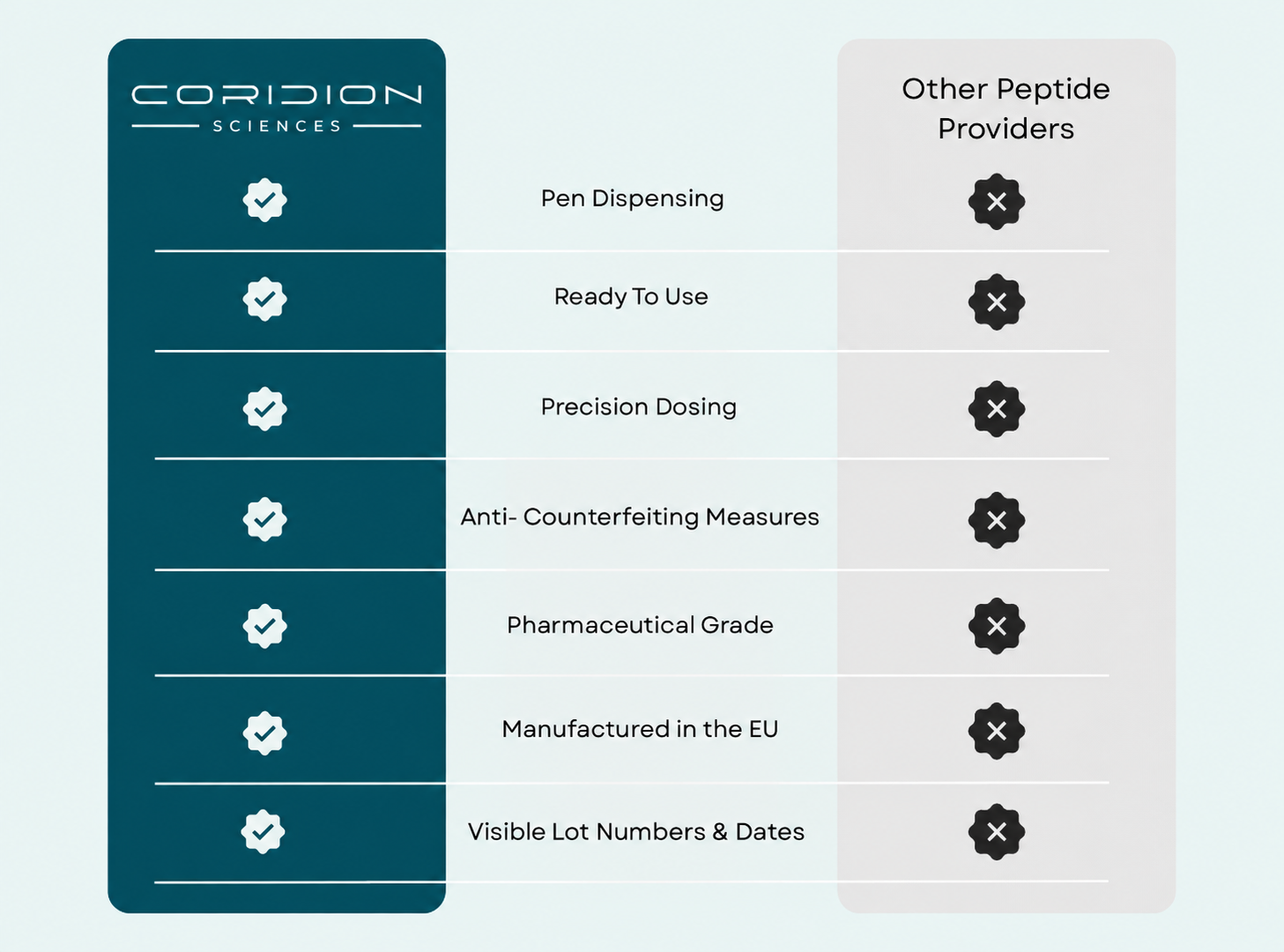
Engineered for absolute accuracy and ease. Our pre-blended pens make precise dosing completely seamless in just three quick steps.
Step 1 - Remove the Pre-mixed pen from the box
Step 2 - Secure the needle tip
Step 3 - Twist to set the required dose
Blends
Blends
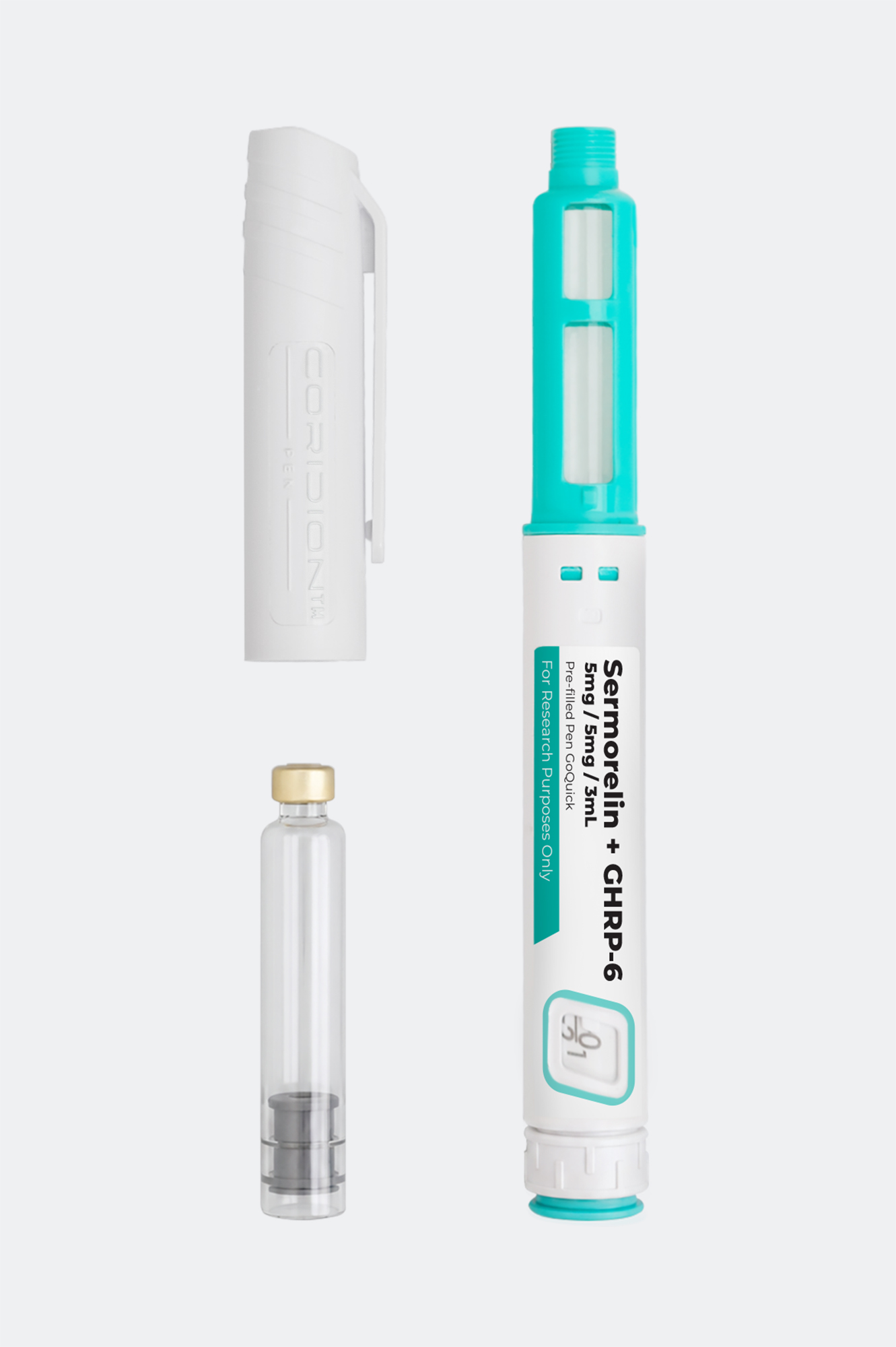
Sermorelin + GHRP-6 – 5mg / 5mg (3ml Pen)
Sermorelin + GHRP-6 5mg/5mg combines a 29-amino-acid GHRH analogue with a synthetic ghrelin receptor agonist. Investigated for complementary growth hormone signalling pathways, pituitary hormone. Research use only.
£95.00
Blends
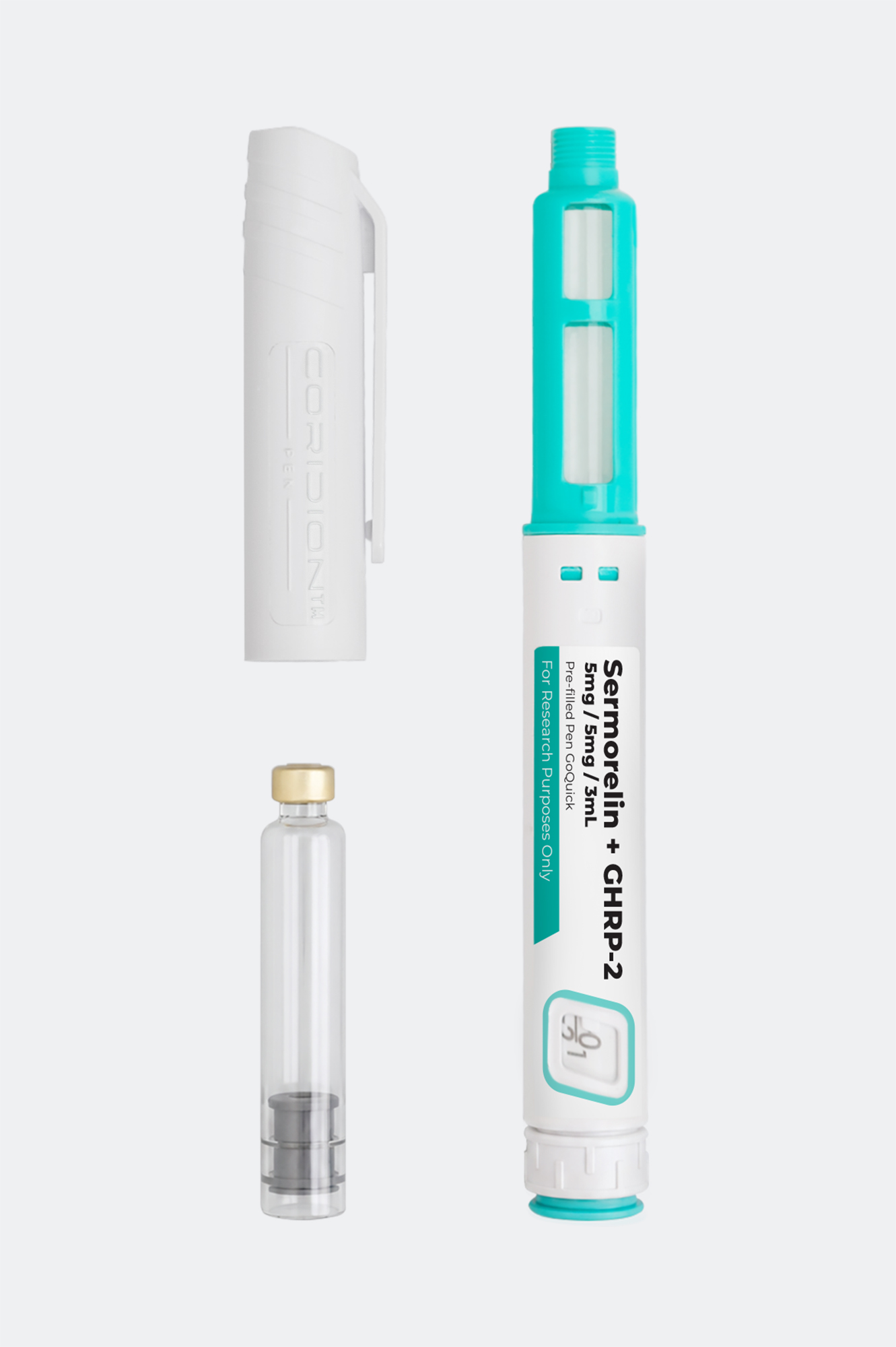
Sermorelin + GHRP-2 – 5mg / 5mg (3ml Pen)
Sermorelin + GHRP-2 5mg/5mg combines a 29-amino-acid GHRH analogue with a synthetic growth hormone secretagogue. Investigated for complementary pituitary signalling, ghrelin receptor activation and. Research use only.
£99.00
Blends
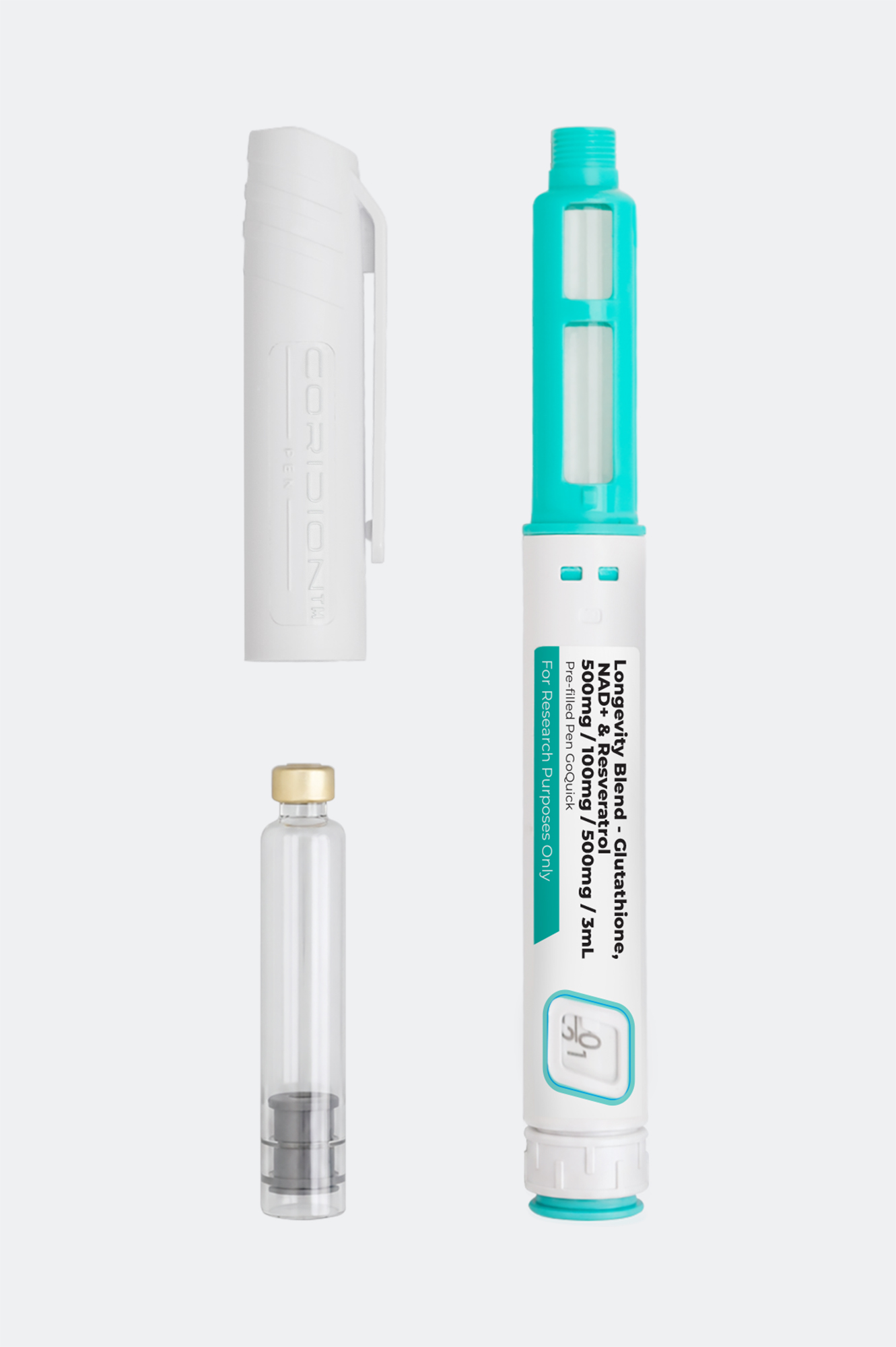
Longevity Blend (Glutathione / NAD+ / Resveratrol) – 500mg / 100mg / 500mg (3ml Pen)
Three pillars of cellular ageing research in one pen. Pairs antioxidant defence, NAD+ coenzyme power, and sirtuin-modulating activity. Research use only. Research use only.
£129.00
Blends
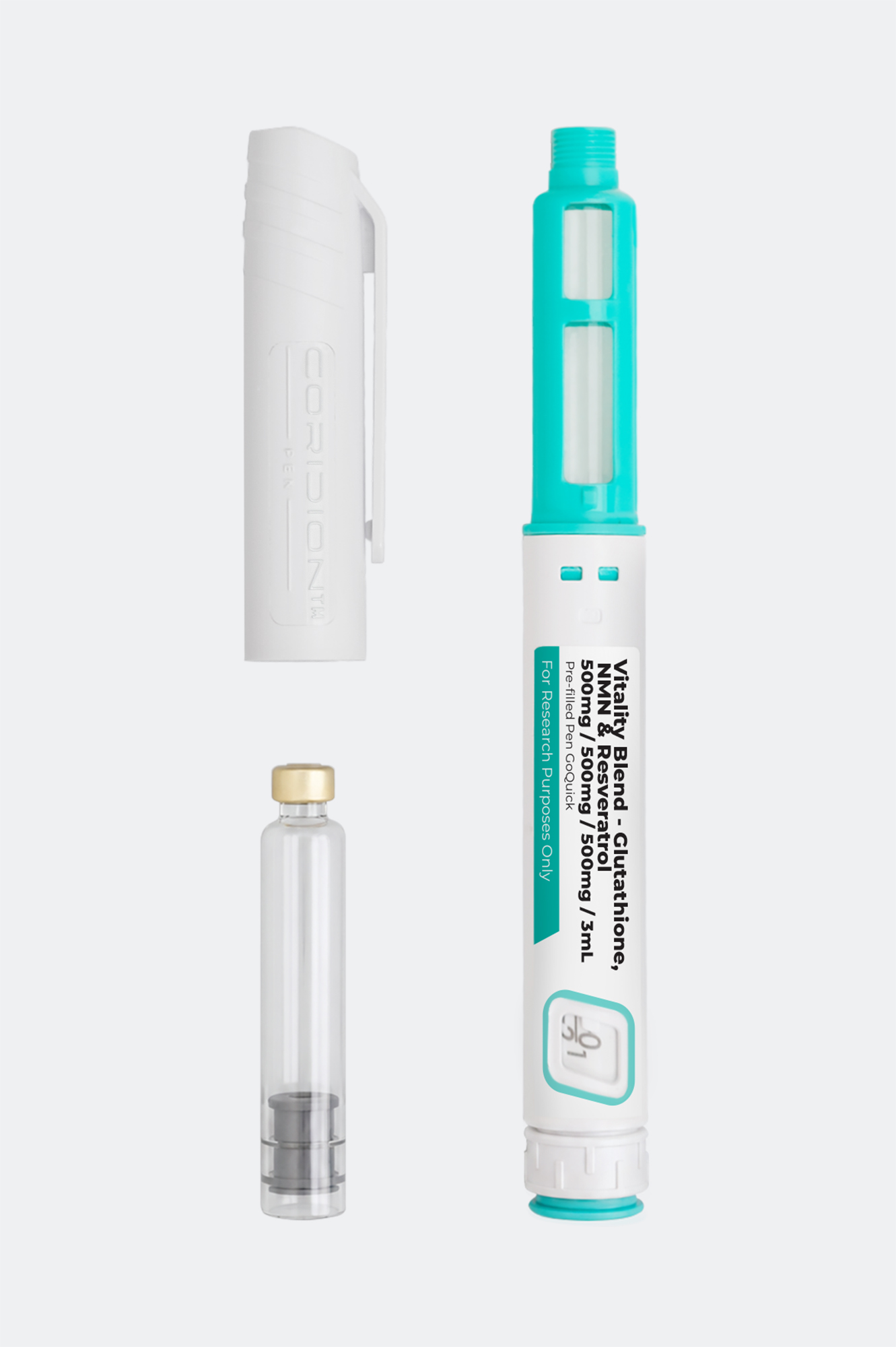
Vitality Blend (Glutathione / NMN / Resveratrol) – 500mg / 500mg / 500mg (3ml Pen)
The NAD+ precursor evolution. Swaps direct NAD+ for NMN — the biosynthetic precursor the cell uses via the salvage pathway. Research use only. Research use only.
£129.00
Blends

SS-31 + MOTS-c – 10mg / 10mg (3ml Pen)
Two mitochondrial compounds acting on different layers of the same biology — membrane structure and mitokine signalling. Research use only. Research use only.
£139.00
Blends

SS-31 + MOTS-c + NAD+ – 10mg / 10mg / 200mg (3ml Pen)
The flagship triple combination of mitochondrial research. SS-31, MOTS-c and NAD+ each act on a different layer of cellular energy biology — structure, signal. Research use only.
£159.00
Blends

KLOW Blend Peptide – BPC-157, TB-500, KPV & GHK-Cu (3ml Pen)
KLOW Blend Peptide combines BPC-157 10mg, TB-500 10mg, KPV 10mg and GHK-Cu 50mg in a four-component research formulation. The blend brings together compounds studied. Research use only.
£105.00
Blends

CJC-1295 (No DAC) + Ipamorelin + GHRP-2 – 3mg / 3mg / 3mg (3ml Pen)
A three-component preparation pairing a GHRH analogue with both a selective and a higher-potency ghrelin agonist. Research use only. Research use only.
£95.00
Blends
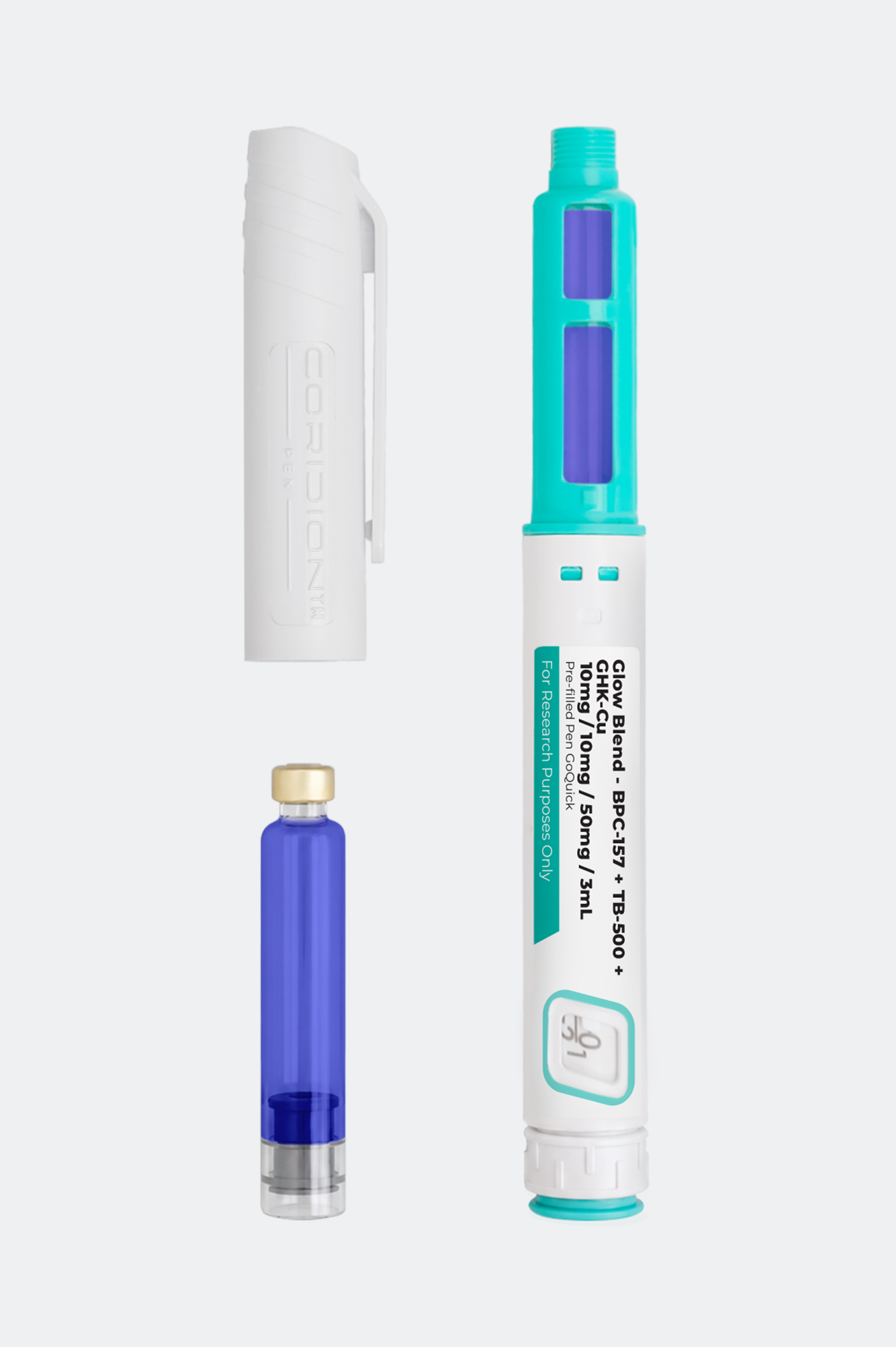
Glow Blend Peptide – BPC-157, TB-500 & GHK-Cu (3ml Pen)
Glow Blend Peptide combines GHK-Cu 50mg, BPC-157 10mg and TB-500 10mg in a three-component research formulation. Its ingredients have been investigated individually for extracellular. Research use only.
£95.00