
Epitalon (Epithalon) Peptide 20mg (3ml Pen) – Telomerase and Cellular Ageing Research
The most widely studied of the Khavinson bioregulators, and the compound that put telomerase research on the peptide map. Research use only.
Telomere Research
Longevity
Circadian Signalling
Description
Epitalon peptide, also known as Epithalon, is a synthetic tetrapeptide investigated for its relationship with telomerase activity, telomere biology and cellular processes associated with ageing.
Containing four amino acids, Epitalon has the sequence alanine–glutamic acid–aspartic acid–glycine, abbreviated AEDG.
The compound emerged from the Khavinson peptide bioregulator research programme, which investigated short synthetic peptides associated with tissue regulation, cellular signalling and age-related biological processes.
Epitalon has attracted particular attention because published cell-culture studies have reported changes in telomerase expression and telomere length following experimental exposure.
Additional research associated with the wider pineal peptide programme has examined circadian regulation, melatonin-related biology and gene-expression mechanisms.
However, these findings do not establish that Epitalon extends human lifespan, reverses ageing or prevents age-related disease.
Epitalon 20mg is supplied in a 3ml pen format by Coridion Sciences for scientific and laboratory investigation.
What Is Epitalon (Epithalon)?
Epitalon is a synthetic peptide consisting of four amino acids:
Alanine – Glutamic Acid – Aspartic Acid – Glycine
Its abbreviated sequence is:
Ala-Glu-Asp-Gly (AEDG)
Epitalon and Epithalon are alternative names for the same parent tetrapeptide.
The compound is associated with the research of Vladimir Khavinson and colleagues, whose work explored short peptide sequences related to extracts from different tissues and organs.
Epitalon is linked to research involving Epithalamin, a peptide preparation derived from pineal gland tissue.
However, the two are not identical.
Epithalamin is a complex extract-derived preparation, whereas Epitalon is a defined synthetic tetrapeptide.
This distinction matters when interpreting the scientific literature, since findings from studies involving Epithalamin cannot automatically be attributed to Epitalon.
Epitalon Peptide and Telomere Research
Telomeres are specialised structures located at the ends of chromosomes.
They consist of repetitive DNA sequences and associated proteins that help maintain chromosome integrity.
In human cells, telomeric DNA contains repeated TTAGGG sequences.
Telomeres typically shorten during successive cell divisions, although the relationship between telomere length, cellular ageing and organismal lifespan is complex.
Telomere shortening is one of several mechanisms associated with cellular replicative senescence.
Epitalon has been investigated because selected experiments have reported changes in telomerase activity and telomere dynamics.
Research areas include:
- Telomerase expression: Investigating the expression of telomerase reverse transcriptase.
- Telomere length: Examining chromosome-end maintenance in cultured cells.
- Replicative senescence: Studying cellular division limits and ageing-associated processes.
- Pineal gland biology: Exploring mechanisms associated with the Khavinson peptide research programme.
- Circadian signalling: Investigating pineal-associated rhythmic biological processes.
- Gene regulation: Examining proposed interactions between short peptides and cellular transcription.
These mechanisms are relevant to the biology of ageing but do not establish clinical anti-ageing benefits.
Researchers investigating related compounds can explore our longevity and cellular ageing research peptides, including compounds associated with telomere biology, cellular senescence and mitochondrial research.
How Does Epitalon Work?
The complete molecular mechanism of Epitalon has not been conclusively characterised.
Published studies and hypotheses have focused on telomerase expression, cellular proliferation, pineal-associated signalling and possible gene-regulatory activity.
Telomerase Reverse Transcriptase (TERT)
Telomerase is an enzyme complex involved in maintaining telomeric DNA.
One of its central components is telomerase reverse transcriptase, commonly abbreviated TERT.
A study published in 2003 investigated Epitalon in telomerase-negative human fetal fibroblast cultures.
The researchers reported induction of TERT expression, increased telomerase enzymatic activity and telomere elongation following experimental exposure.
These findings provide a direct experimental basis for Epitalon’s association with telomerase research.
However, the observations were made in cultured cells and have not established equivalent activity in living humans.
Telomere Length and Cell Division
A subsequent study published in 2004 examined the proliferative potential of human fetal fibroblasts exposed to Epitalon.
The investigators reported telomere elongation and approximately ten additional cell passages compared with untreated controls.
These observations contributed to scientific interest in the relationship between Epitalon, replicative senescence and telomere regulation.
However, extending the number of divisions achieved by a cultured cell population is not equivalent to extending the lifespan of an organism.
Cellular Senescence
Cellular senescence is a biological state in which cells undergo persistent changes associated with cell-cycle arrest, stress responses and altered signalling.
Telomere shortening is one possible contributor to replicative senescence.
Epitalon’s reported activity in fibroblast experiments has prompted interest in this area.
Nevertheless, cellular senescence involves many mechanisms beyond telomere length, including DNA damage responses, mitochondrial changes and epigenetic regulation.
Epitalon should not be classified as an established senolytic or proven senescence-reversing compound.
Proposed Gene Regulation
The Khavinson research programme has proposed that certain short peptides may interact with DNA or chromatin-associated structures and influence gene expression.
Epitalon has been investigated within this broader framework.
However, the hypothesis that AEDG produces specific biological effects through direct DNA binding remains incompletely validated.
A definitive molecular receptor or universally accepted gene-regulatory mechanism has not been established.
Epitalon and Circadian Rhythm Research
Epitalon’s research history also includes its association with pineal gland biology.
The pineal gland participates in circadian regulation through the production of melatonin.
Melatonin secretion normally follows a daily rhythm influenced by environmental light and signalling from the body’s central circadian system.
Some research originating from the Khavinson programme has examined the relationship between pineal peptide preparations, melatonin-associated rhythms and ageing.
However, much of this literature involves related pineal-derived preparations, different experimental compounds or animal models.
These findings should not be interpreted as demonstrating that Epitalon reliably improves sleep quality or restores circadian rhythms in humans.
The relationship between Epitalon and circadian physiology remains an area of experimental investigation.
Scientific Research Applications
1. Telomerase Activity Research
Epitalon has been investigated in laboratory experiments examining telomerase expression and enzymatic activity.
The reported changes in cultured fibroblasts are among the best-known experimental findings associated with the compound.
Further independent replication is needed to establish their reproducibility across different biological systems.
2. Cellular Replicative Senescence
Research has examined Epitalon’s effects on telomere length and the proliferative capacity of human cell cultures.
These experiments provide information about cellular division processes but cannot establish human longevity benefits.
3. Ageing-Associated Cellular Biology
Telomere maintenance, gene expression and cellular stress responses are connected to the biology of ageing.
Epitalon has been investigated within this wider scientific context.
However, ageing is multifactorial, and changes in a single cellular marker do not necessarily predict improvements in health or lifespan.
4. Circadian and Pineal Research
Epitalon is associated with studies of pineal-derived peptide preparations and melatonin-related biological processes.
The evidence for direct circadian effects from the purified AEDG tetrapeptide is less established than its published fibroblast findings.
5. Short Peptide Bioregulation
Epitalon is one of the better-known examples from the Khavinson peptide bioregulator research tradition.
Researchers have investigated whether short amino-acid sequences may influence selected cellular processes.
The broader theory requires more independent mechanistic and clinical validation.
Epitalon Compared with Related Longevity Research Peptides
Epitalon – Standard AEDG Tetrapeptide
Epitalon contains the unmodified Ala-Glu-Asp-Gly sequence.
Its published research history includes investigations into telomerase expression, cellular proliferation and selected pineal-associated processes.
N-Acetyl Epitalon Amidate – Terminally Modified Analogue
N-Acetyl Epitalon Amidate is a chemically modified version of the parent AEDG peptide.
The modified compound incorporates N-terminal acetylation and C-terminal amidation.
These changes are relevant to peptide stability and degradation research, but they do not establish superior telomerase activity, greater bioavailability or longer human half-life.
The modified analogue also has significantly less direct research than standard Epitalon.
FOXO4-DRI – Senescence-Associated Research
FOXO4-DRI is an experimental peptide designed to interfere with FOXO4–p53-related cellular interactions.
Its research history concerns senescence-associated cell survival mechanisms rather than direct telomerase regulation.
Pinealon – Neural Tissue Bioregulator Research
Pinealon is a synthetic EDR tripeptide associated with the Khavinson research programme.
Its scientific focus differs from Epitalon and includes experimental neuronal stress responses and short peptide bioregulation.
These compounds have distinct chemical structures and scientific evidence bases.
Epitalon Peptide 20mg Product Specifications
- Product: Epitalon
- Alternative name: Epithalon
- Quantity: 20mg
- Format: 3ml pen
- Classification: Synthetic tetrapeptide bioregulator
- Amino-acid sequence: Ala-Glu-Asp-Gly (AEDG)
- Peptide length: 4 amino acids
- Research origin: Khavinson peptide bioregulator programme
- Primary research focus: Telomerase expression and telomere biology
- Additional research areas: Cellular replicative senescence, pineal-associated signalling and gene-regulatory hypotheses
- Evidence status: Cell-culture and preclinical findings, with limited independent clinical validation
Epitalon Research at Coridion Sciences
Coridion Sciences provides specialist research peptides covering ageing-associated biology, cellular signalling and experimental peptide chemistry.
Epitalon forms part of the company’s wider peptide bioregulator research collection, alongside other short synthetic peptides associated with the Khavinson research tradition.
The catalogue also includes compounds investigated for cellular energy, mitochondrial physiology and senescence-associated mechanisms.
Epitalon 20mg is supplied in a 3ml pen format for scientific and laboratory investigation.
Research Use Only: Epitalon is an experimental compound intended exclusively for scientific and laboratory research. It is not approved for human consumption, lifespan extension, anti-ageing treatment, sleep disorders or other therapeutic applications. Human clinical safety and efficacy have not been established.
Mechanisms of Action
Epitalon is a synthetic tetrapeptide (Ala-Glu-Asp-Gly) derived from the pineal extract Epithalamin. Research describes induction of telomerase reverse transcriptase expression in somatic cell culture, with reported effects on telomere length in fibroblast models. Studies also document effects on melatonin secretion rhythm and on the expression of genes associated with antioxidant defence. The Khavinson research programme proposes short peptides of this type act through direct interaction with DNA regulatory regions, a model which has not been widely adopted outside that tradition.
Research Status & Findings
A substantial literature originating principally from a single Russian institutional programme, including long-running cohort work. Independent international replication of the central findings remains limited.
Telomerase research
Cell culture studies reporting telomerase induction and telomere elongation in fibroblasts.
Circadian research
Work on melatonin secretion rhythm and pineal function in animal models.
Longevity cohorts
Long-running observational studies conducted within the originating research programme.
Gene regulation
Proposed direct peptide–DNA interaction model, not widely adopted outside this tradition.
Replication context
Independent verification of key findings outside the originating institution is limited.
*For research purposes only – not for human consumption*

As Seen In The Press
Peptides can affect the way the body functions at a cellular level.

Our 3 Step System
Pre-filled Cartridges
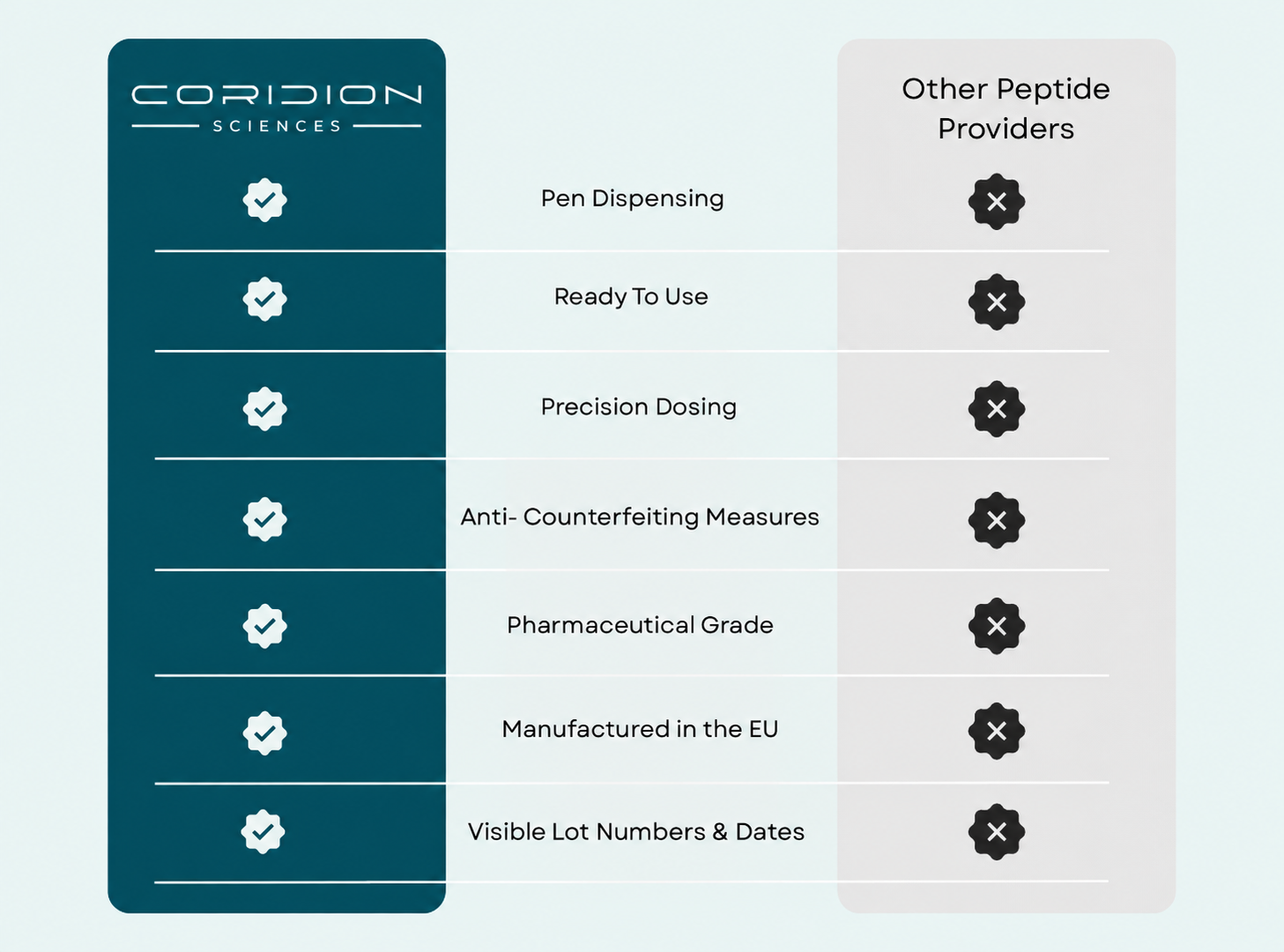
Engineered for absolute accuracy and ease. Our pre-blended pens make precise dosing completely seamless in just three quick steps.
Step 1 - Remove the Pre-mixed pen from the box
Step 2 - Secure the needle tip
Step 3 - Twist to set the required dose
Blends
Blends

Sermorelin + GHRP-6 – 5mg / 5mg (3ml Pen)
Sermorelin + GHRP-6 5mg/5mg combines a 29-amino-acid GHRH analogue with a synthetic ghrelin receptor agonist. Investigated for complementary growth hormone signalling pathways, pituitary hormone. Research use only.
£95.00
Blends
Sermorelin + GHRP-2 – 5mg / 5mg (3ml Pen)
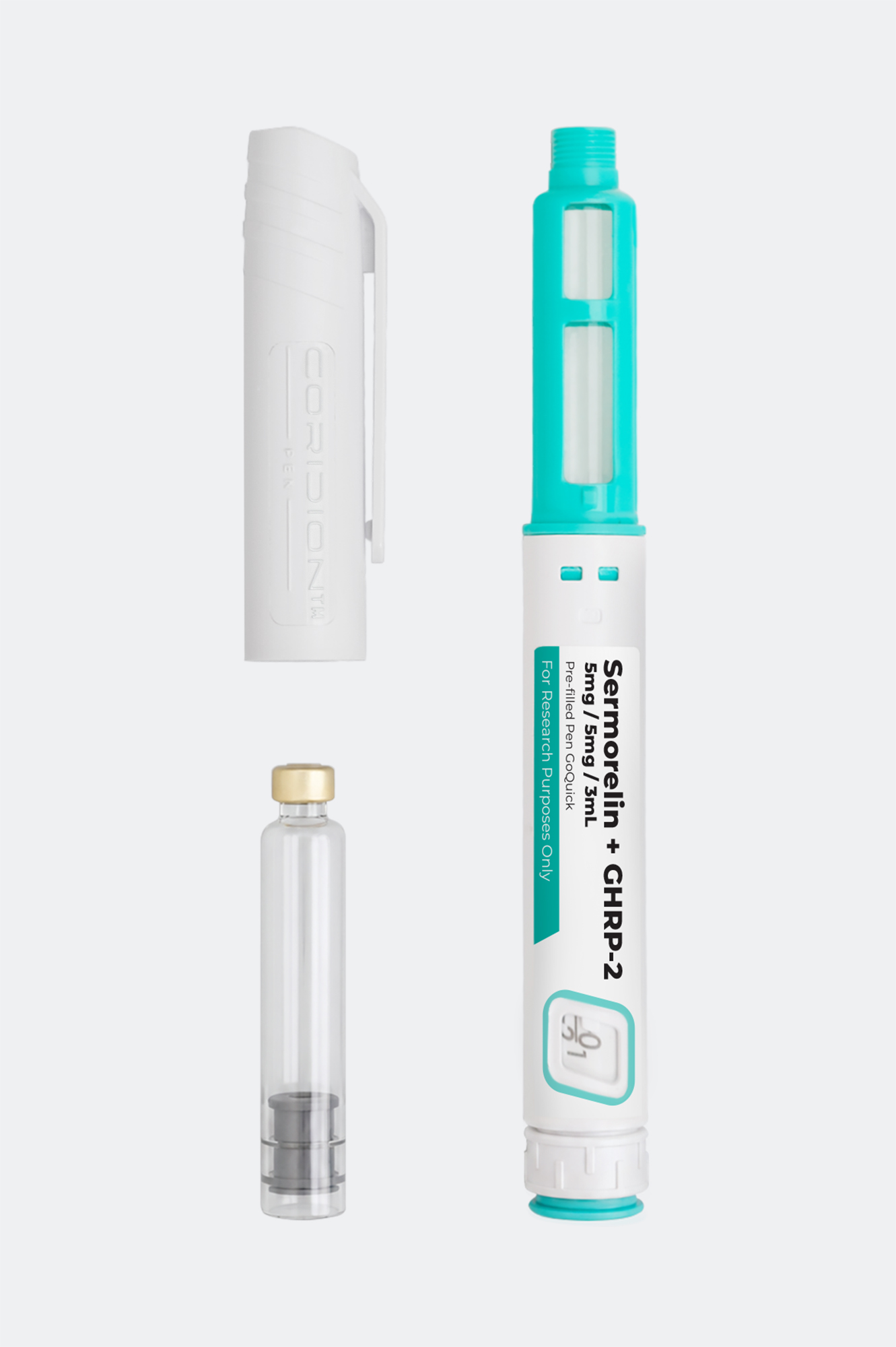
Sermorelin + GHRP-2 5mg/5mg combines a 29-amino-acid GHRH analogue with a synthetic growth hormone secretagogue. Investigated for complementary pituitary signalling, ghrelin receptor activation and. Research use only.
£99.00
Blends
Longevity Blend (Glutathione / NAD+ / Resveratrol) – 500mg / 100mg / 500mg (3ml Pen)
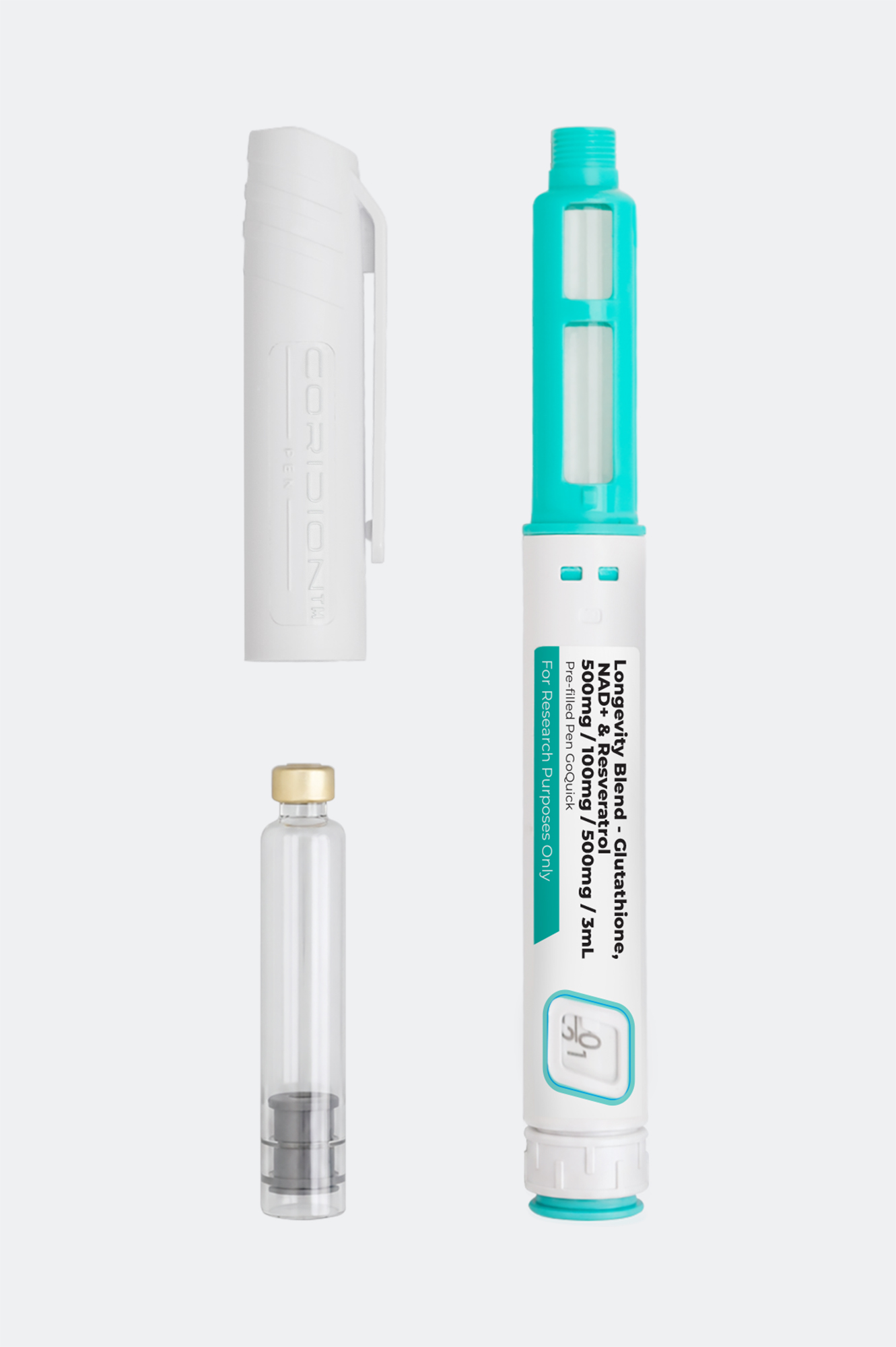
Three pillars of cellular ageing research in one pen. Pairs antioxidant defence, NAD+ coenzyme power, and sirtuin-modulating activity. Research use only. Research use only.
£129.00
Blends

Vitality Blend (Glutathione / NMN / Resveratrol) – 500mg / 500mg / 500mg (3ml Pen)
The NAD+ precursor evolution. Swaps direct NAD+ for NMN — the biosynthetic precursor the cell uses via the salvage pathway. Research use only. Research use only.
£129.00
Blends

SS-31 + MOTS-c – 10mg / 10mg (3ml Pen)
Two mitochondrial compounds acting on different layers of the same biology — membrane structure and mitokine signalling. Research use only. Research use only.
£139.00
Blends

SS-31 + MOTS-c + NAD+ – 10mg / 10mg / 200mg (3ml Pen)
The flagship triple combination of mitochondrial research. SS-31, MOTS-c and NAD+ each act on a different layer of cellular energy biology — structure, signal. Research use only.
£159.00
Blends

KLOW Blend Peptide – BPC-157, TB-500, KPV & GHK-Cu (3ml Pen)
KLOW Blend Peptide combines BPC-157 10mg, TB-500 10mg, KPV 10mg and GHK-Cu 50mg in a four-component research formulation. The blend brings together compounds studied. Research use only.
£105.00
Blends

CJC-1295 (No DAC) + Ipamorelin + GHRP-2 – 3mg / 3mg / 3mg (3ml Pen)
A three-component preparation pairing a GHRH analogue with both a selective and a higher-potency ghrelin agonist. Research use only. Research use only.
£95.00
Blends
Glow Blend Peptide – BPC-157, TB-500 & GHK-Cu (3ml Pen)
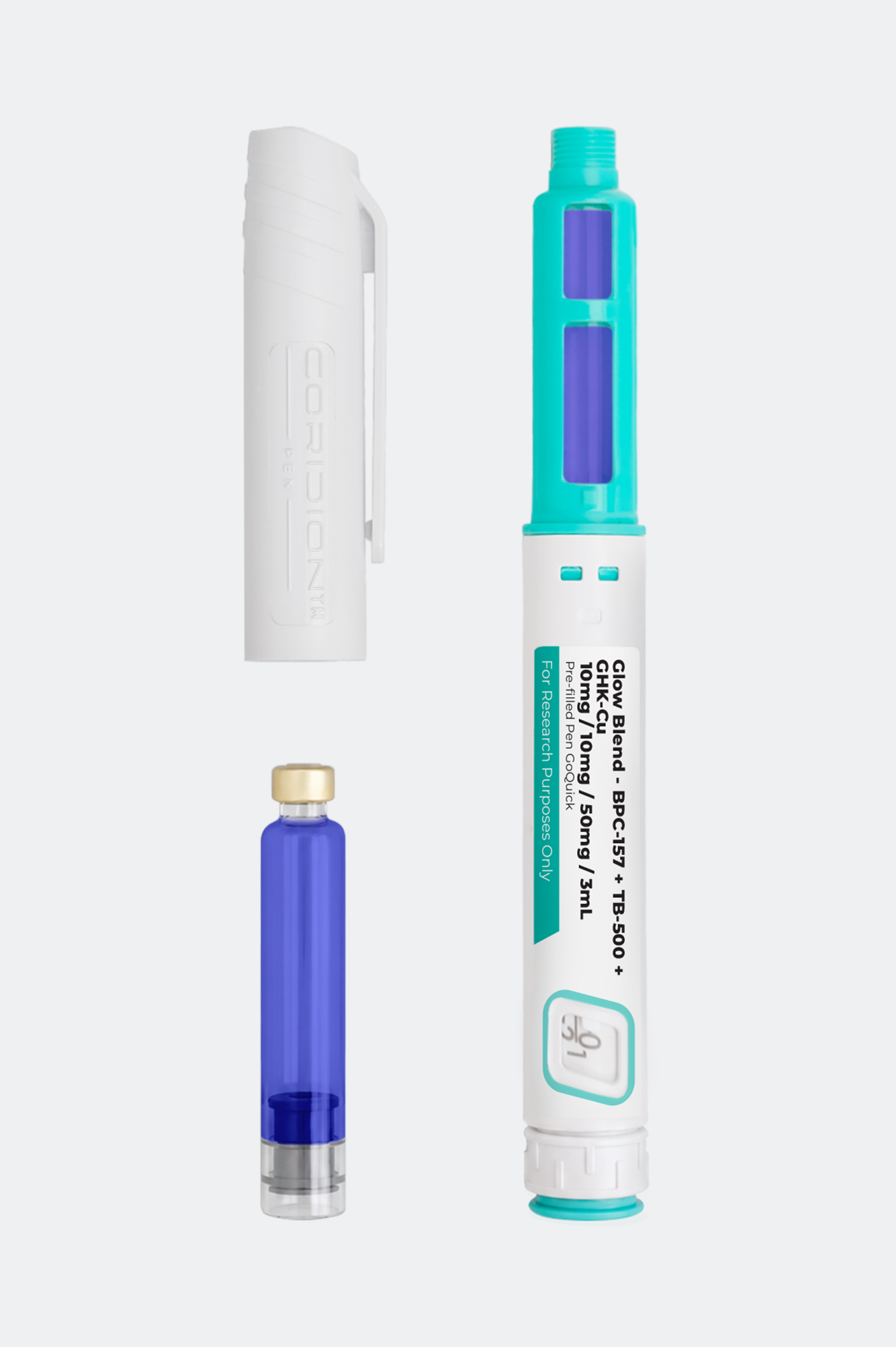
Glow Blend Peptide combines GHK-Cu 50mg, BPC-157 10mg and TB-500 10mg in a three-component research formulation. Its ingredients have been investigated individually for extracellular. Research use only.
£95.00